
Glossary
Process Analyst
 ChatGPT
 Perplexity
 Gemini
 Claude
What is a process analyst?
A process analyst studies how work moves through a business process and recommends ways to make that work clearer, faster, safer, or more consistent. The role often includes mapping workflows, interviewing employees, reviewing process metrics, finding bottlenecks, and turning findings into documentation or improvement recommendations.
A strong process analyst does more than take notes. They translate messy operational reality into a clear view of what is happening, where the process breaks down, and what the team should change next.
What a process analyst does
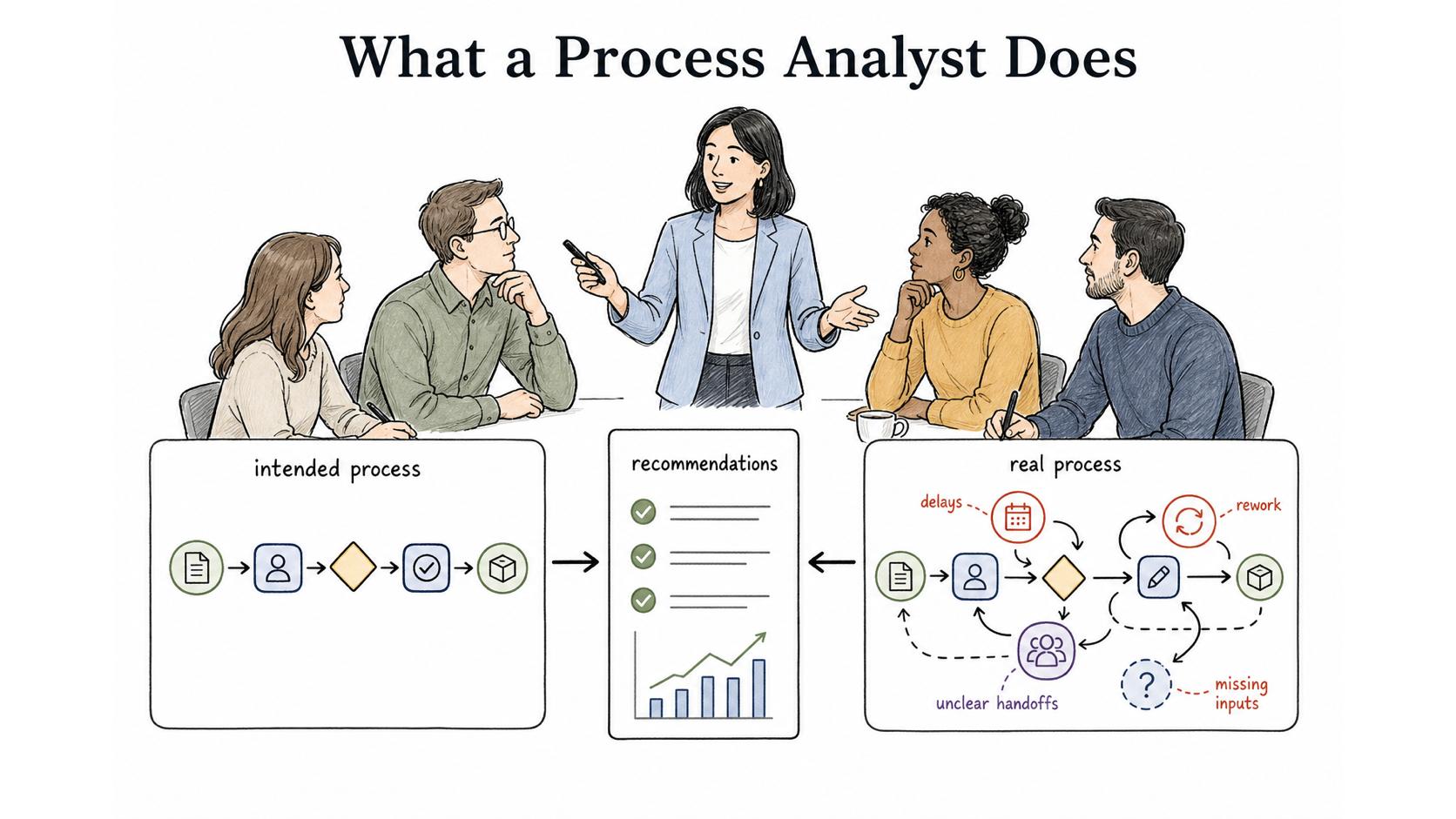
A process analyst looks at the gap between the intended process and the real one. They study how work starts, who owns each step, what information moves between teams, where delays happen, and how the output is judged.
Common responsibilities include:
- Interviewing stakeholders and watching the work happen.
- Mapping current-state workflows and comparing them to SOPs.
- Identifying bottlenecks, rework, unclear handoffs, and missing inputs.
- Reviewing process metrics and operational data.
- Gathering requirements for process, documentation, or system changes.
- Turning findings into recommendations, audit support, or updated training material.
For example, a process analyst might investigate why customer onboarding takes too long. They may find that the issue isn’t customer delay, but incomplete information from the sales handoff. The recommendation might include a better intake form, a clearer checklist, and an updated onboarding SOP.
Process analyst vs related roles
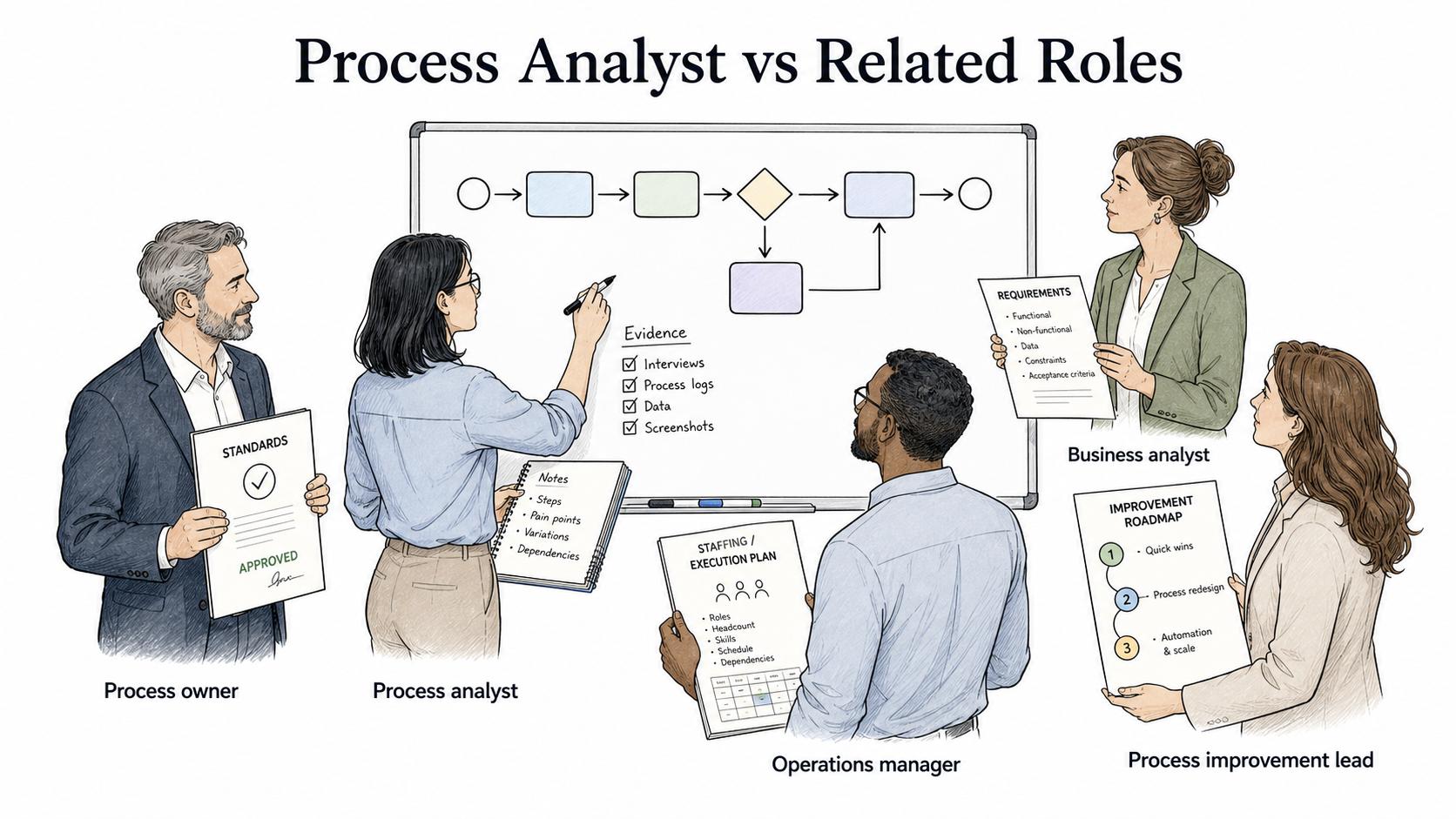
These roles can overlap, especially in smaller companies, but they answer different questions.
| Role | Primary question | Typical output |
|---|---|---|
| Process analyst | How does this process work, and where should it improve? | Process maps, findings, requirements, recommendations |
| Process owner | Is this process performing well and staying accountable? | Standards, priorities, approvals, performance decisions |
| Business analyst | What does the business need from a system, product, or change? | Requirements, user stories, stakeholder alignment |
| Operations manager | How do we run the work reliably with the people and capacity we have? | Staffing, execution plans, operating rhythm, follow-through |
| Process improvement lead | How do we redesign or optimize the process? | Improvement roadmap, experiments, change plan |
That distinction matters. Analysis without ownership becomes a report. Ownership without analysis can become opinion. Strong process improvement needs both evidence and accountability.
Skills a process analyst needs
A strong process analyst combines curiosity with structure. They need to ask specific questions, understand work at the step level, and explain findings in a way busy teams can use.
Useful skills include process mapping, interviewing, facilitation, root cause analysis, data analysis, requirements gathering, documentation writing, systems thinking, stakeholder communication, and change-management awareness.
Tool skills help, but judgment matters more. A dashboard can show that work waits for three days. A process analyst helps explain why it waits, whether the wait matters, and what should change. The best analysts are comfortable with evidence and ambiguity: they can say what the data shows, what the interviews suggest, and what still needs validation.
Common process analyst deliverables
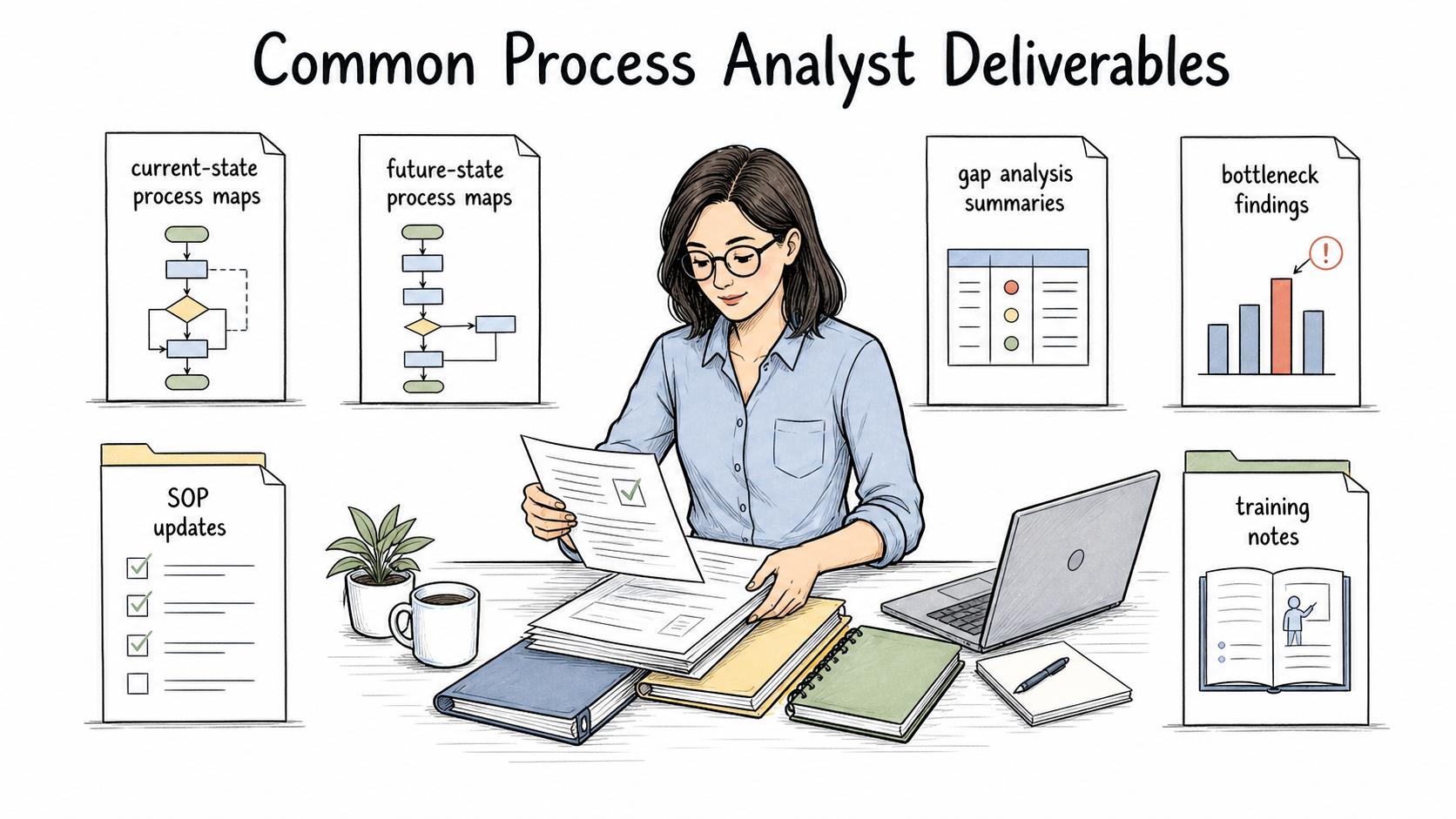
A process analyst may create current-state process maps, future-state process maps, gap analysis summaries, bottleneck findings, root cause notes, process metrics reviews, SOP updates, automation requirements, stakeholder interview summaries, audit findings, or training notes.
The deliverable should match the decision the team needs to make. A process map is useful for shared understanding. A requirements document is useful when software must change. A short findings memo is useful when leaders need to choose between improvement options.
A weak deliverable describes the process but doesn’t change anyone’s next action. A strong deliverable makes the tradeoff visible: what to fix first, what to leave alone, what risk remains, and who needs to decide.
Example of process analyst work
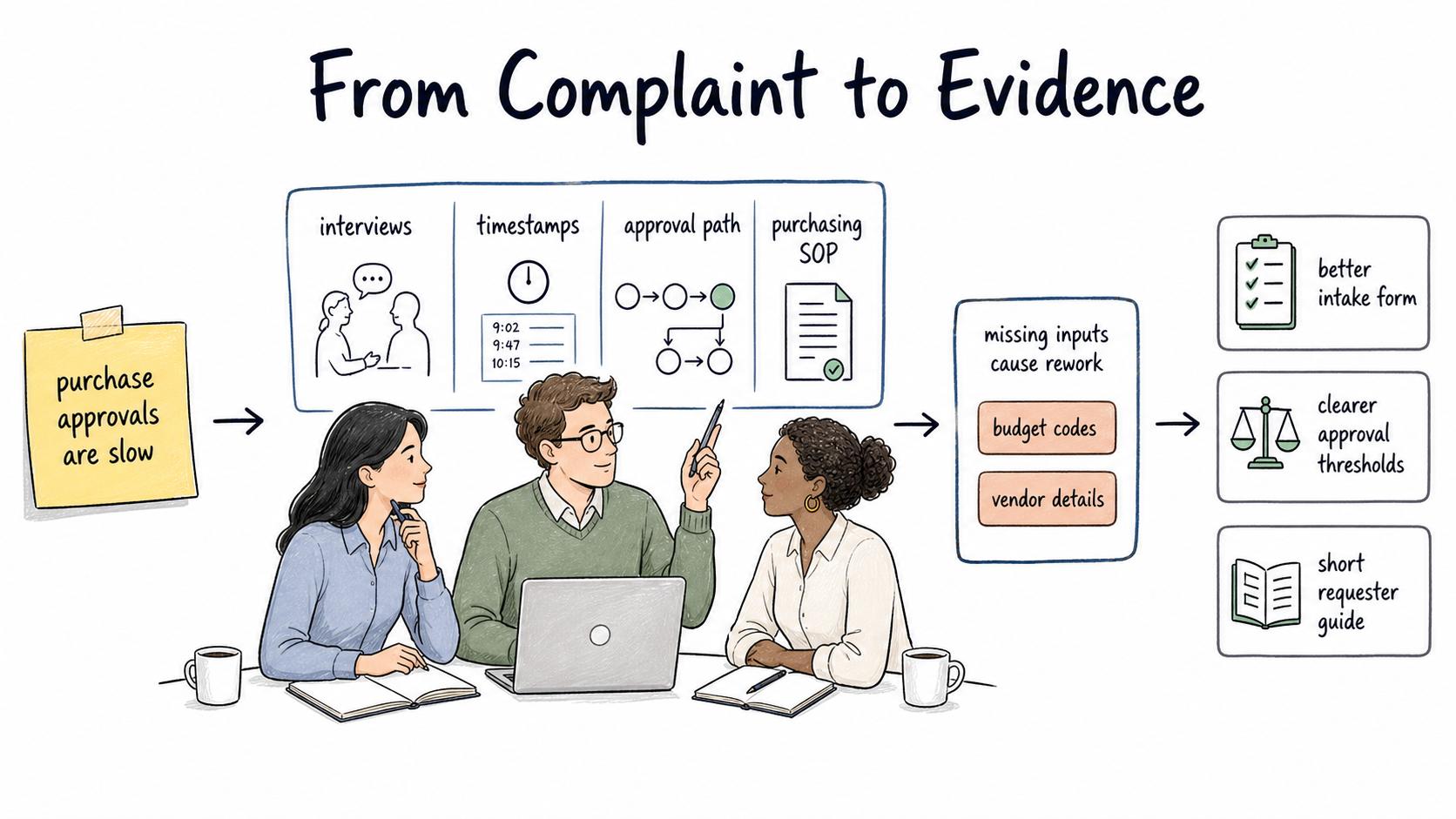
A finance team says purchase approvals are slow. The process analyst interviews requesters, managers, and finance; reviews timestamps; maps the approval path; and compares the workflow to the purchasing SOP.
The analysis shows that approvals are not slow because managers ignore requests. Most requests arrive without budget codes or vendor details, so managers send them back. The fix is not a reminder campaign. It is a better intake form, clearer approval thresholds, and a short requester guide.
That is the value of process analysis: it moves the conversation from complaint to evidence.
Common mistakes
One mistake is documenting the ideal process instead of the actual process. Improvement starts with reality, even when reality is awkward.
Another mistake is treating symptoms as root causes. A slow approval step may be caused by incomplete inputs, unclear ownership, too many approval rules, or a tool that hides required context.
A third mistake is producing recommendations that no one can operationalize. Good findings connect to owners, documentation, training, metrics, or system changes. If a recommendation can’t be assigned, tested, or documented, it’s probably not specific enough.
Process analyst interview prompt
Use this AI-ready prompt to prepare for a process analysis interview:
## Process Analyst Interview Prompt

**Glossary term:** Process Analyst
**Source:** Trails Glossary — trails.so/glossary/process-analyst

---

### 01. Prepare an interview guide

"Prepare an interview guide for analyzing the [process] used by [team].
Goal of analysis: [goal]
Known issues: [known issues]
Audience for findings: [leaders, process owner, frontline team, software team]

Create questions that uncover:
- How the process starts and ends
- Who owns each step
- What inputs are required
- Where work waits or gets reworked
- Which exceptions happen most often
- Which tools, forms, or documents are used
- What people do differently from the SOP
- What evidence would confirm the problem
- What improvement options should be tested first

Keep questions neutral and specific. Avoid wording that blames the interviewee."
Documentation takeaway
Process analysts turn operational knowledge into usable documentation and practical improvement plans. Their work is strongest when interviews, maps, metrics, and SOPs all point to the same story.
Good process documentation also makes future analysis easier. When the standard is visible, it’s much easier to compare what should happen with what actually happens.
How Trails helps
Trails helps process analysts capture a workflow as someone performs it and turn it into a step-by-step guide. That gives analysts a faster way to document real work, validate it with stakeholders, and create training material after the process changes.
Trails can also create an AI-narrated video version of a guide, which helps teams roll out the updated workflow after analysis leads to a process change.