
Glossary
Process Audit
 ChatGPT
 Perplexity
 Gemini
 Claude
What is a process audit?
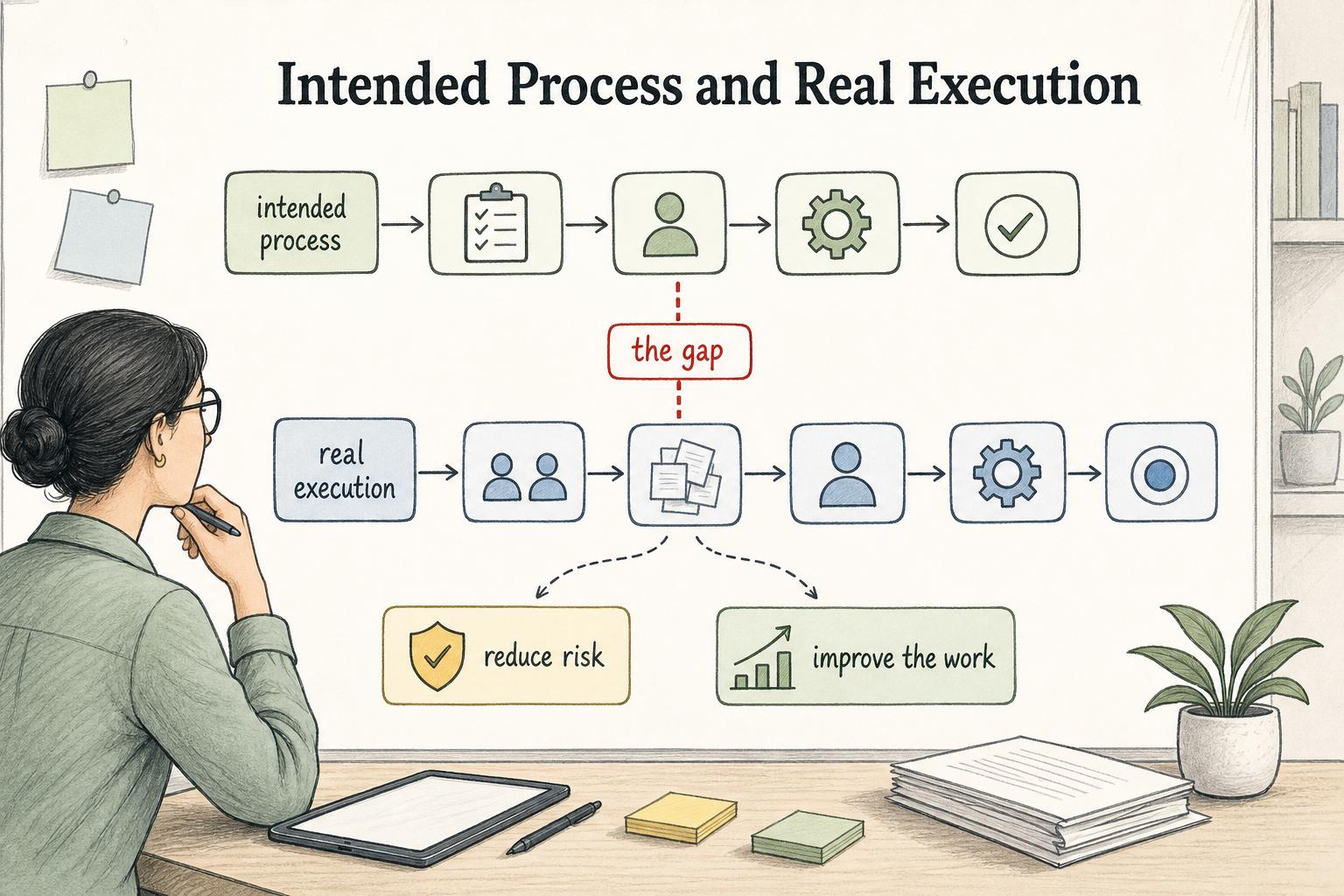
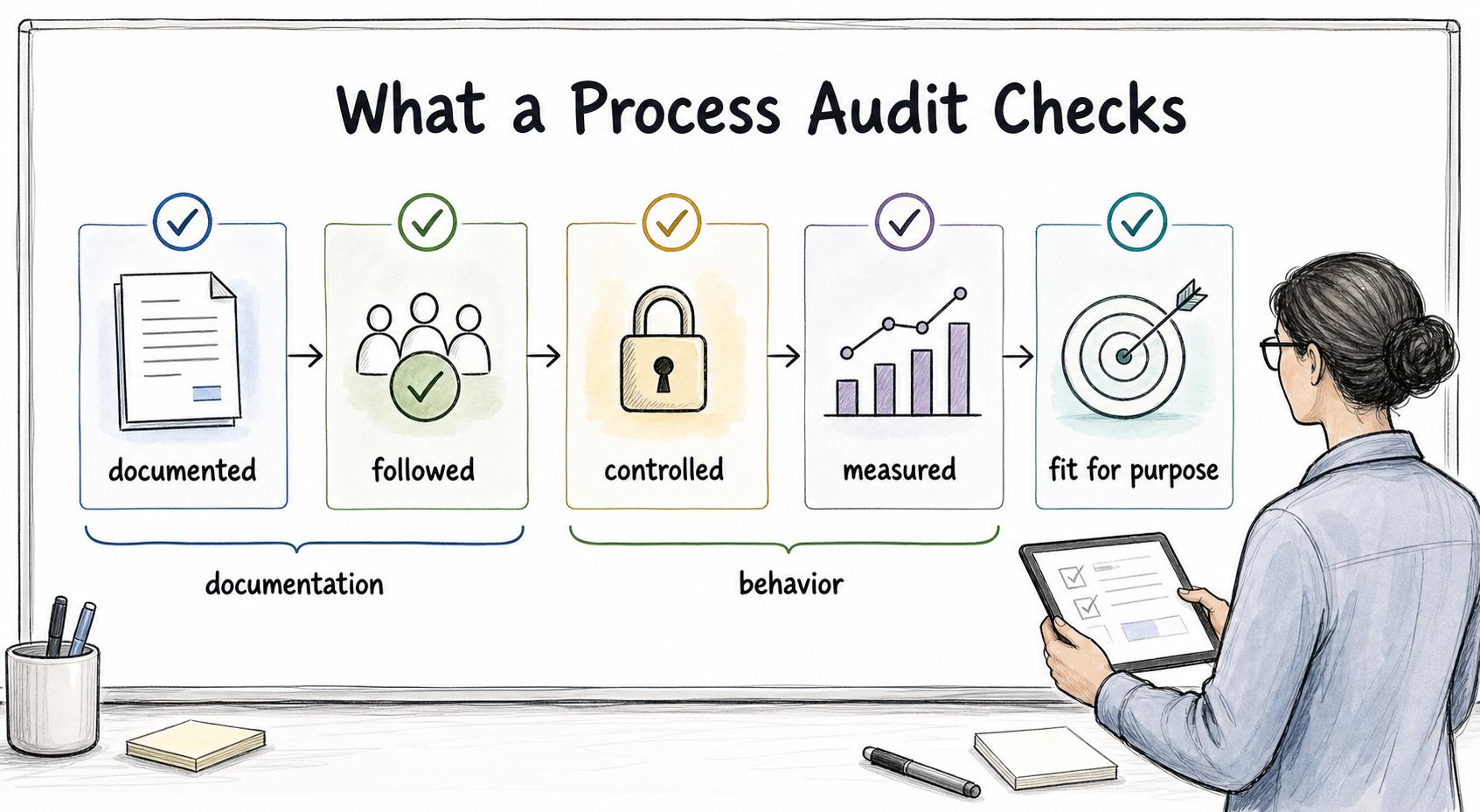
A process audit is a structured review of how a process is supposed to work compared with how it actually works. It checks whether the process is documented, followed, controlled, measured, and still fit for purpose.
Process audits show up in quality, compliance, operations, finance, manufacturing, customer support, and HR. The point isn’t to catch people doing something wrong. It’s to find the gap between the intended process and real execution so the team can reduce risk and improve the work.
What a process audit checks
A process audit looks at both documentation and behavior. A clean SOP isn’t enough if people work around it every day. A successful informal workaround isn’t enough if nobody has documented it and the next person can’t repeat it.
A practical process audit usually checks for:
- Clear ownership and current documentation.
- Evidence that actual work matches the documented steps.
- Required approvals, records, controls, and quality checks.
- Handoffs that people can trace across teams or systems.
- Consistent handling of exceptions and corrective actions.
- Training on the current version of the process.
For example, an onboarding process audit might review HR paperwork, account provisioning, equipment setup, manager check-ins, training assignments, and evidence that each step happened at the right time.
How to run a process audit
Start with a narrow scope. Auditing “customer onboarding” is usually too broad. Auditing “the handoff from sales to implementation for new SMB customers” is specific enough to produce useful findings.
A practical workflow:
- 1. Define the process, audit objective, and time period.
- 2. Identify the owner, participants, and systems involved.
- 3. Gather SOPs, guides, checklists, records, forms, reports, and training materials.
- 4. Decide what evidence will prove whether the process is working.
- 5. Compare the documented workflow to actual execution.
- 6. Interview or observe people who do the work.
- 7. Write findings that name the issue, impact, evidence, and recommended correction.
- 8. Assign owners, due dates, and a recheck point.
The best audit findings are specific enough to fix. “The process is inconsistent” is weak. “The sales-to-CS handoff has no required field for implementation risk, so CSMs discover blockers during kickoff” gives the team something to change.
Process audit checklist
Use these questions as a starting point, then adapt them to the risk and importance of the process:
- What is supposed to happen, and where is that documented?
- Who owns the process, each handoff, and the evidence trail?
- Which approvals, records, controls, or quality checks must happen every time?
- Where do exceptions, rework, or informal workarounds appear?
- Are people trained on the current version, and were past corrective actions completed?
A payroll change process deserves a stricter audit than a low-risk internal request workflow. The audit should match the consequence of getting the process wrong.
Common process audit findings
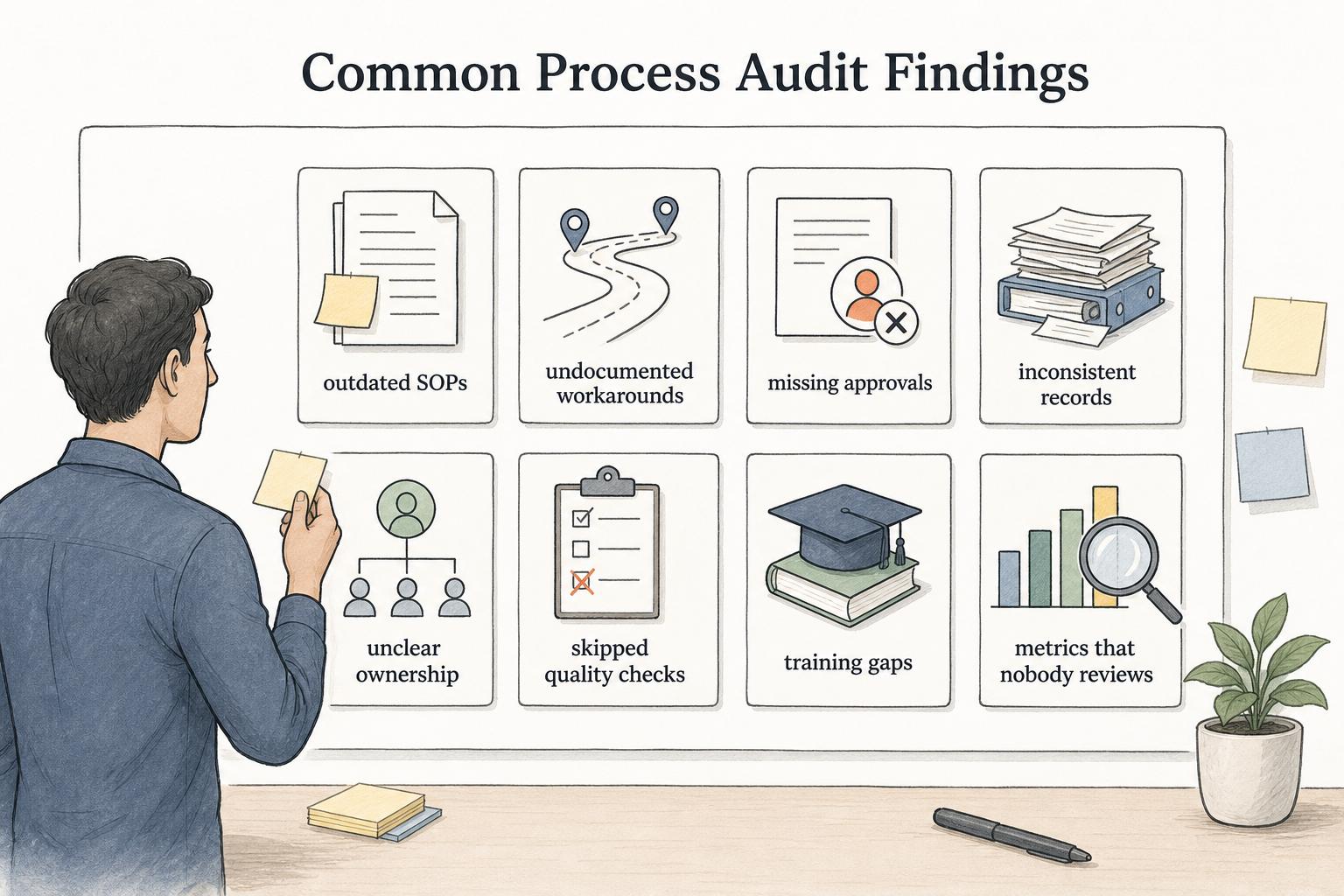
Common findings include outdated SOPs, undocumented workarounds, missing approvals, inconsistent records, unclear ownership, skipped quality checks, training gaps, and metrics that nobody reviews.
The useful move is to separate symptoms from causes. If people skip a checklist, the answer may not be “try harder.” The checklist may be too long, stored in the wrong place, missing from training, or disconnected from the tools people use.
Good findings avoid vague blame. They point to the process condition that created the issue: missing field, unclear owner, stale guide, unreviewed queue, weak handoff, or no defined exception path.
Audit finding template
Use this AI-ready template to turn audit notes into action-oriented findings:
## Process Audit Findings

**Glossary term:** Process Audit
**Source:** Trails Glossary — trails.so/glossary/process-audit

---

### 01. Create process audit findings

"Create process audit findings for [process] used by [team].
Audit objective: [objective]
Evidence reviewed: [records, SOPs, interviews, observations]
Raw notes: [paste notes]

For each finding, provide:
- Finding title
- What was expected
- What was observed
- Evidence
- Operational impact or risk
- Likely root cause
- Recommended corrective action
- Owner role
- Suggested due date or priority
- Documentation that must be updated

Keep findings specific, factual, and fixable. Do not assign personal blame."
Documentation takeaway
Process audits depend on current documentation. SOPs, process maps, checklists, records, and training guides give the auditor a standard to compare against real work.
After the audit, update the documentation to reflect the correction. Otherwise the finding may be fixed in conversation but lost in day-to-day execution. A process audit is only useful if the team changes the system that created the gap.
How Trails helps
Trails helps teams capture a corrected workflow and turn it into a polished step-by-step guide. When a process audit finds unclear handoffs, missing training, or inconsistent execution, Trails can convert the fix into documentation people can follow and share.
Trails can also create an AI-narrated video version of the guide, which is useful when audit findings require retraining a team on the updated process.