
Glossary
Standard Operating Procedure
 ChatGPT
 Perplexity
 Gemini
 Claude
What is a standard operating procedure?
A standard operating procedure, or SOP, documents the approved way to perform recurring work. A good SOP defines the purpose, scope, roles, steps, exceptions, and owner of a process so people don't have to rely on memory, informal training, or one experienced teammate.1
SOPs are common in operations, healthcare, manufacturing, finance, IT, customer support, HR, and any team where repeated work affects quality, safety, customer experience, compliance, or speed. They give judgment a stable frame: the standard path is clear, and exceptions are easier to recognize.2

What an SOP is used for
An SOP turns a repeatable process into a shared operating standard. That matters when the task has real consequences if people do it differently every time.
A customer support refund SOP, for example, might explain which requests agents can approve, which account details they must verify, which fields to update, when manager approval is required, and how to document the outcome. Without that standard, each agent may make a slightly different decision and leave a different record behind.
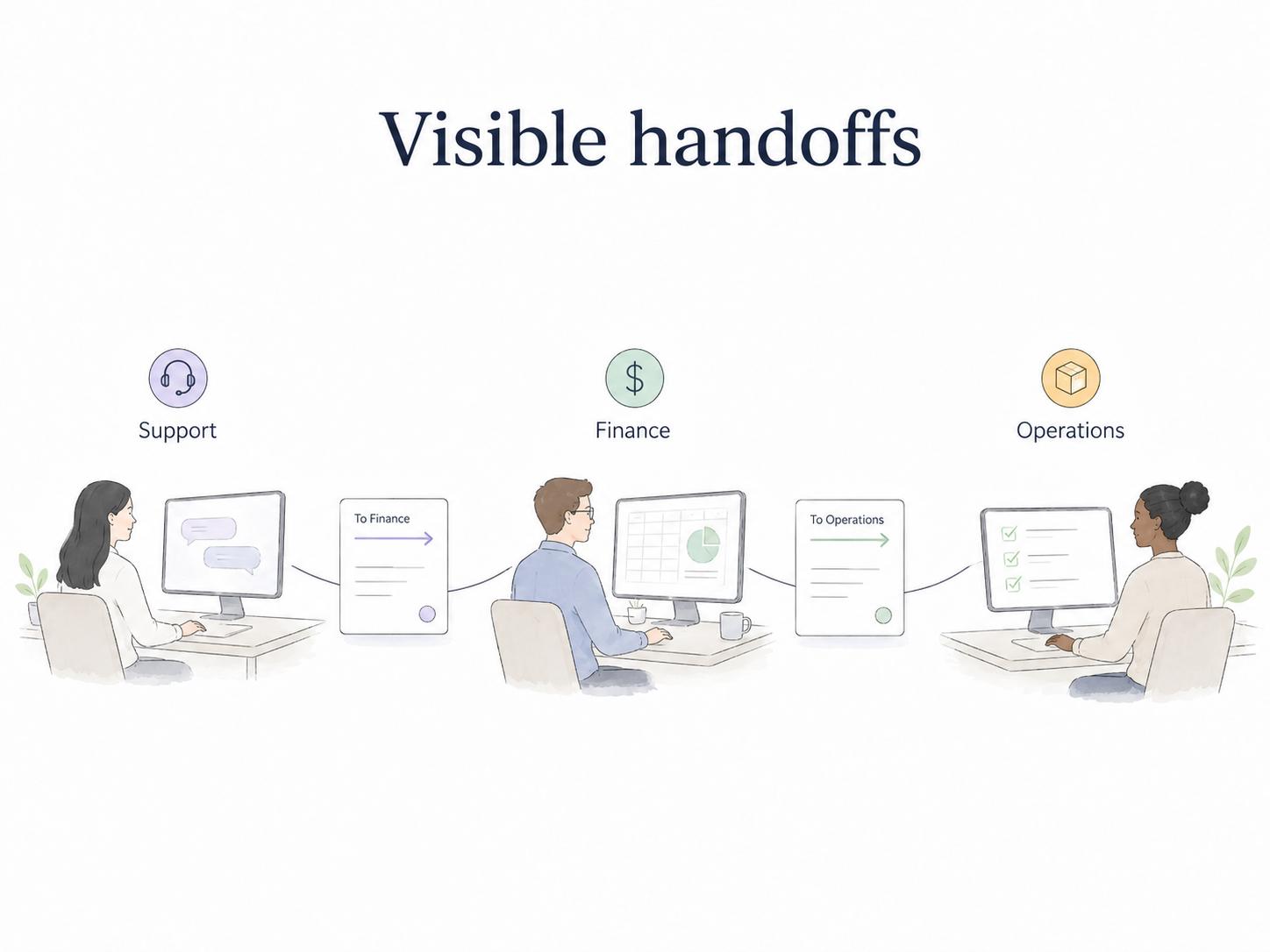
SOPs are especially useful when work crosses people, tools, or departments. They make handoffs visible, reduce avoidable variation, and give managers a concrete artifact to train, audit, improve, and update when the process changes.
What a standard operating procedure should include
Most useful SOPs answer the reader's operational questions without burying the actual work.
Start with the purpose: why the procedure exists and what outcome or risk it supports. Define the scope so the reader knows when the SOP applies and when it doesn't. Name the roles and process owner so accountability is clear. List required tools, systems, inputs, forms, or materials before the reader starts.
Then write the procedure steps in sequence. Put decision points, approvals, exceptions, and escalation rules near the steps they affect. Finish with the expected outcome, related documents, and review owner.
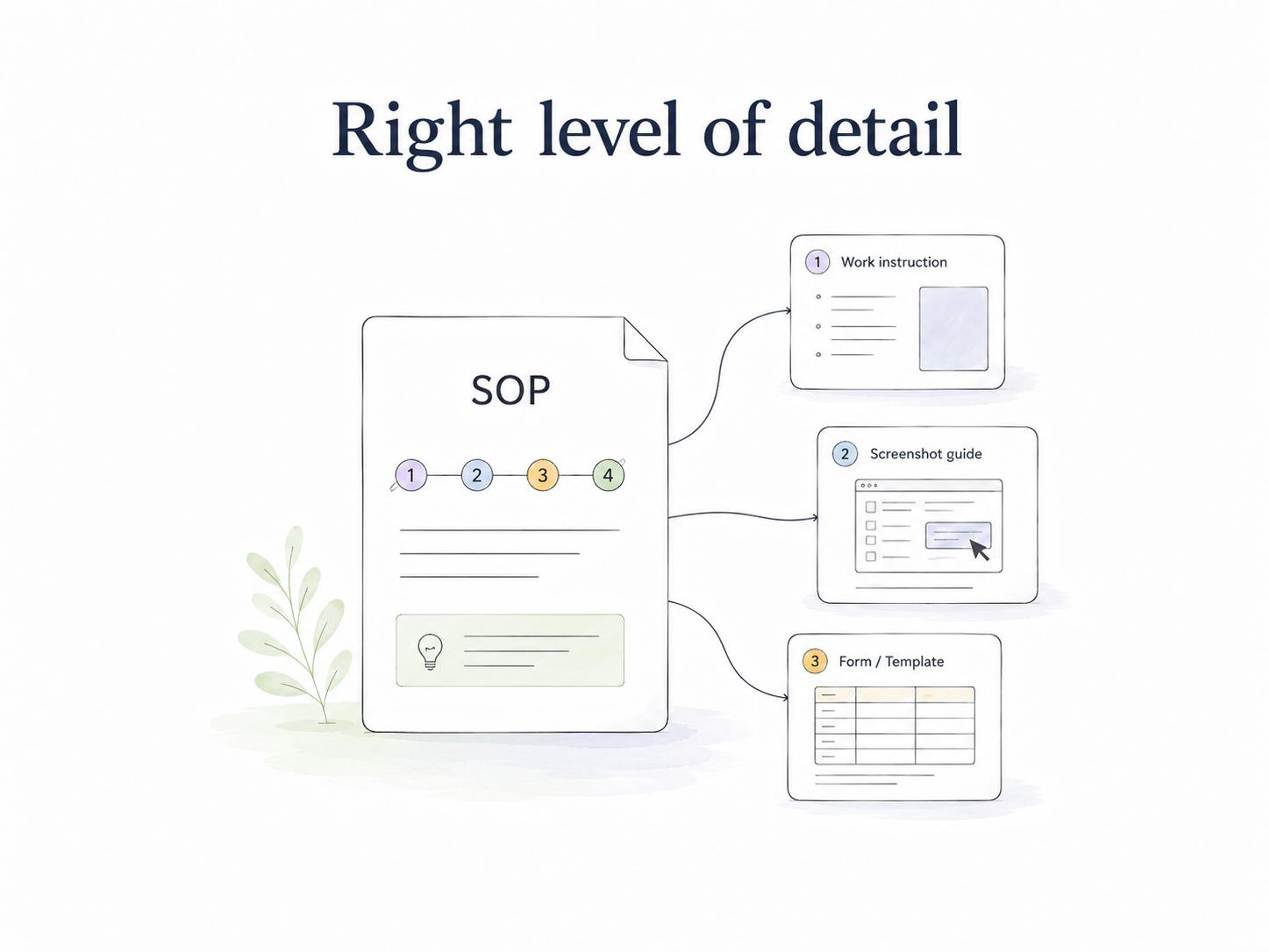
If one step needs detailed click-by-click instruction, link to a work instruction or step-by-step guide instead of forcing every detail into the main SOP.
SOP vs process vs work instruction
A business process is the broader flow of work that turns an input into an outcome. An SOP documents how the team performs that process in a standard way. A work instruction gives task-level detail for one part of the process.
New customer onboarding is a process. The onboarding SOP might define the handoffs between sales, implementation, support, and billing. A work instruction might explain exactly how to configure one account setting inside the software.
This distinction keeps documentation usable. If every process map becomes an SOP, the team loses execution detail. If every tiny click path becomes an SOP, the team drowns in documents. The right level depends on risk, frequency, complexity, and training need.
How to write an SOP people will use
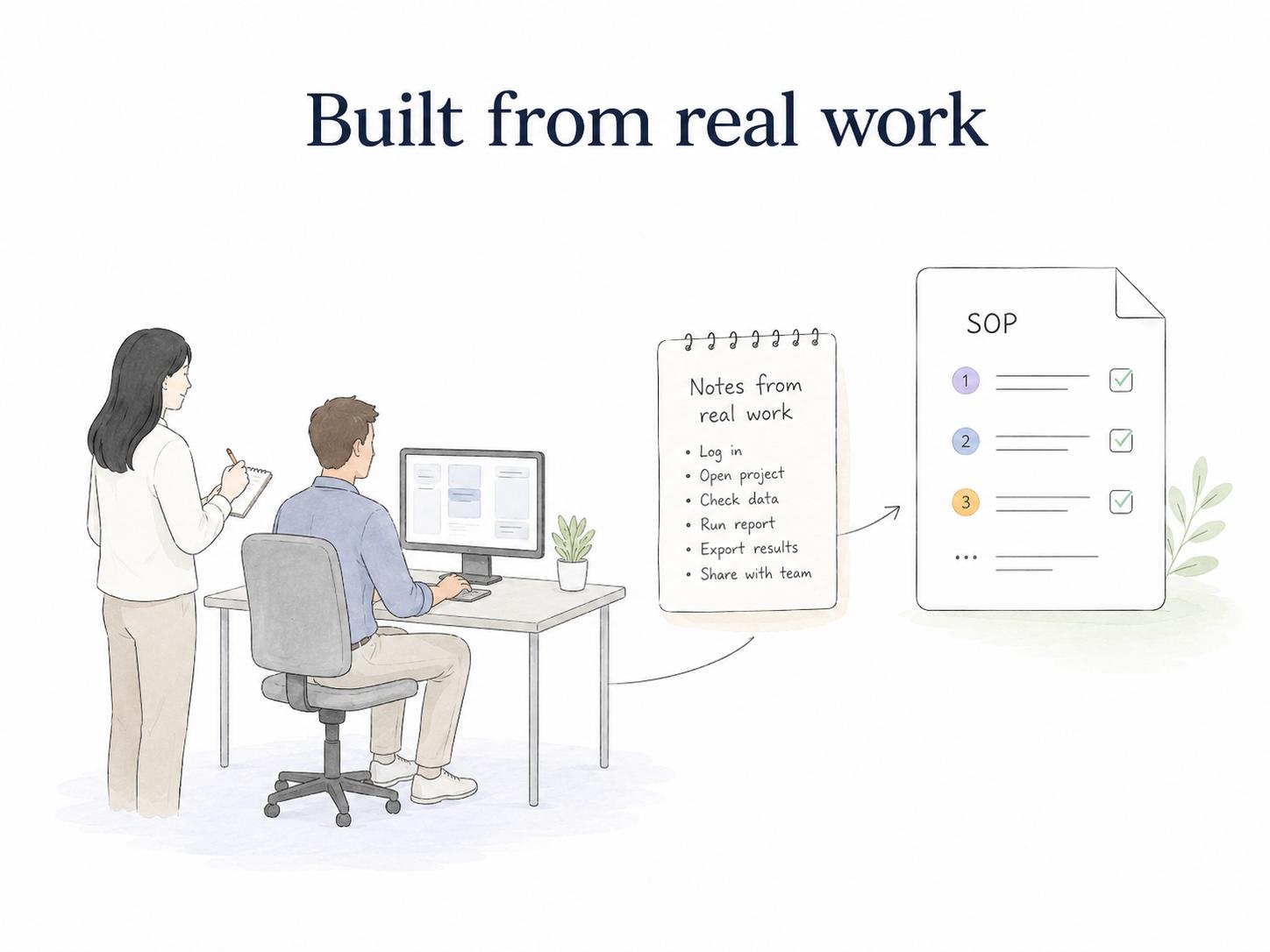
Start by observing the work or interviewing the people who perform it. Don't begin with a generic template and hope the process fits. Strong SOPs come from the real workflow: the trigger, handoffs, systems, common mistakes, and exceptions that experienced employees already understand.
Define the outcome in one sentence. Set the scope, including what is out of scope. Name the roles involved and the procedure owner. Capture the normal step sequence. Add decisions, approvals, and escalation rules near the steps they affect. Link to forms, templates, screenshots, or work instructions. Test the SOP with someone who was not involved in writing it. Set a review trigger so the document doesn't quietly decay.3
A useful SOP should survive the new-hire test: if a trained employee with the right access reads it, can they complete the process without asking five extra questions?
AI-ready SOP drafting prompt
## SOP Drafting Prompt

**Glossary term:** Standard Operating Procedure
**Source:** Trails Glossary — trails.so/glossary/standard-operating-procedure

---

### 01. Create a standard operating procedure

"Create a standard operating procedure for [process] used by [team].

Include:
- Purpose
- Scope, including what is out of scope
- Roles and responsibilities
- Required tools, systems, or documents
- Step-by-step procedure
- Decision points or approvals
- Exceptions and escalation rules
- Definition of done
- Review owner and review trigger

Context:
[paste process notes, screenshots, transcript, or rough steps]

Write the SOP in clear operational language for a trained employee. Flag any missing details or assumptions that a process owner should verify."
Common SOP mistakes
One mistake is writing the SOP for an auditor instead of for the person doing the work. Auditability may matter, but the frontline user still has to understand what to do on a normal day.
Another mistake is hiding ownership. If no one owns the SOP, no one updates it when the workflow changes. That is how teams end up with documentation that looks official but teaches old behavior.
A third mistake is documenting only the happy path. SOPs should explain the standard path, but they also need clear escalation triggers. People should know when to pause, when to ask for approval, and when a different procedure applies.
Documentation takeaway
A standard operating procedure should make repeatable work easier to perform correctly. It should be specific enough to train from, clear enough to follow under pressure, and owned enough to stay current.
The best SOPs create a reliable baseline without freezing work forever. Once the team can see the standard, it can improve the standard deliberately.
How Trails helps
Trails captures a workflow as someone performs it, then turns that capture into a polished step-by-step guide. That's useful when an SOP needs real screenshots, clear sequence, and enough context for training.
Teams can also create an AI-narrated video version for onboarding or process rollouts.
Comparing tools? See the process documentation software comparison.
- Standing operating procedure
- Standard work
- Procedure manual
- Work instruction
- Step-by-step guide
- Process owner
- Support documentation
Sources
- 1
U.S. Environmental Protection Agency. Guidance for Preparing Standard Operating Procedures. EPA. www.epa.gov/sites/default/files/2015-06/documents/g6-final.pdf. Accessed July 6, 2026.
- 2
Electronic Code of Federal Regulations. 21 CFR 211.100 Written procedures; deviations. eCFR. www.ecfr.gov/current/title-21/chapter-I/subchapter-C/part-211/subpart-F/section-211.100. Accessed July 6, 2026.
- 3
American Society for Quality. ISO 9001 Overview. ASQ. asq.org/quality-resources/iso-9001. Accessed July 6, 2026.