
Glossary
Kaizen
 ChatGPT
 Perplexity
 Gemini
 Claude
What is kaizen?
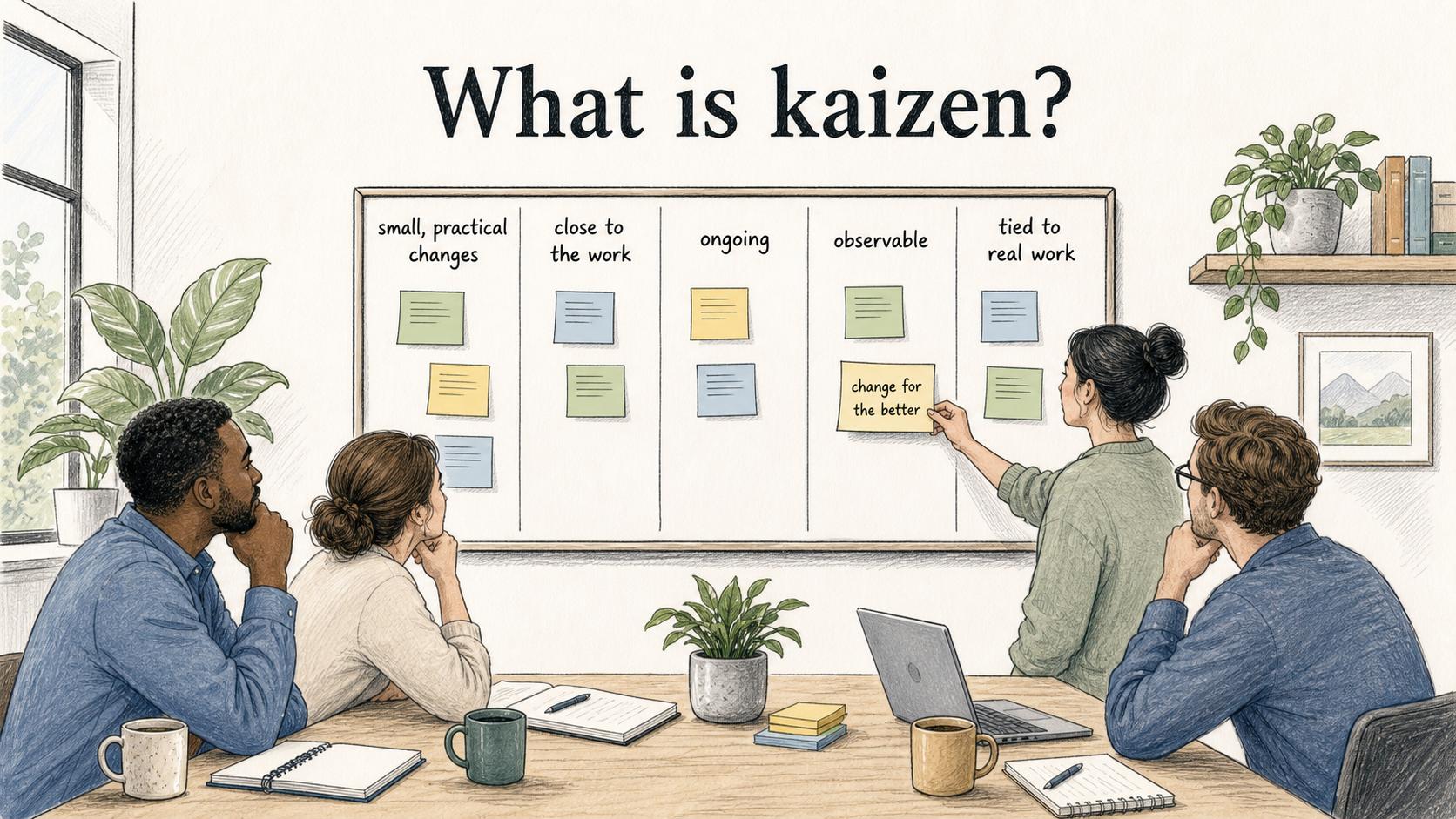
Kaizen is a continuous improvement approach built around making work better through small, practical changes. In lean and operations contexts, it means improving processes close to where the work happens, with input from the people who perform it. 1
Strong kaizen is a disciplined habit of noticing friction, testing changes, and standardizing what works.
How kaizen works
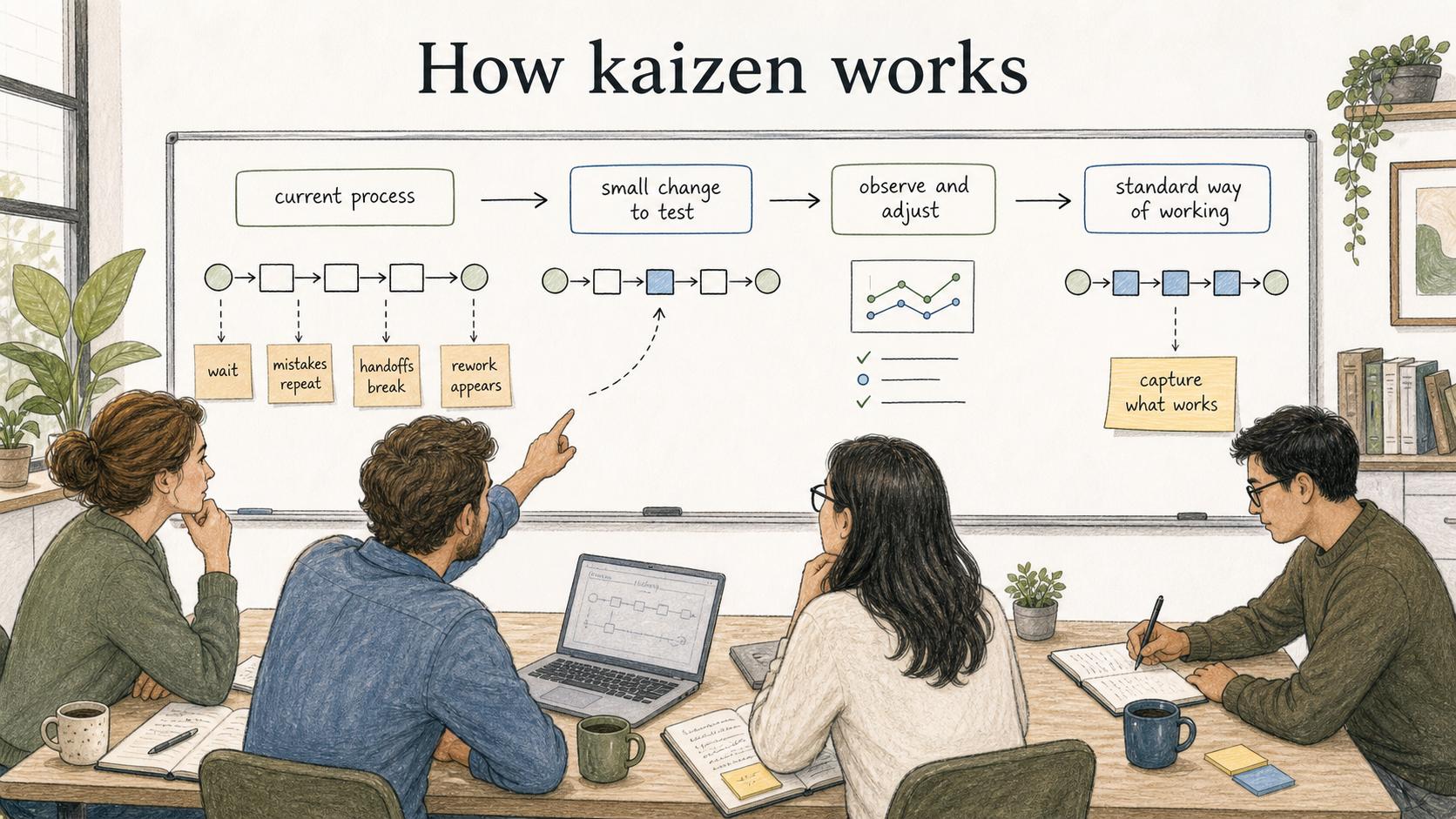
Kaizen starts with the current process: where people wait, mistakes repeat, handoffs break, rework appears, and customers feel the impact. 2 Test a small change, such as a clearer form, better checklist, simpler handoff, visible label, or escalation rule. 3
After a change works, capture it in the standard way of working. Otherwise the improvement becomes folklore instead of a new standard.
Kaizen vs continuous improvement
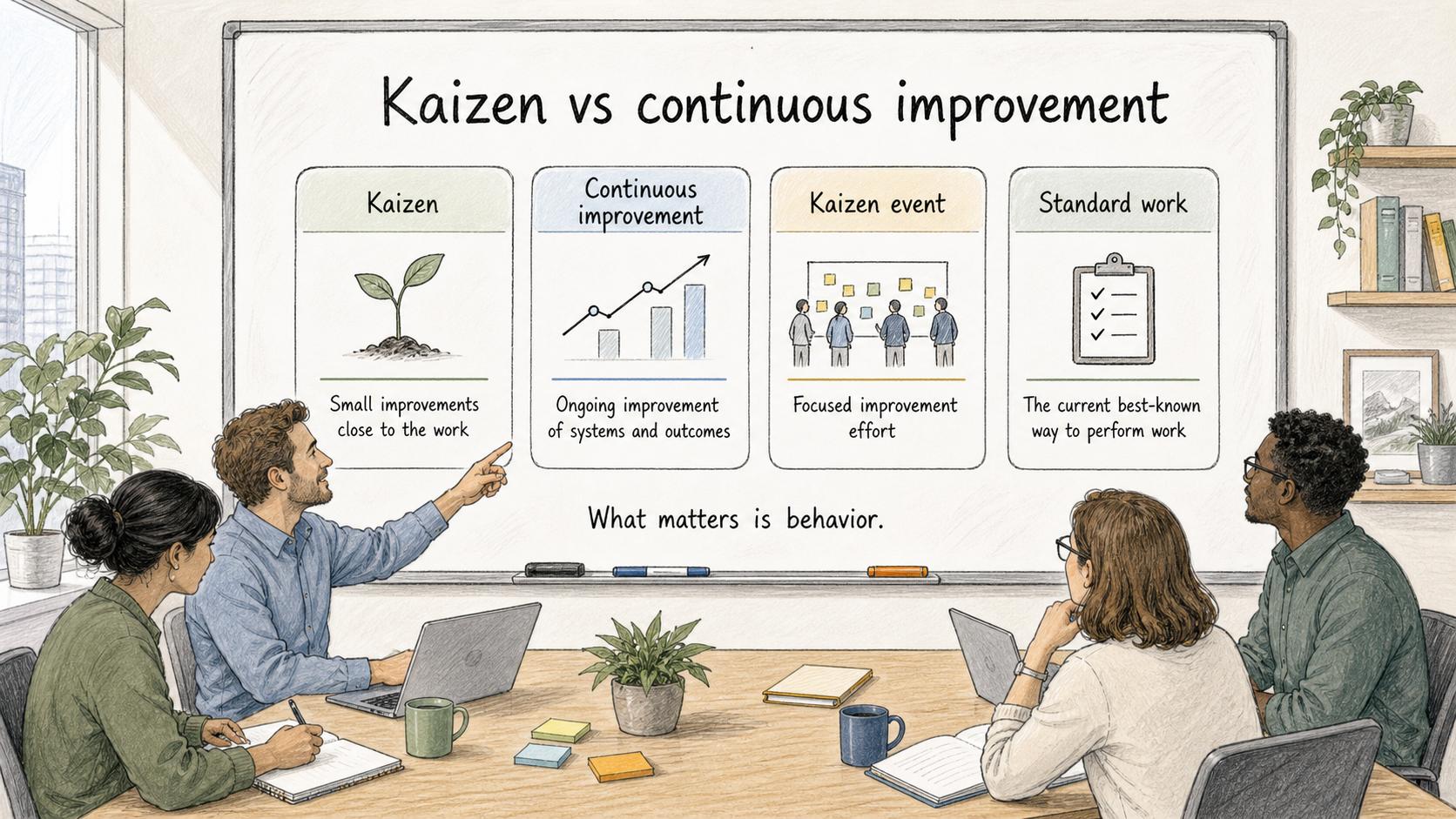
Continuous improvement is the broader idea of repeatedly improving systems and outcomes. Kaizen is one practical expression of that idea, especially in lean environments.
| Concept | Main focus | Best use | Common failure mode |
|---|---|---|---|
| Kaizen | Small improvements close to work | Fixing daily friction | Ideas without testing |
| Continuous improvement | Ongoing system improvement | Long-term discipline | Too abstract |
| Kaizen event | Focused short effort | A defined problem | Treating the event as the system |
| Standard work | Current best-known way | Making improvements repeatable | Stale standards |
Examples of kaizen in team operations
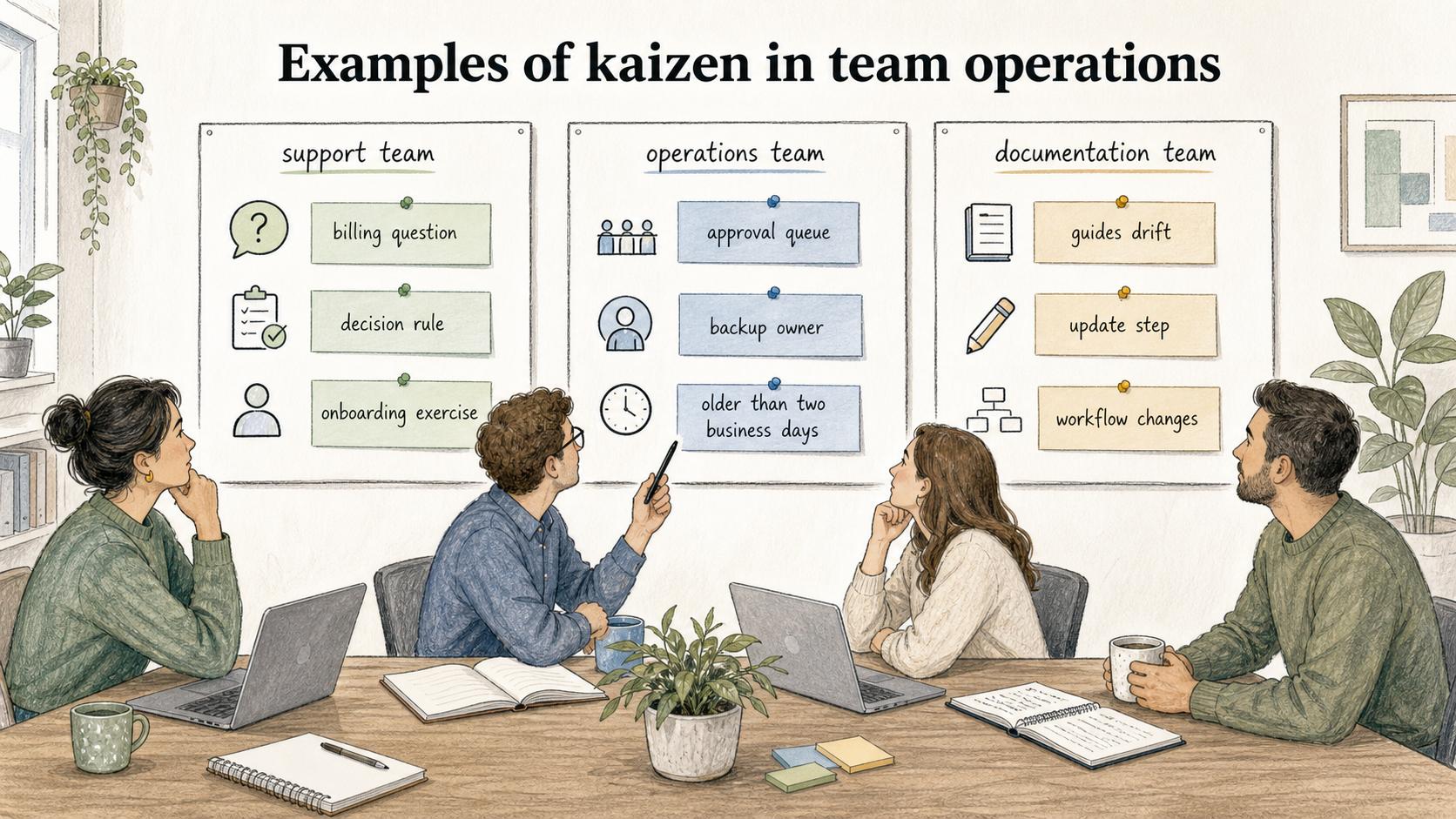
A support team can rewrite a decision rule and update onboarding when new reps repeatedly escalate the same billing question. An operations team can add a visible approval queue, backup owner, and escalation rule. A documentation team can update its guide when the process changes.
What makes kaizen work in practice?
Kaizen works when teams treat improvement as part of the job, observe the process with evidence, and standardize what helps. If an improvement is not captured, trained, and repeated, it is only a temporary workaround. 4
Common kaizen mistakes
Small does not mean cosmetic: a small change can remove a serious delay or error. Do not reward idea volume over tested changes, and do not leave SOPs, work instructions, onboarding materials, or checklists unchanged after an improvement works.
Kaizen improvement prompt
## Kaizen improvement prompt

**Glossary term:** Kaizen
**Source:** Trails Glossary — trails.so/glossary/kaizen

---

### 01. Design a kaizen experiment

"Help design a small kaizen improvement for [team/process].

Observed problem:
[Describe the friction, delay, error, or rework]

Current workflow:
[Summarize the steps as they happen today]

People affected:
[Roles, customers, or teams]

Constraints:
[Tools, approvals, timing, compliance, staffing]

Return:
- The likely root cause to investigate first.
- One small change to test.
- What evidence would show the change helped.
- What standard work or documentation should be updated if it works.
- One risk or unintended consequence to watch."
How Trails helps
Trails helps teams capture the current workflow, turn it into a polished step-by-step guide, and create an AI-narrated video version. When a team changes a process, it can update the documented workflow instead of relying on everyone to remember the new way.
Sources
- 1
Lean Enterprise Institute. Kaizen. www.lean.org/lexicon-terms/kaizen/.
- 2
Toyota. Toyota Production System. global.toyota/en/company/vision-and-philosophy/production-system/index.html.
- 3
Institute for Healthcare Improvement. Testing changes. www.ihi.org/library/model-for-improvement/testing-changes.
- 4
Lean Enterprise Institute. Standardized work. www.lean.org/lexicon-terms/standardized-work/.