
Glossary
Kanban
 ChatGPT
 Perplexity
 Gemini
 Claude
What is kanban?
Kanban is a visual workflow management method that helps teams see work, limit work in progress, and improve flow. It often means a board where work moves through stages such as To do, In progress, Review, and Done. 1 Kanban also has roots in lean pull systems, where cards signal what is needed next. 2
The board makes invisible work visible, letting a team see where work is waiting, piling up, blocked, or moving smoothly.
How kanban works
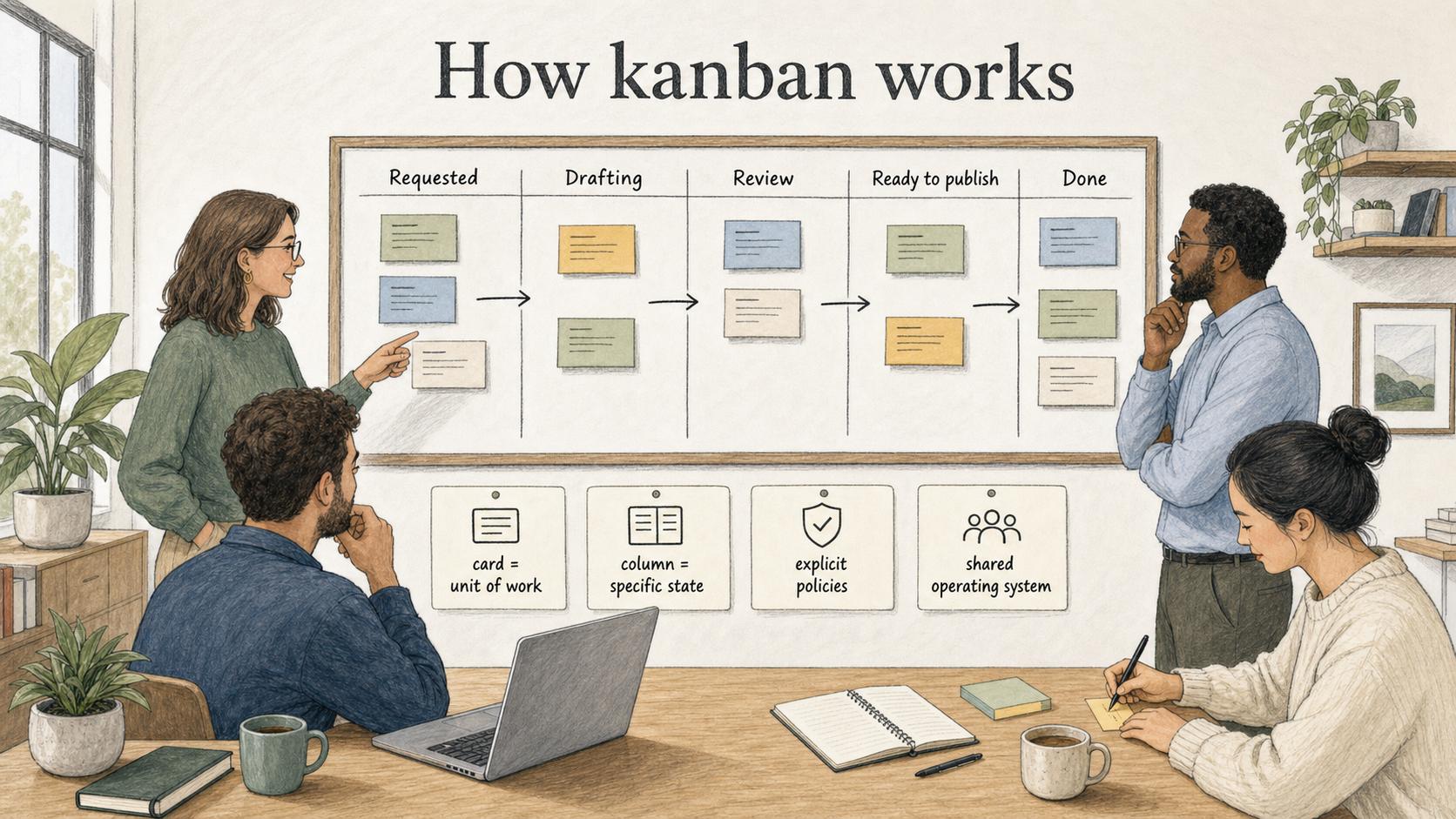
Cards represent units of work and columns represent workflow stages. The important part is the policy behind the board: a column should mean something specific. Without explicit policies, a kanban board becomes a prettier task list. 3
| Kanban signal | What it means | What to ask |
|---|---|---|
| Too many cards | Work is piling up | Is there a bottleneck or unclear handoff? |
| Blocked cards | Work depends on unresolved inputs | Who can remove the blocker? |
| Skipped stages | The board does not match real work | Should the board change? |
| Old cards | Ownership is unclear | Who owns the next action? |
Why work-in-progress limits matter
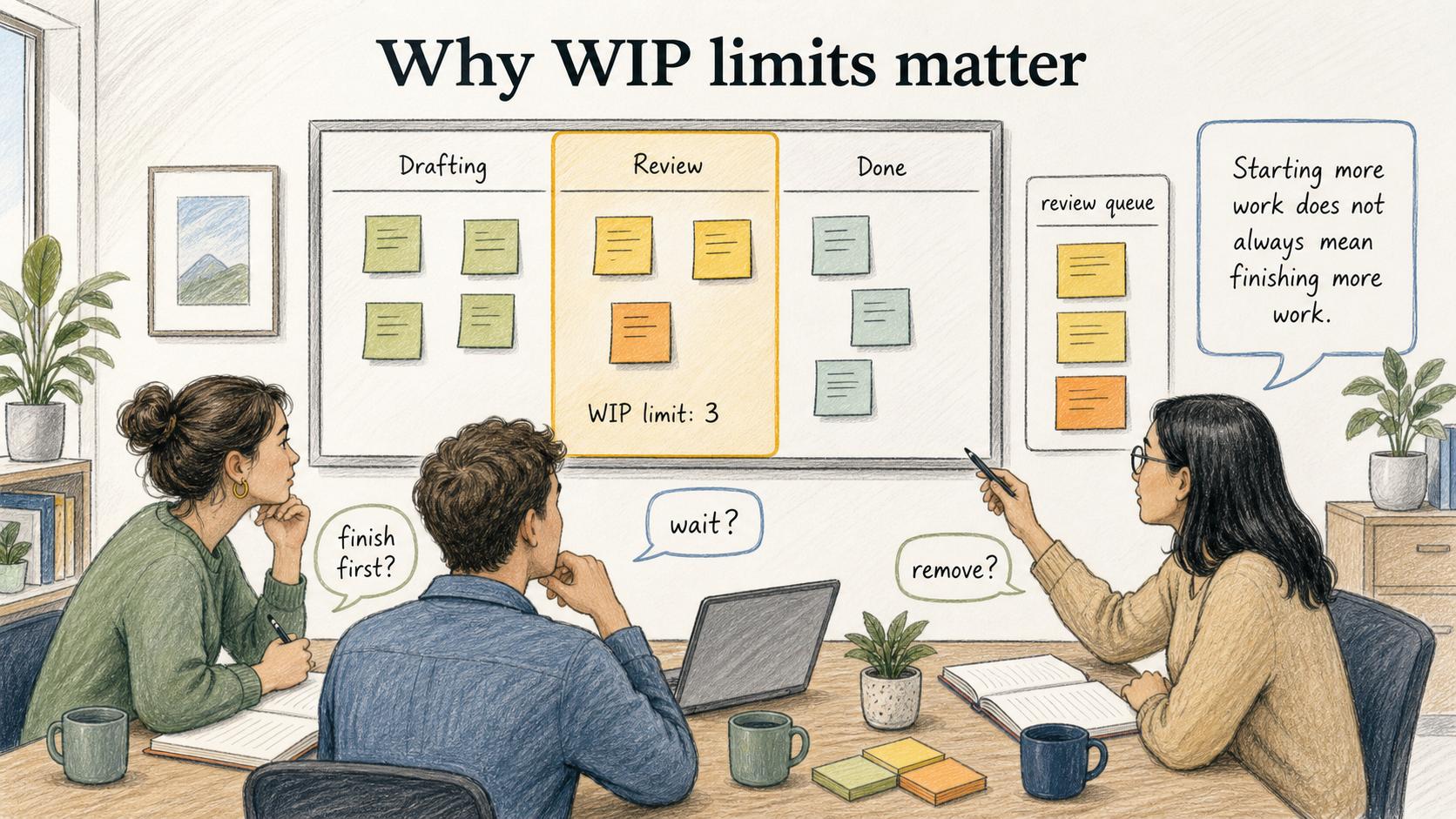
A WIP limit caps how many items can sit in a stage at once. It exposes the truth that starting more work does not always mean finishing more work. 4
When too many tasks are active, people context-switch, review queues grow, and urgent work hides behind busy work. If the board is full, decide what should finish, wait, or be removed.
Examples of kanban in team operations
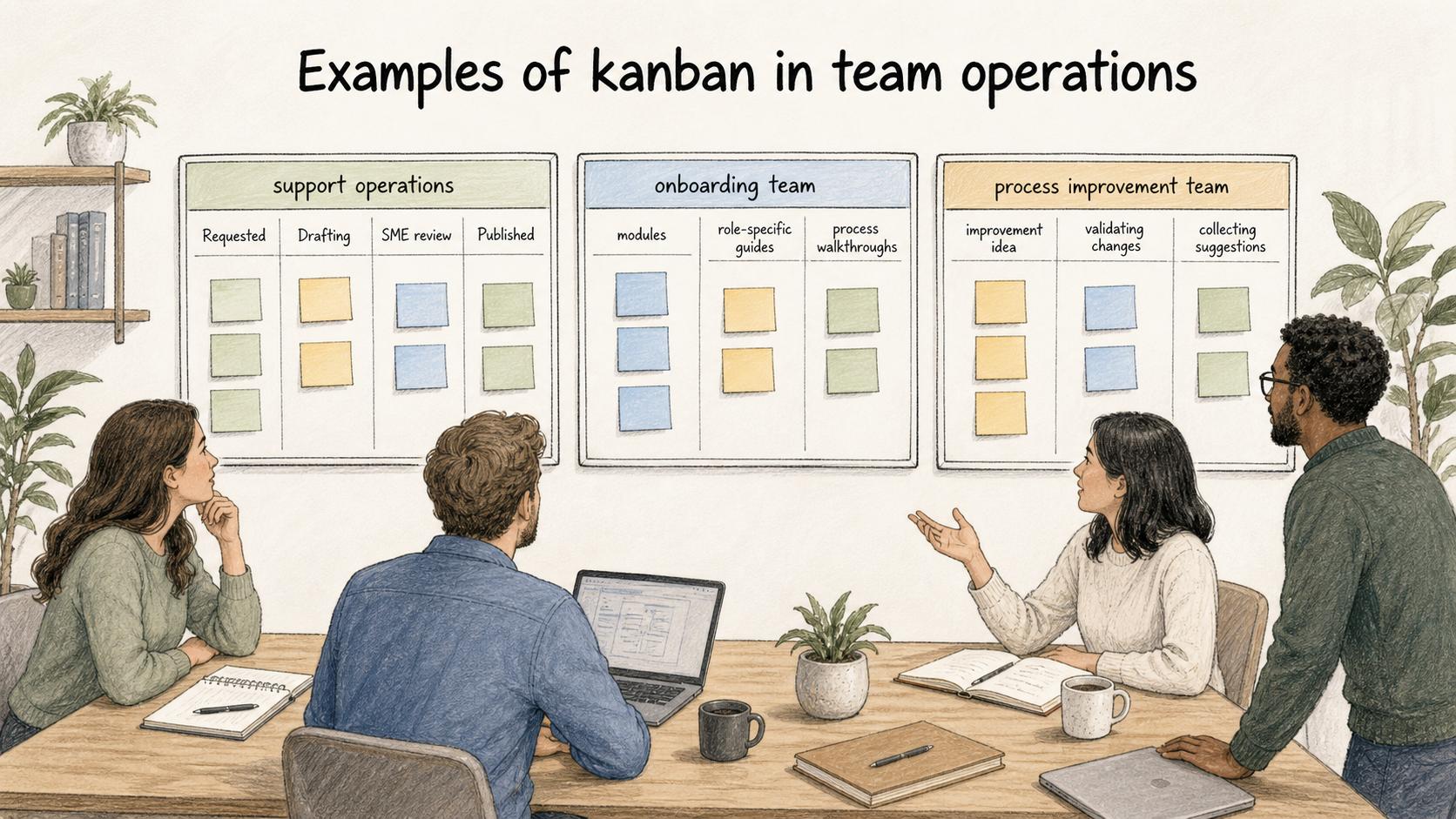
Support teams can move help-center updates from Requested to Drafting to SME review to Published. Onboarding teams can track modules and guides. Process-improvement teams can use cards for experiments. The board reveals whether the bottleneck is writing, approval, missing workflow knowledge, or capacity.
Common kanban mistakes
Do not copy columns that do not reflect real work. Avoid tracking tasks without entry and exit criteria, and do not use the board only for reporting. Teams get value when they use it to make tradeoffs, unblock work, and improve flow.
Kanban board design prompt
## Kanban board design prompt

**Glossary term:** Kanban
**Source:** Trails Glossary — trails.so/glossary/kanban

---

### 01. Design a kanban board

"Design a kanban board for [team] managing [type of work].

Context:
- Current workflow stages: [list stages if known]
- Common delays or blockers: [list problems]
- People involved: [roles]
- Definition of done: [what finished means]

Return:
- Recommended columns.
- What each column means.
- Entry and exit criteria for each column.
- Suggested WIP limits where useful.
- The first 3 bottlenecks this board should help reveal."
Documentation takeaway
Document what each column means, who owns each stage, what counts as blocked, and when work should be escalated. Review bottlenecks often reveal undocumented ownership, approval criteria, or subject-matter expectations.
Sources
- 1
Kanban University. Official Kanban Guide. kanban.university/kanban-guide/.
- 2
Lean Enterprise Institute. Pull production. www.lean.org/lexicon-terms/pull-production/.
- 3
ProKanban. The Kanban Guide. www.prokanban.org/the-kanban-guide.
- 4
Kanban Guides. The Kanban Guide. kanbanguides.org/the-kanban-guide/2020.7/pdf/kanban-guide-v2020.7.en.pdf.