
Glossary
Standard Work
 ChatGPT
 Perplexity
 Gemini
 Claude
What is standard work?
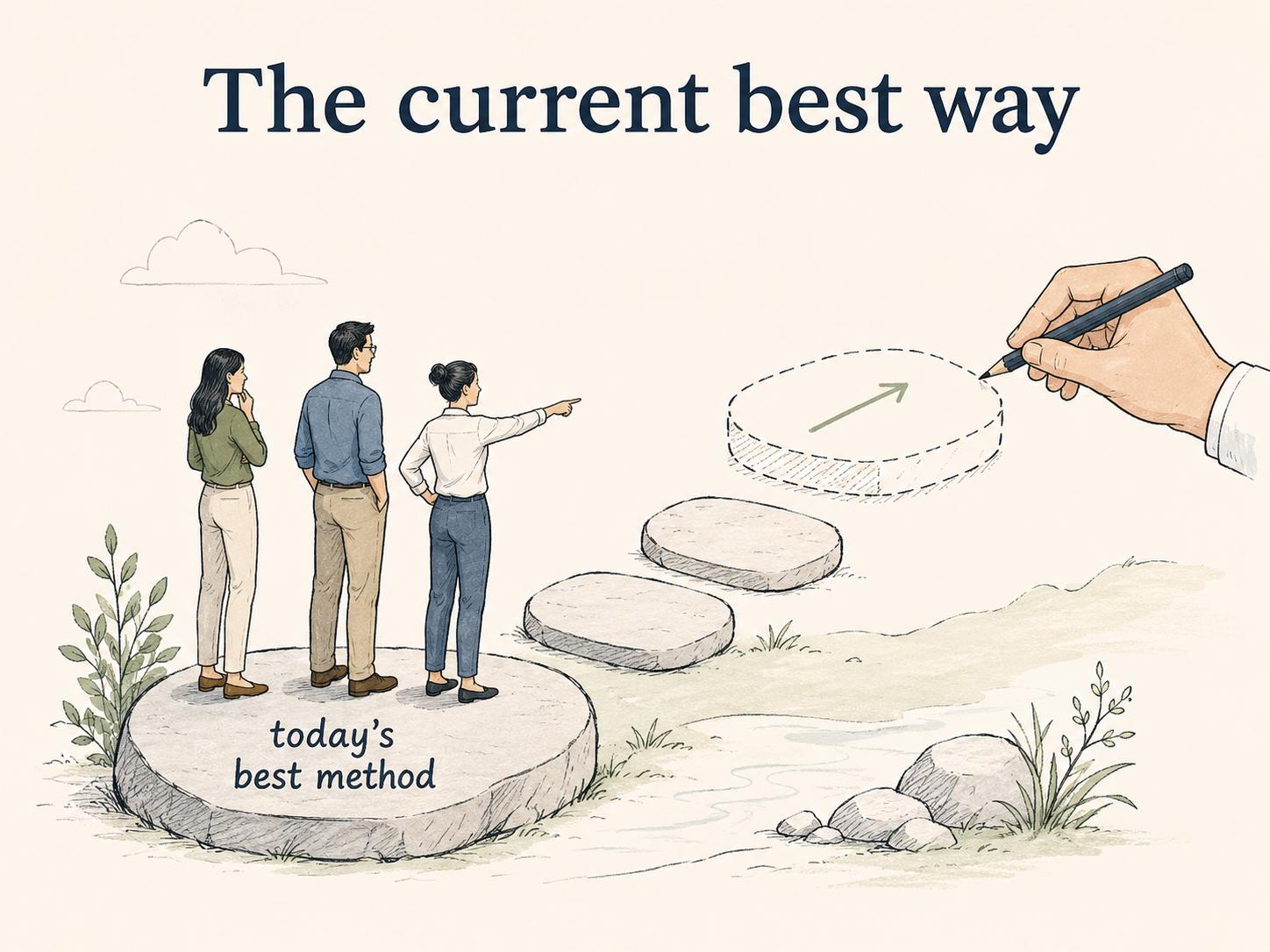
Standard work is the team's current best-known method for doing repeatable work safely, consistently, and at the expected quality level. In lean and operations contexts, it gives the team a baseline for training, spotting variation, and improving the process deliberately.1
The important word is current. Standard work should describe the best method the team knows today, not a perfect method that never changes. When the work improves, the standard should improve with it.
Why standard work matters
Without standard work, people rebuild the job from memory, habit, or whoever trained them last. One person skips a quality check, another uses a different tool, and a new hire learns a shortcut before understanding the risk.
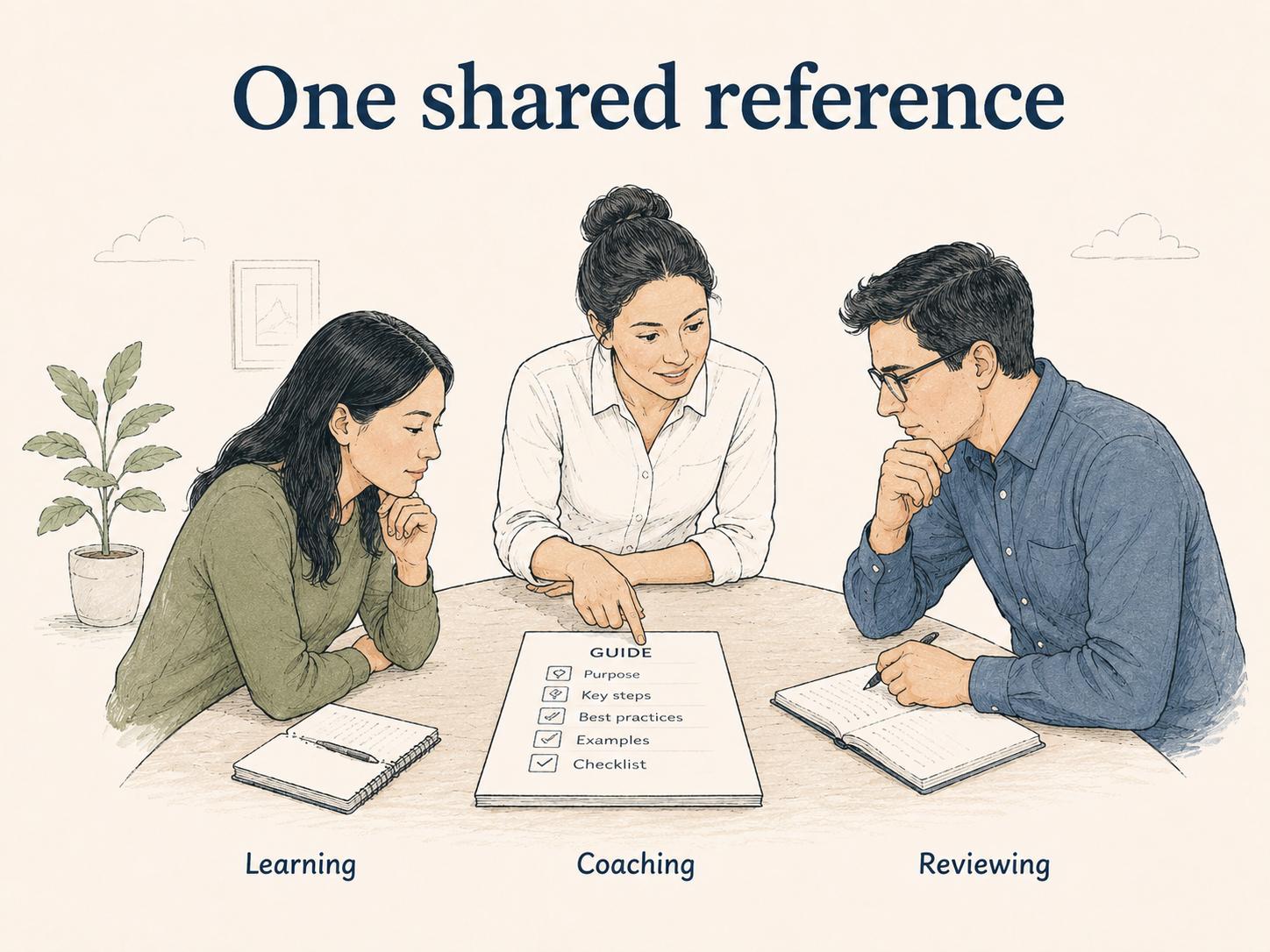
Standard work gives the team a shared reference point. Supervisors can coach against the same flow, new employees can learn the expected method, and improvement teams can inspect the work instead of debating what the work is supposed to be.2
The trap is treating standard work as control paperwork. If it reads like a script written far from the job, people will ignore it or perform it only when audited. Useful standard work is close to the actual work and easy to revise when the team finds a better method.
What standard work usually includes
Standard work is more specific than a high-level policy, but it should not document every possible thought someone might have. It should capture the details that make performance repeatable.
That usually means the work sequence, expected outcome, required tools or inputs, quality criteria, timing expectations, handoffs, and exceptions that should stop the normal flow. Some environments also need pace, takt time, safety checks, materials, layout, or visual job aids.3
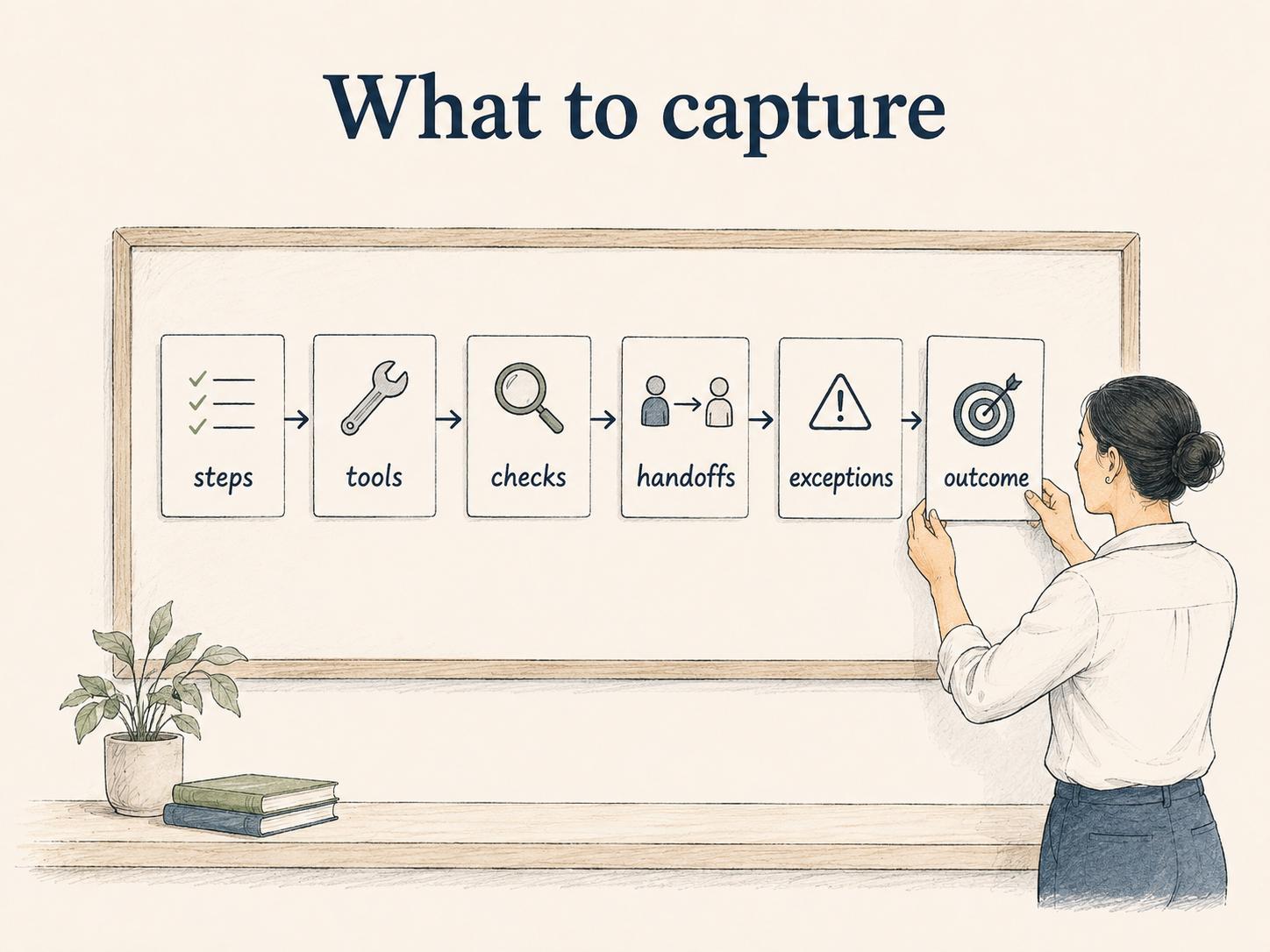
For a customer support team, standard work might define the order for verifying identity, checking account history, choosing a response template, documenting the resolution, and escalating unusual cases. For an operations team, it might define the correct sequence for an opening checklist, inventory check, or invoice review.
The format can vary. The standard just needs to be specific enough to train from and concrete enough to improve.
Standard work vs SOP vs work instruction
Standard work, SOPs, and work instructions overlap, but they answer different questions.
An SOP explains a repeatable process at a governance level: purpose, scope, roles, triggers, steps, exceptions, and review cadence. A work instruction explains how to perform a specific task in more detail. Standard work names the operational baseline: this is the current best way we do the work.
A standard work document may live inside an SOP, link to a work instruction, or appear as a visual job aid at the point of work. The format matters less than whether people can use it, teach from it, and improve it.
How to document standard work
Start with observation, not a blank template. Watch the work being done by someone who understands the job. Ask where errors happen, what must be true before the work starts, and which decisions cannot be left to memory.
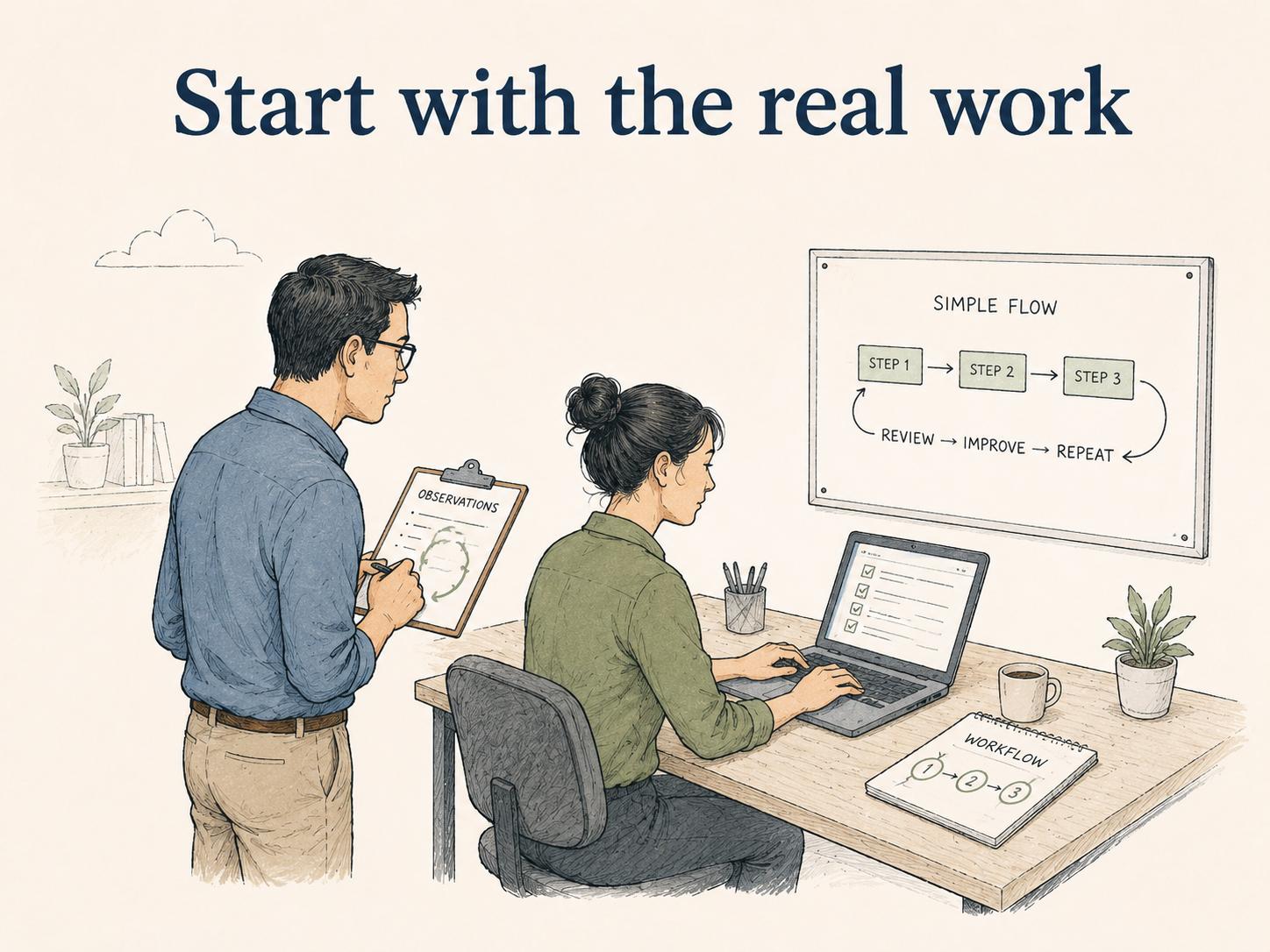
Then write the standard around the real flow. Name the process, outcome, trigger, owner, and finish point. Capture the critical steps in order. Add the checks, timing expectations, tools, handoffs, and exceptions that prevent the work from drifting.
Test the draft with someone who was not part of writing it. Assign an owner and a review trigger. That review step keeps standard work from turning stale; if the team improves the process but the guide still describes the old method, the documentation starts teaching the wrong work.
AI-ready standard work prompt
## Standard Work Draft Prompt

**Glossary term:** Standard work
**Source:** Trails Glossary — trails.so/glossary/standard-work

---

### 01. Create a standard work draft

"Create a standard work draft for [process] used by [team].

Context:
- Process goal: [outcome]
- Trigger: [what starts the work]
- Finish point: [what counts as done]
- Role responsible: [owner]
- Tools or systems used: [tools]
- Known exceptions: [exceptions]

Output:
1. Plain-English definition of the work
2. Step-by-step work sequence
3. Quality checks or decision points
4. Required tools, materials, or information
5. Escalation conditions
6. Common mistakes to avoid
7. Review owner and suggested review trigger

Keep the draft practical enough for a new employee to follow, but flag assumptions that need confirmation from a subject matter expert."
Common mistakes
One mistake is treating standard work as "the one perfect way forever." A better framing is "the best known way until we learn something better." That leaves room for improvement while still preventing every person from inventing their own method.
Another mistake is documenting only the happy path. Standard work should show the normal flow, but it also needs clear stop signs: when to escalate, when to pause, and when a different process applies.
A third mistake is burying standard work in a document no one opens. Put the guidance where the work happens: a checklist, step-by-step guide, internal wiki page, visual job aid, or short training video.
Documentation takeaway
Standard work gives improvement a baseline. When people agree on the current best method, variation becomes easier to see, training becomes more consistent, and changes can be tested against a shared reference.
The best standard work is specific, observable, and revisable. It should be close enough to the real work that employees trust it, and light enough to update when the process gets better.
How Trails helps
Trails captures repeatable work as someone performs it, then turns that workflow into a polished step-by-step guide. For standard work, that means the first draft can start from the real process instead of from memory.
Teams can also create an AI-narrated video version for onboarding, training, or sharing changes across locations.
- Leader standard work
- Standard operating procedure
- Work instruction
- Digital work instruction
- Process map
- Process owner
Sources
- 1
Lean Enterprise Institute. Standardized Work. Lean Enterprise Institute. www.lean.org/lexicon-terms/standardized-work/. Accessed July 6, 2026.
- 2
American Society for Quality. Standardized Work. ASQ. asq.org/quality-resources/standardized-work. Accessed July 6, 2026.
- 3
Toyota Material Handling. Standardized Work: The Foundation for Continuous Improvement. Toyota Material Handling. www.toyotaforklift.com/blog/standardized-work-the-foundation-for-continuous-improvement. Accessed July 6, 2026.