
Glossary
5S Methodology
 ChatGPT
 Perplexity
 Gemini
 Claude
5S methodology overview
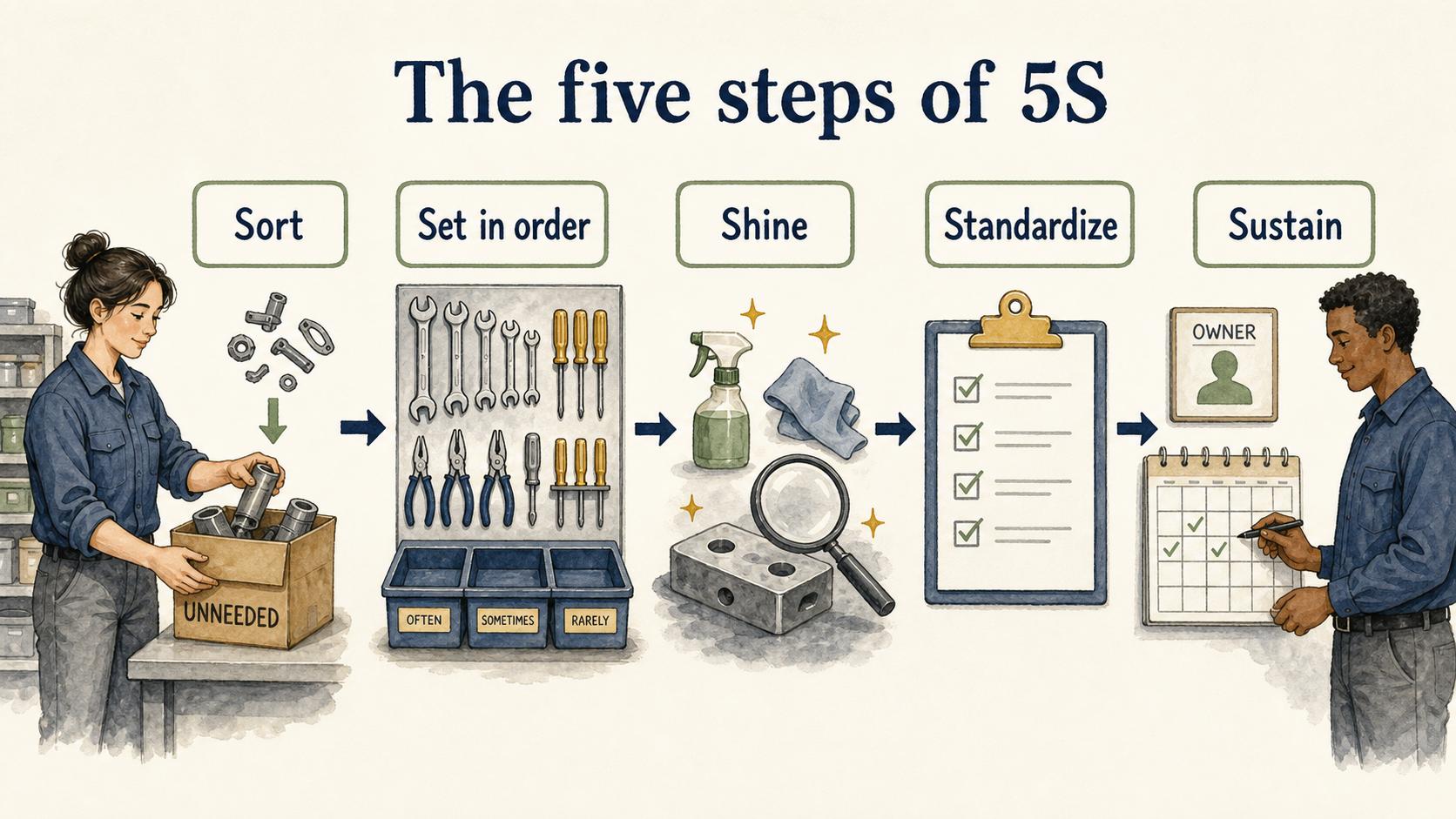
The 5S methodology is a lean workplace organization method built around five steps: Sort, Set in order, Shine, Standardize, and Sustain. 1 Teams use 5S to make a workspace easier to use, safer to navigate, simpler to inspect, and more consistent over time.
5S is often associated with manufacturing and physical workspaces, but the same thinking can apply to offices, service operations, support teams, shared drives, software tools, and documentation systems. EPA describes 5S as reducing waste and optimizing productivity through orderly workspaces and visual cues that create more consistent operational results. 2 The core idea is simple: remove what does not belong, arrange what remains, make problems visible, document the best current method, and keep improving it.
What the 5S methodology is for
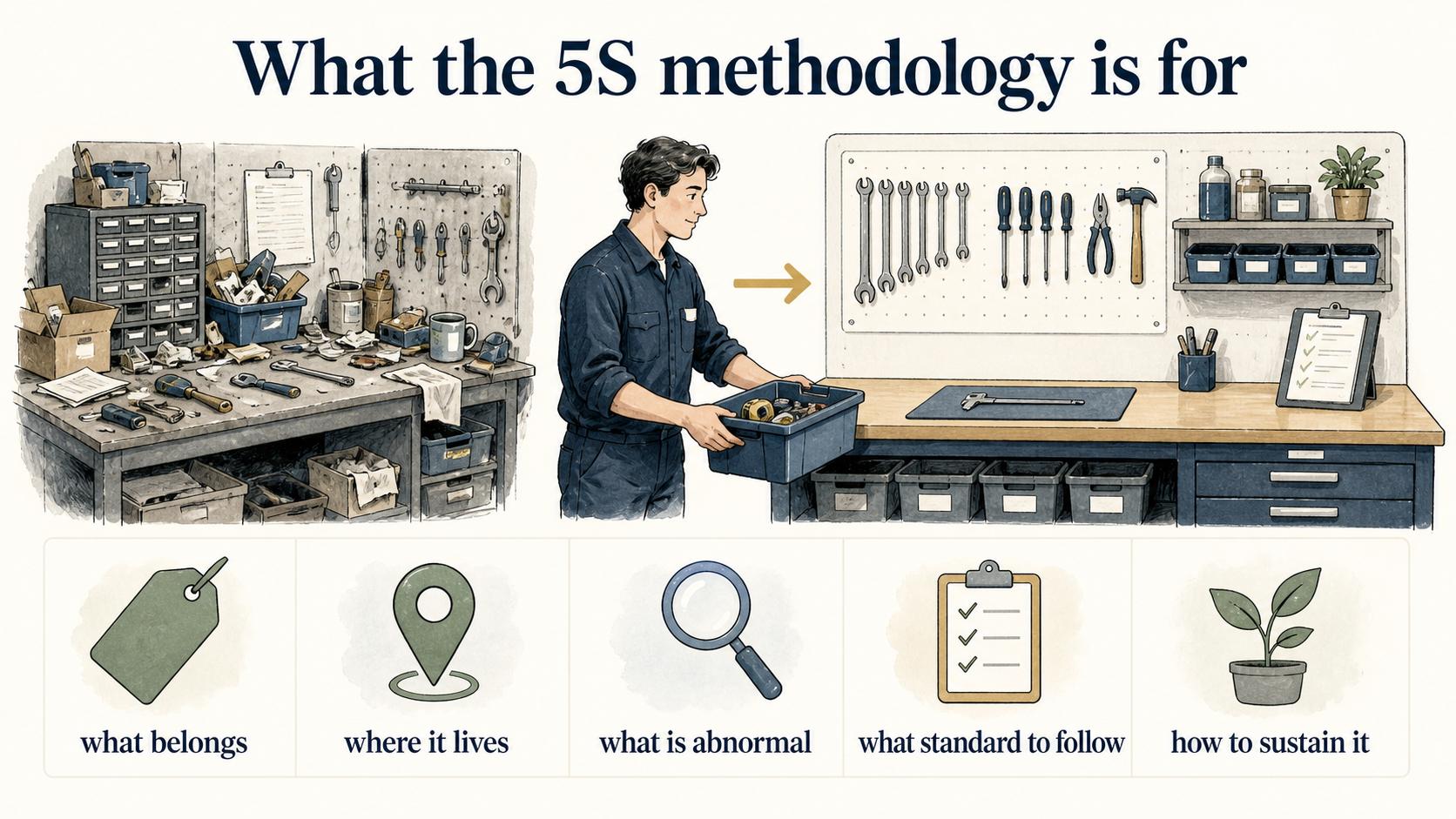
5S is not just a cleanup exercise. A cleanup makes a space look better for a while. 5S changes how a team designs, uses, and maintains a work environment. Workplace Safety and Health Council guidance similarly frames 5S as a systematic approach to good housekeeping, continual improvement, and enhanced productivity. 3
The method helps teams answer practical questions:
- What belongs in this workspace, process, or system?
- Where should each item, tool, file, or instruction live?
- How can we tell when something is missing, dirty, broken, outdated, or out of place?
- What standard should people follow after the improvement event ends?
- How will the team keep the standard alive when work gets busy?
That final question is the hard one. Many teams can run a good 5S event. Fewer teams build the habits, documentation, and ownership needed to sustain it.
The five steps of 5S
| Step | Meaning | What teams often miss |
|---|---|---|
| Sort | Remove items, files, steps, or tools that are not needed for the work | Deciding who has authority to remove or archive borderline items |
| Set in order | Arrange the remaining items so they are easy to find, use, and return | Designing around the work sequence, not just making things look neat |
| Shine | Clean, inspect, and make abnormal conditions easier to see | Treating cleaning as inspection, not cosmetic maintenance |
| Standardize | Create shared rules, visuals, labels, procedures, or checklists | Documenting the current best method clearly enough that others can follow it |
| Sustain | Build routines that keep the standard working over time | Assigning ownership and review rhythm instead of relying on enthusiasm |
The sequence matters. If a team tries to standardize before it has sorted and organized the work, it may preserve clutter. If it shines without standardizing, the workspace may drift back. If it standardizes without sustainment, the improvement becomes a one-time event. Lean Construction Institute guidance reinforces that 5S covers materials, tools, information, visual controls, file-naming structures, and sustainment routines. 4
5S examples
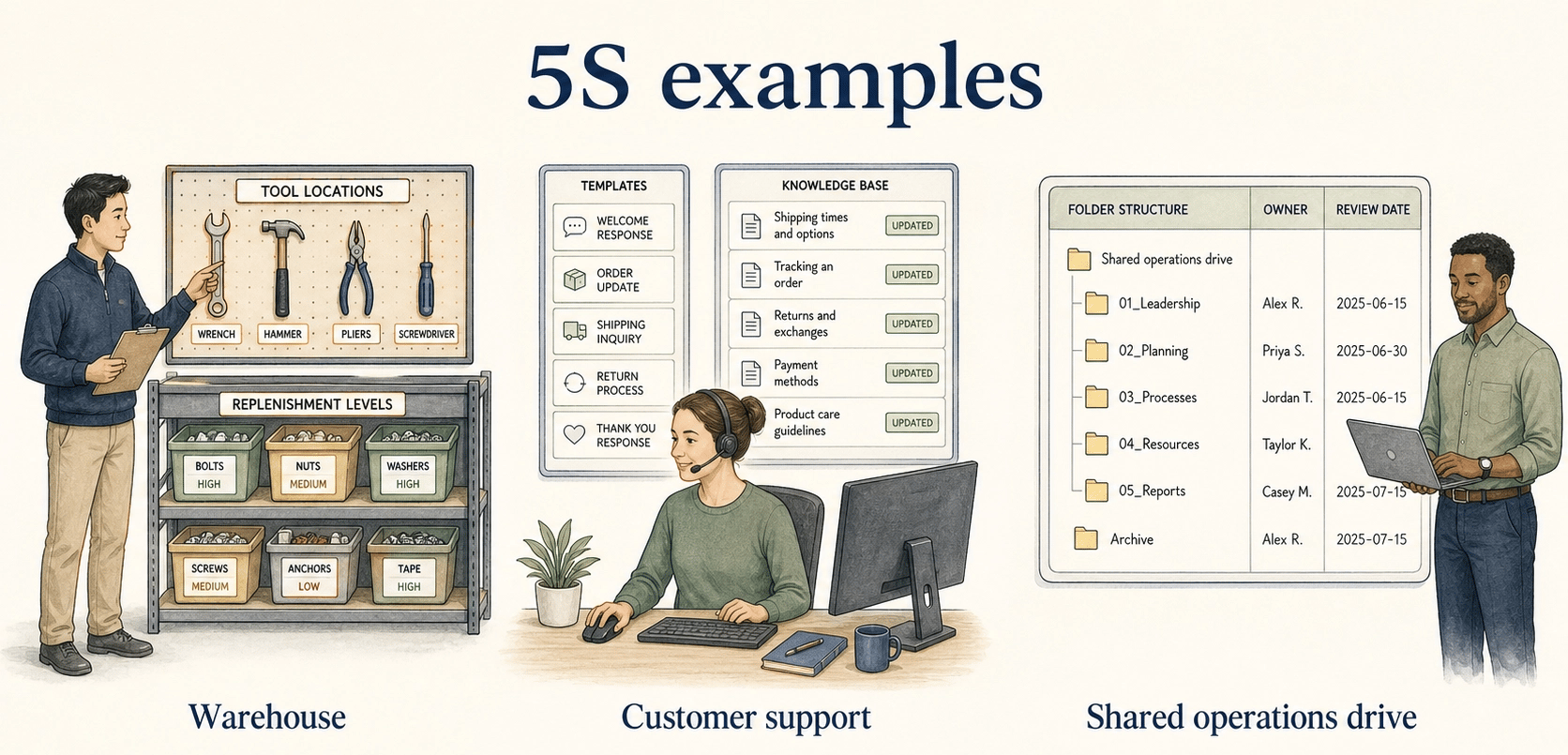
In a warehouse, 5S might mean removing obsolete packing materials, labeling tool locations, marking replenishment levels, inspecting workstations daily, and assigning ownership for each zone.
In a customer support team, 5S might mean archiving outdated macros, organizing current templates by issue type, cleaning up duplicate knowledge base articles, standardizing naming conventions, and reviewing top-used answers monthly.
In a shared operations drive, 5S might mean deleting duplicate files, moving active SOPs into one folder structure, naming documents consistently, adding owners and review dates, and creating a recurring audit so people do not rebuild private folders.
The non-obvious lesson is that 5S is about findability and trust. A tool, document, or instruction is only useful if people can find the right version quickly and believe it is current.
How 5S connects to documentation
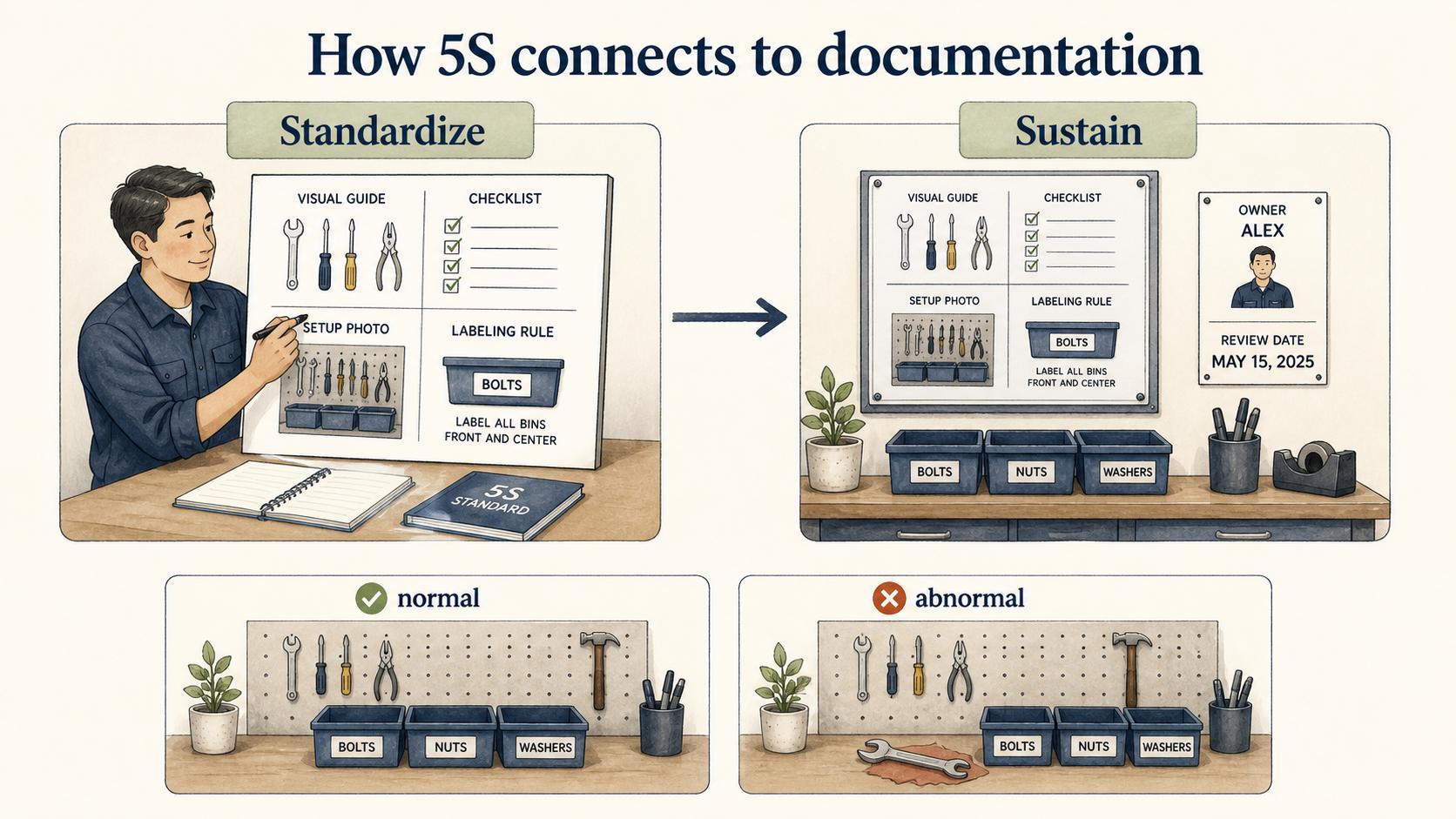
Documentation is most important in the last two S's: Standardize and Sustain. After a team improves a workspace or process, it needs a lightweight way to show the new standard. That might be a visual guide, checklist, SOP, setup photo, labeling rule, folder map, or short training video.
The documentation should be close to the work. If the standard lives in a binder nobody opens or a file path nobody remembers, the team will revert to memory. In a physical workspace, the standard might be posted at the workstation. In a digital workflow, it might live beside the tool, template, or process that people use every day.
Good 5S documentation also names what abnormal looks like. For example, a clean workstation photo is helpful, but a better standard explains what is missing, misplaced, expired, duplicated, or unsafe. For digital systems, that might mean showing what counts as an outdated SOP, duplicate article, stale folder, or unsupported workaround.
Common mistakes
One common mistake is treating 5S as a tidiness campaign. Neatness can be a side effect, but the goal is better work. If an item is beautifully labeled but rarely used, it may still be waste.
Another mistake is making standards too heavy. If every small improvement requires a long document, teams will avoid updating the standard. The right artifact depends on the work: a label, checklist, short guide, photo, or one-minute video may be enough.
A third mistake is skipping ownership. Sustainment needs someone responsible for review, not just a general expectation that everyone will maintain the system. Shared ownership often becomes no ownership.
How Trails helps
5S improvements often need quick documentation so the new standard does not disappear after the cleanup or improvement event. Trails can capture a workflow as someone performs it, turn it into a polished step-by-step guide, and create an AI-narrated video version for training or sharing. That helps teams document the current best way to set up, inspect, and maintain a repeatable process.
FAQ
What do the five S's stand for?
They commonly stand for Sort, Set in order, Shine, Standardize, and Sustain.
Is 5S only for manufacturing?
No. It started in lean operational contexts, but the same logic can apply to offices, software systems, service workflows, support content, and shared documentation.
What is the hardest part of 5S?
Sustain is usually the hardest part. It requires ownership, review habits, and standards that are easy enough for people to maintain during normal work.
Sources
- 1
ASQ. Five S Tutorial. asq.org/quality-resources/five-s-tutorial.
- 2
EPA. Lean Thinking and Methods: 5S. www.epa.gov/sustainability/lean-thinking-and-methods-5s.
- 3
Workplace Safety and Health Council. Workplace Housekeeping. www.tal.sg/wshc/topics/housekeeping/workplace-housekeeping.
- 4
Lean Construction Institute. 5S in Lean. leanconstruction.org/lean-topics/5s/.