
Glossary
HR Manager
 ChatGPT
 Perplexity
 Gemini
 Claude
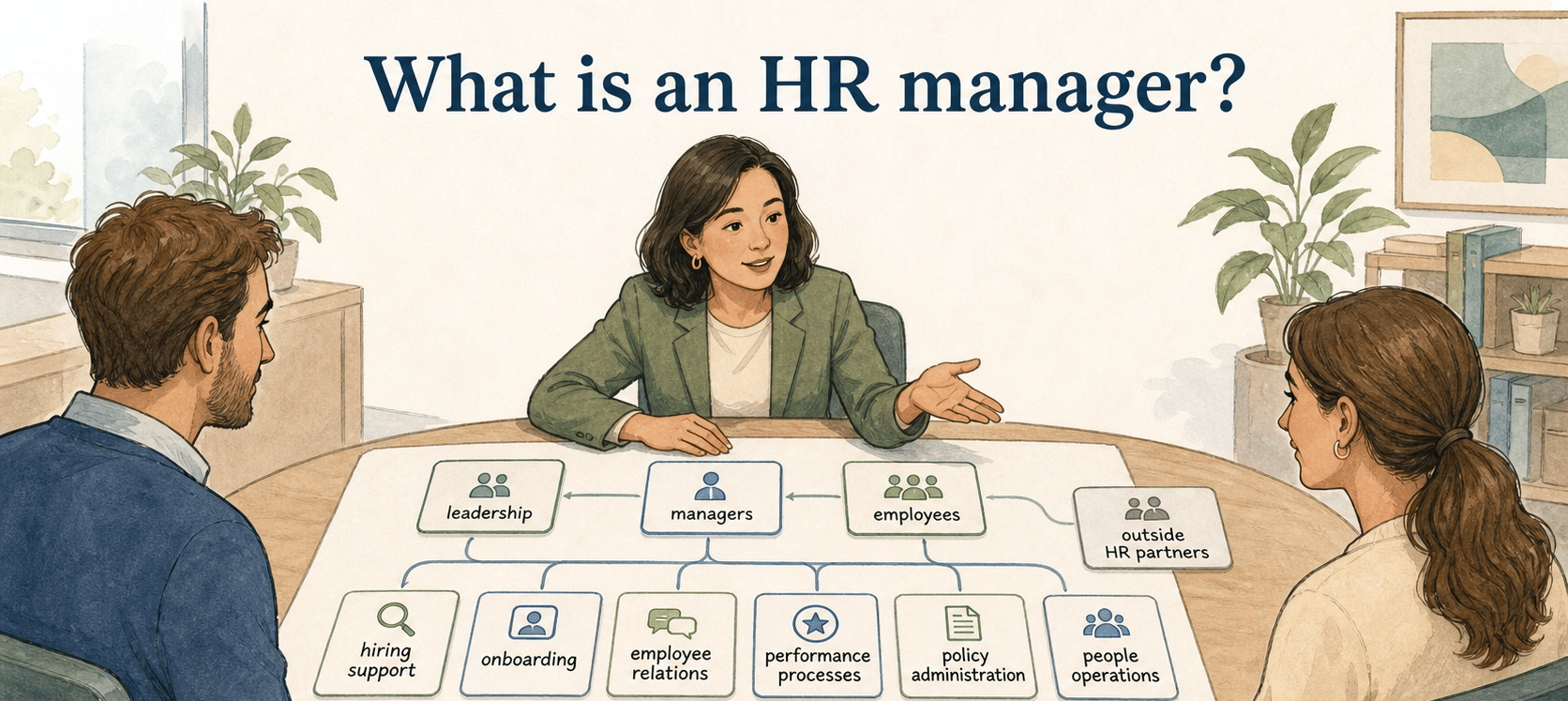
What is an HR manager?
An HR manager leads core human resources work inside an organization, including hiring support, onboarding, employee relations, performance processes, policy administration, and people operations. 1 The role usually sits between company leadership, managers, employees, and outside HR partners.
A strong HR manager does more than answer policy questions. They turn people-related expectations into processes that employees and managers can follow without guessing.
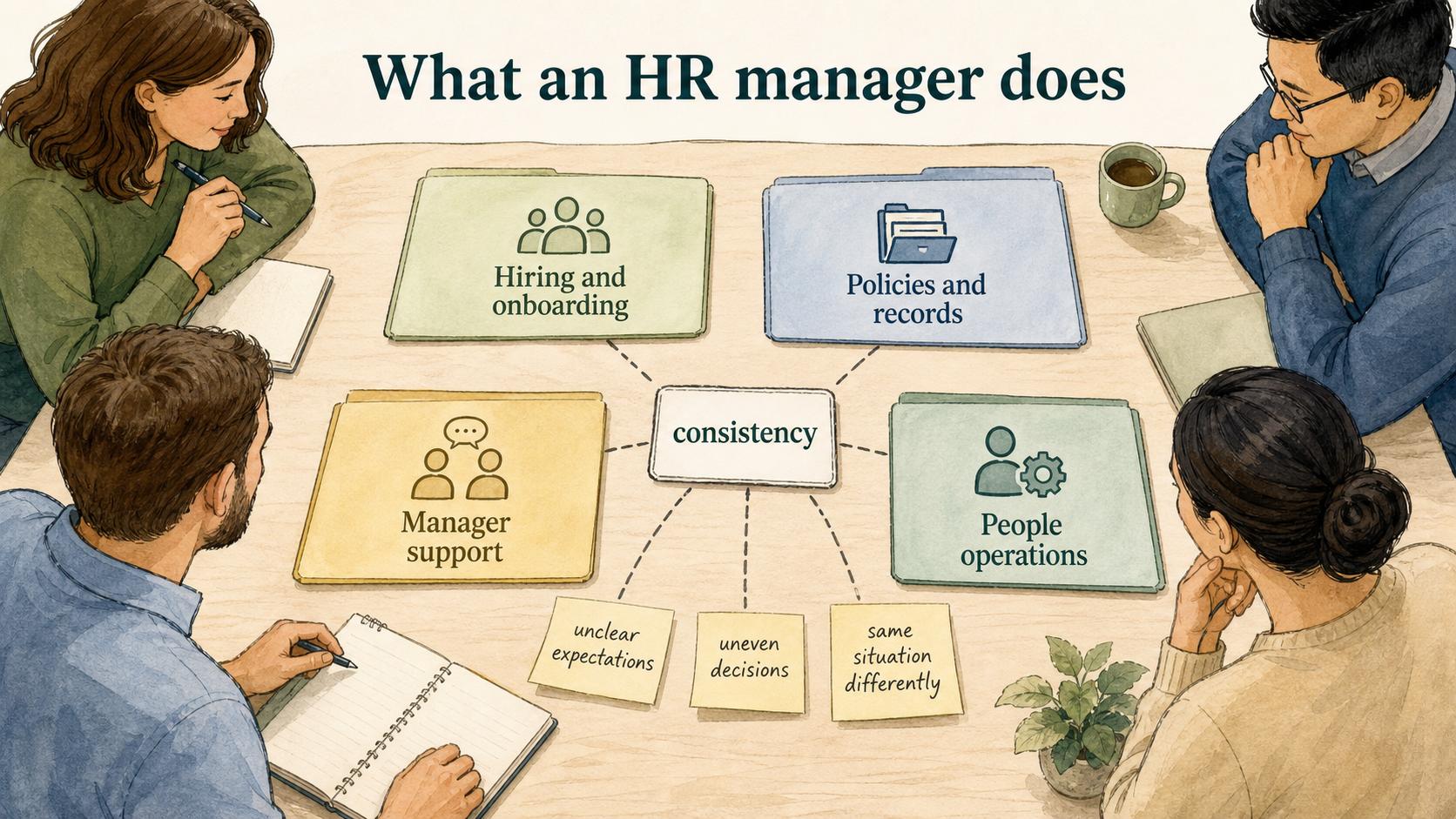
What an HR manager does
The exact scope depends on company size. In a small business, an HR manager may own nearly every people process. In a larger company, they may manage a team, partner with specialists, or support a specific business unit.
- Hiring and onboarding: Recruiting coordination, offer steps, new-hire setup, and employee orientation.
- Policies and records: Handbook updates, policy administration, HR recordkeeping, and compliance reminders.
- Manager support: Performance review cycles, employee relations intake, escalation paths, and manager enablement.
- People operations: Benefits support, training coordination, and process documentation.
The hidden work is consistency. A strong HR manager reduces ambiguity by making the process visible before there is a problem.
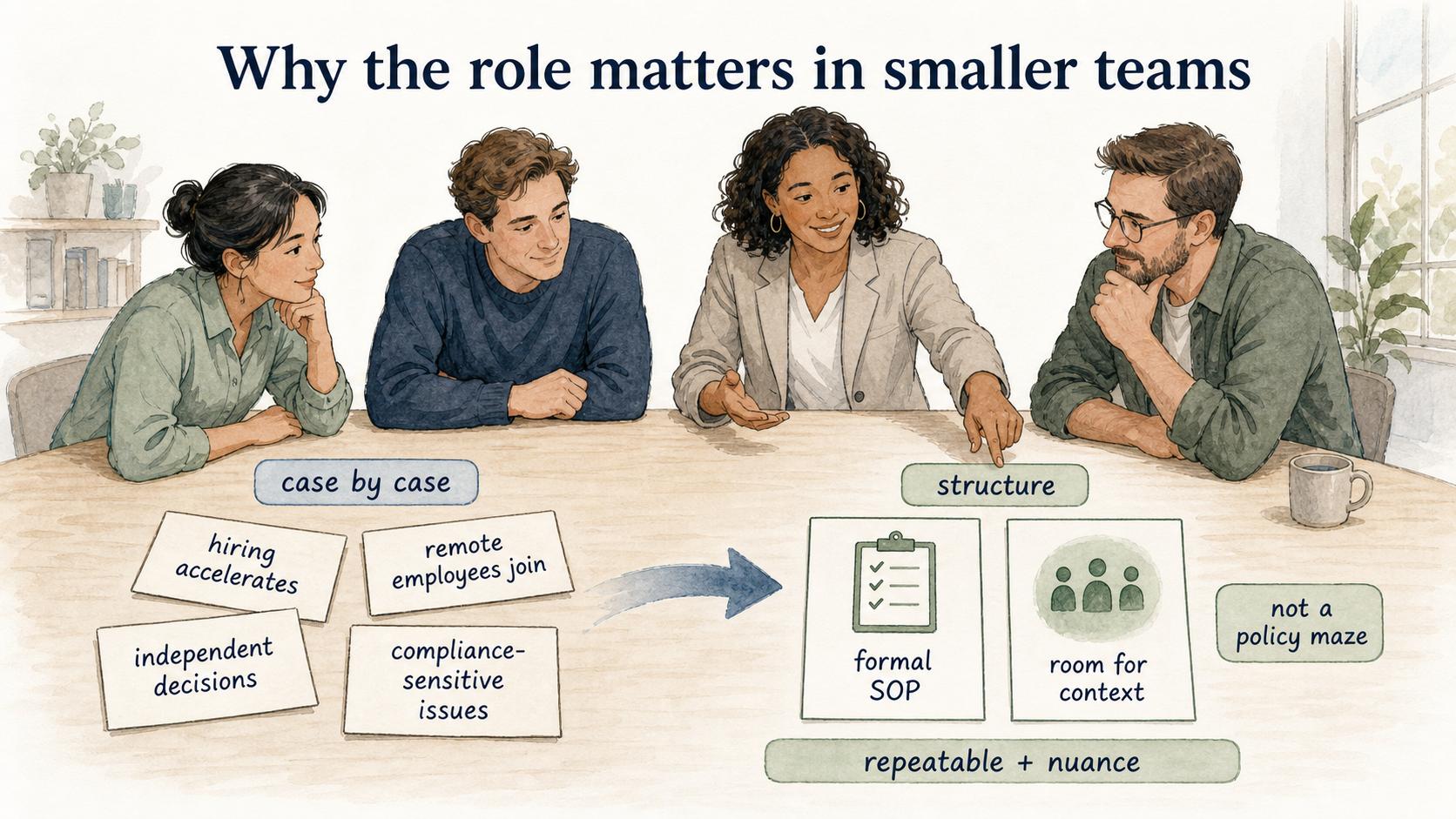
Why the role matters in smaller teams
Small teams often wait too long to formalize HR processes. A founder or office manager may answer questions case by case until hiring accelerates, remote employees join, managers make independent decisions, or compliance-sensitive issues appear. 2
An HR manager brings structure without turning the company into a policy maze. A background-check workflow needs clear steps and ownership; a difficult employee conversation needs preparation, escalation criteria, and documentation expectations, but it should not become a script.
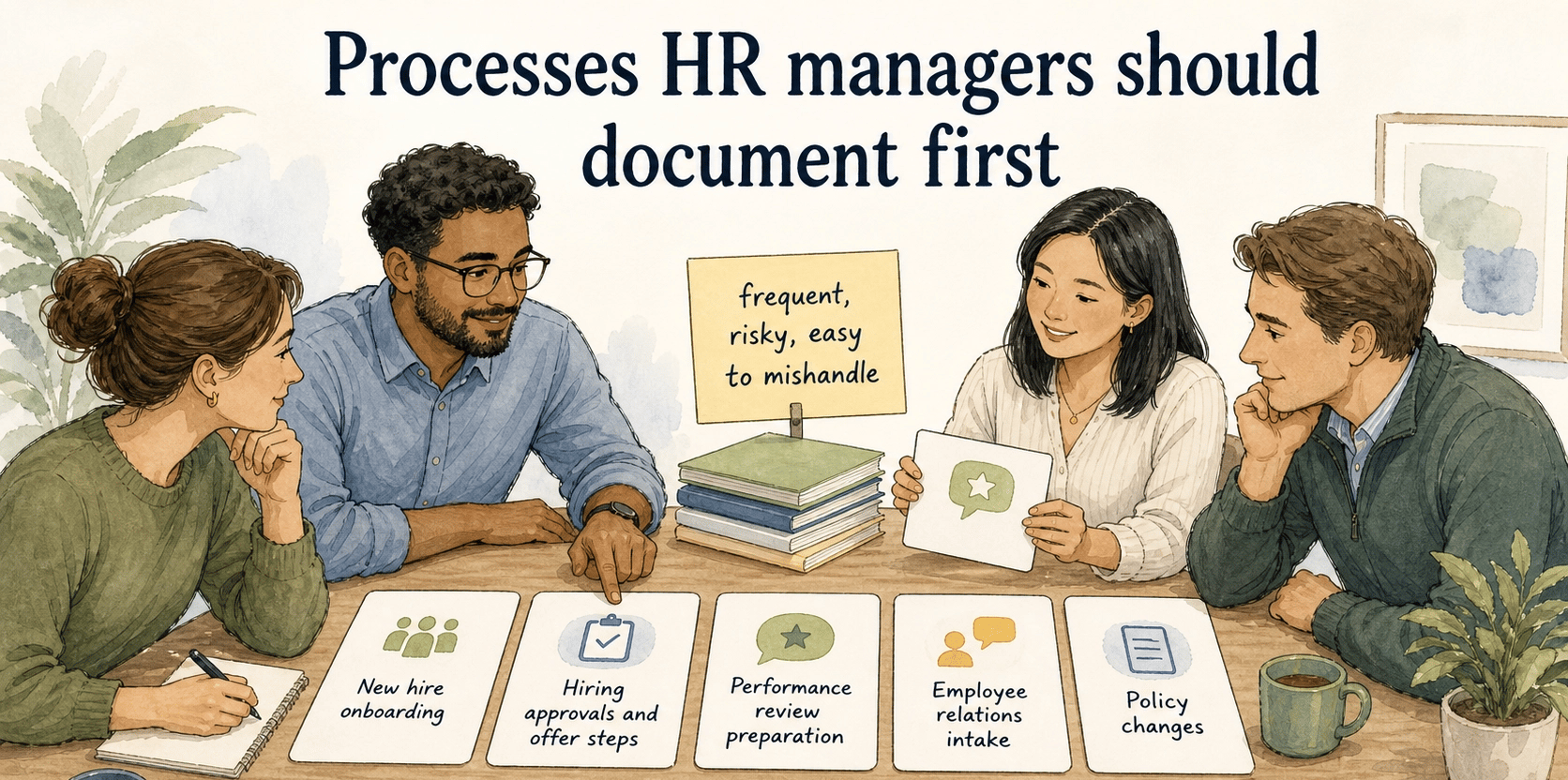
Processes HR managers should document first
HR documentation should not start with a giant handbook rewrite. Start with workflows that are frequent, risky, or easy for managers to mishandle.
- New-hire onboarding. Capture handoffs between recruiting, IT, payroll, the hiring manager, and the employee.3
- Hiring approvals and offer steps. Document headcount, compensation, offer-letter, and background-check approvals.
- Performance review preparation. Give managers deadlines, rating guidance, calibration expectations, and examples of useful feedback.
- Employee relations intake. Define intake, escalation criteria, and recordkeeping expectations.4
- Policy changes. Define who drafts, reviews, approves, announces, and archives the old version.
Practical checklist for HR managers
Use this diagnostic to decide whether an HR process needs better documentation:
- Do managers ask the same question more than twice?
- Would two managers handle the same situation differently today?
- Is there a handoff between HR, finance, IT, legal, or department leaders?
- Could a missed step affect pay, access, compliance, or employee trust?
- Does the process depend on one person's memory?
If the answer is yes to several of these, the process probably needs a guide, SOP, checklist, or decision tree. Document repeatable parts first so HR judgment is not spent reconstructing the same workflow every week.
How Trails helps
Many HR processes are practical workflows: setting up a new hire, running an onboarding checklist, updating an employee record, preparing a performance review packet, or publishing a policy update. Trails helps HR managers capture those workflows, turn them into polished guides, and create AI-narrated video versions for training and manager enablement.
FAQ
What is the main responsibility of an HR manager?
To keep core people operations running consistently, including hiring support, onboarding, employee relations, policies, performance processes, training coordination, and manager support.
Is an HR manager the same as an HR generalist?
Not always. An HR generalist often handles a wide range of tasks, while an HR manager usually owns the system, priorities, and quality of HR work. In smaller organizations, one person may perform both roles.
What should a new HR manager document first?
Start with high-frequency or high-risk workflows: onboarding, hiring approvals, performance reviews, policy updates, employee-relations intake, and cross-functional handoffs.
- L&D manager
- Onboarding specialist
- Performance review SOP
- Employee handbook
- Employee onboarding
- HR standard operating procedures
- Hiring SOP
Sources
- 1
Bureau of Labor Statistics. Human Resources Managers. www.bls.gov/ooh/management/human-resources-managers.htm.
- 2
Gallup. Employees Have a Lot to Say About Their Managers. www.gallup.com/workplace/236570/employees-lot-managers.aspx.
- 3
NIH. Structured Onboarding. pmc.ncbi.nlm.nih.gov/articles/PMC6718493/.
- 4
EEOC. Summary of Selected Recordkeeping Obligations. www.eeoc.gov/employers/summary-selected-recordkeeping-obligations-29-cfr-part-1602.