
Glossary
Project Manager
 ChatGPT
 Perplexity
 Gemini
 Claude
What is a project manager?
A project manager coordinates a project from agreed goal to delivered outcome. PMI describes project managers as responsible for goals and scope, tasks, resources, stakeholders, blockers, risks, documentation, and delivery quality. 1
In practice, the PM turns scattered work into a visible delivery system: scope, owners, milestones, risks, decisions, and changes all have a place.
The role gets messy when the PM becomes the default approver, subject expert, note-taker, and task owner. A good project manager keeps accountability visible so the right people can decide, trade off, and act before small misses become expensive surprises.
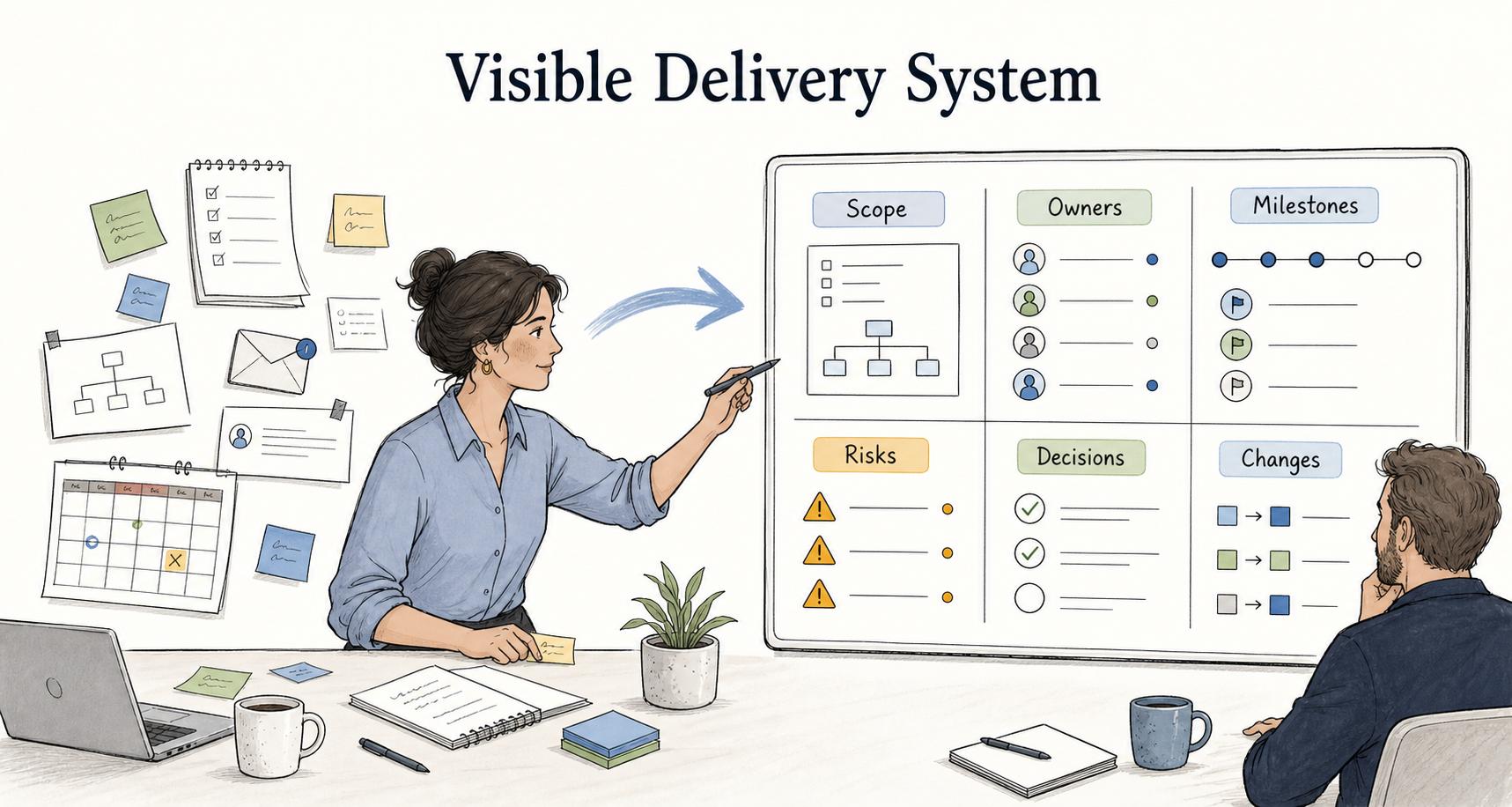
What does a project manager own?
A project manager owns coordination. They don't own every business decision or every task. When the PM quietly absorbs those jobs, the project may keep moving, but accountability gets blurry.
In most teams, the project manager is responsible for:
- Translating the project goal into a plan people can actually use.
- Defining scope, milestones, owners, dependencies, and due dates.
- Keeping risks, blockers, decisions, and changes in one place.
- Running the project cadence, from kickoff through closeout.
- Matching the level of communication to executives, contributors, customers, and vendors.
- Preserving enough project history for handoff, audit, or future reuse.
The PM doesn't need to be the deepest expert in every task. They do need to spot missing expertise, stuck decisions, and fake dependencies early. GAO schedule guidance treats sequencing, resource assignment, progress updates, and schedule risk analysis as best practices for reliable project schedules. 2
Project manager vs. related roles
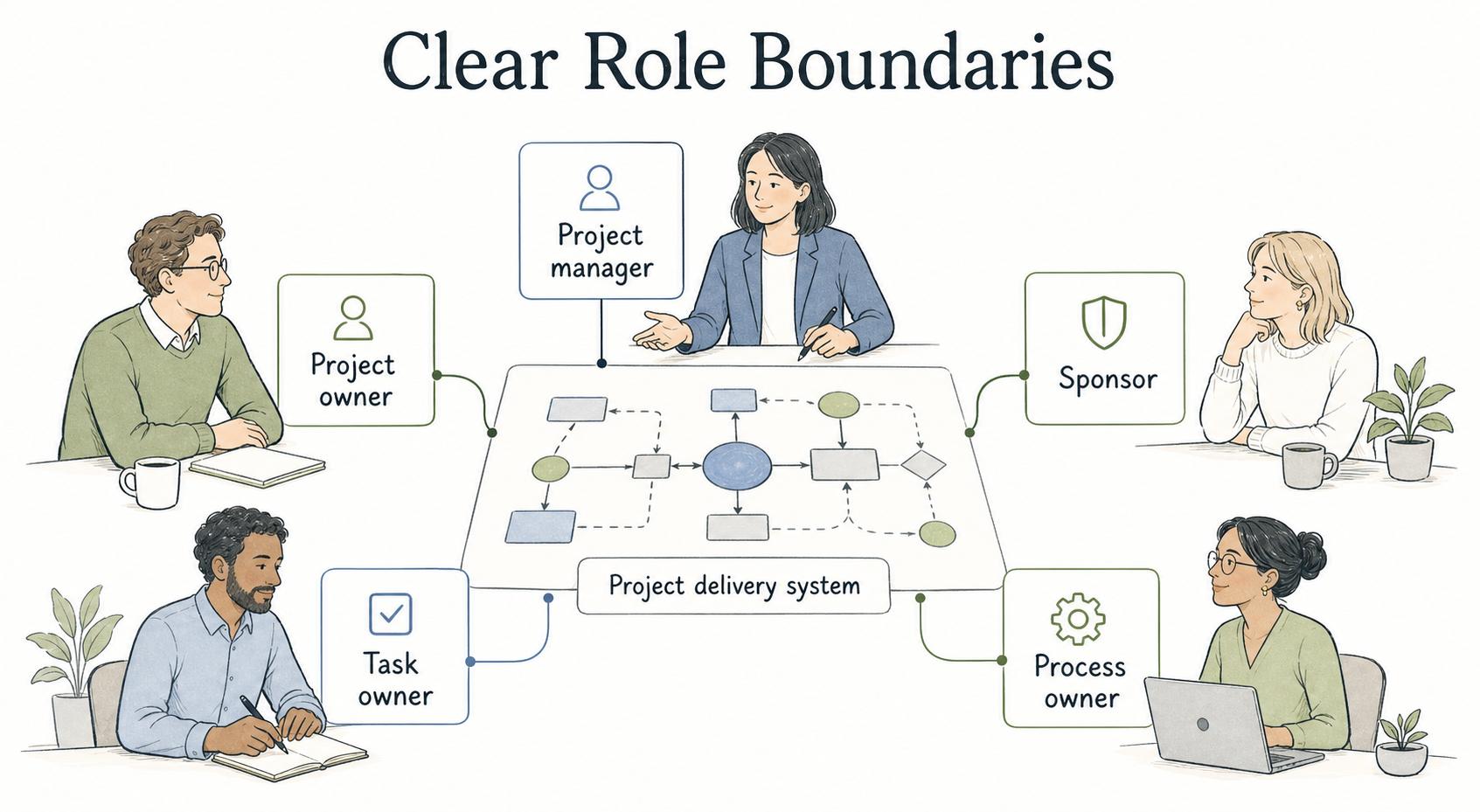
Project work gets messy when every role is called an owner. These boundaries help keep the work honest:
| Role | Main responsibility | Practical question |
|---|---|---|
| Project manager | Coordinates the project delivery system | Are the plan, owners, risks, and decisions clear? |
| Project owner | Owns the business outcome | Is this still the right project result? |
| Sponsor | Provides authority, resources, and priority | Should this project get support or escalation? |
| Task owner | Completes a defined piece of work | What am I accountable for finishing? |
| Process owner | Maintains the repeatable workflow after the project ends | Will this keep working once the project is over? |
The project manager can influence all of these areas, but influence is not the same as ownership. The cleaner the role boundaries, the easier it is to escalate without blame and hand off without losing context.
What documents does a project manager need?
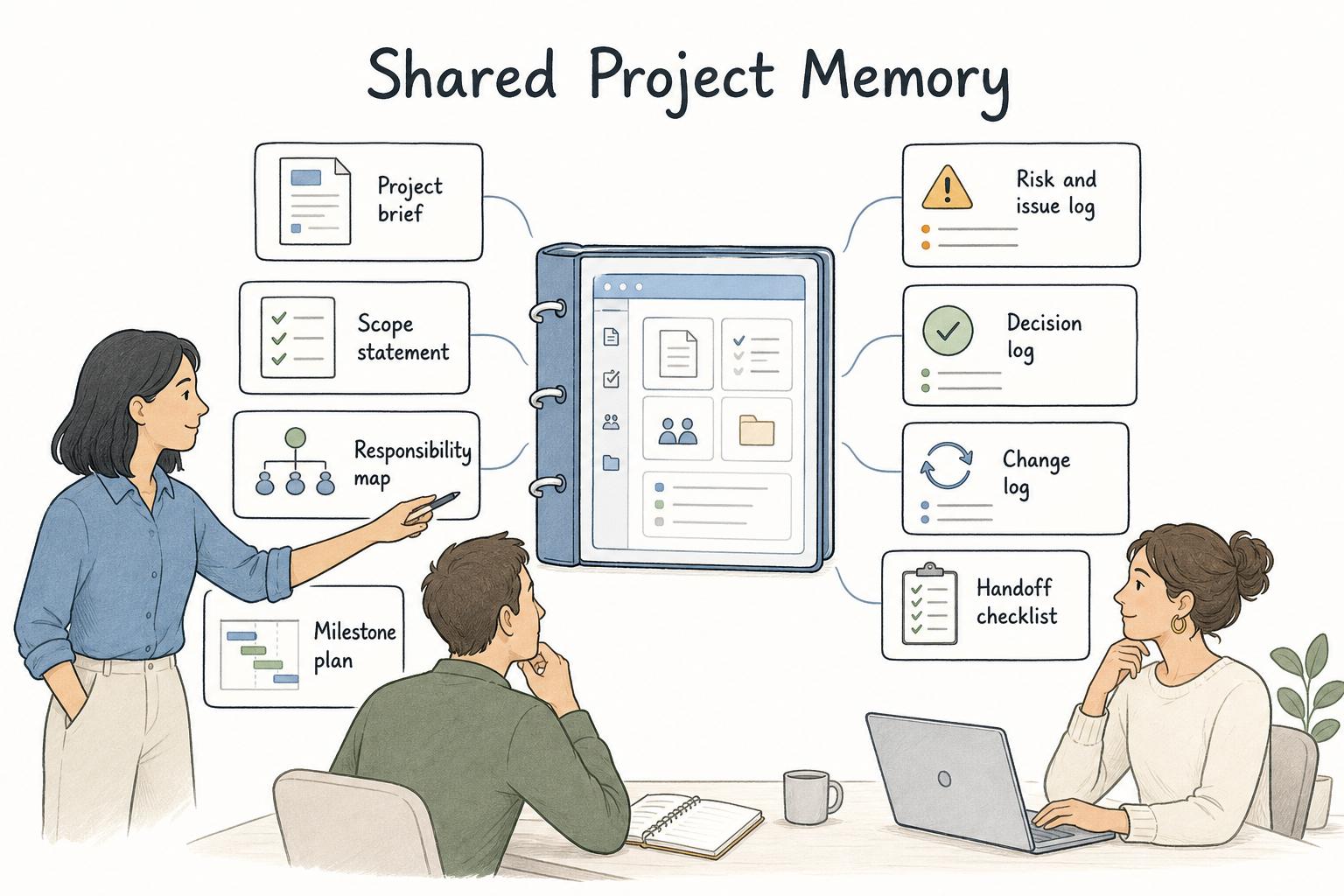
Project documentation gives the team a shared memory for scope, decisions, and handoffs. PMI communication guidance emphasizes that project managers spend much of their work communicating and that communication quality affects delivery. 3
The useful documents are the ones that answer repeated questions:
- Project brief: What are we trying to accomplish, for whom, and by when?
- Scope statement: What is included, excluded, and still uncertain?
- Responsibility map: Who owns decisions, tasks, reviews, and approvals?
- Milestone plan: What must happen in what order?
- Risk and issue log: What could block progress, and what is already blocking it?
- Decision log: What did we decide, when, why, and who approved it?
- Change log: What changed after kickoff, and what impact did it have? PMI's project-management wiki describes project managers as receiving, logging, monitoring, and controlling project changes. 4
- Handoff checklist: What must another team know to operate or maintain the result?
A lightweight internal project may need only a brief, plan, and closeout note. A customer-facing rollout, compliance-sensitive project, or cross-functional launch usually needs stricter records because ambiguity costs more.
What makes a project manager effective?
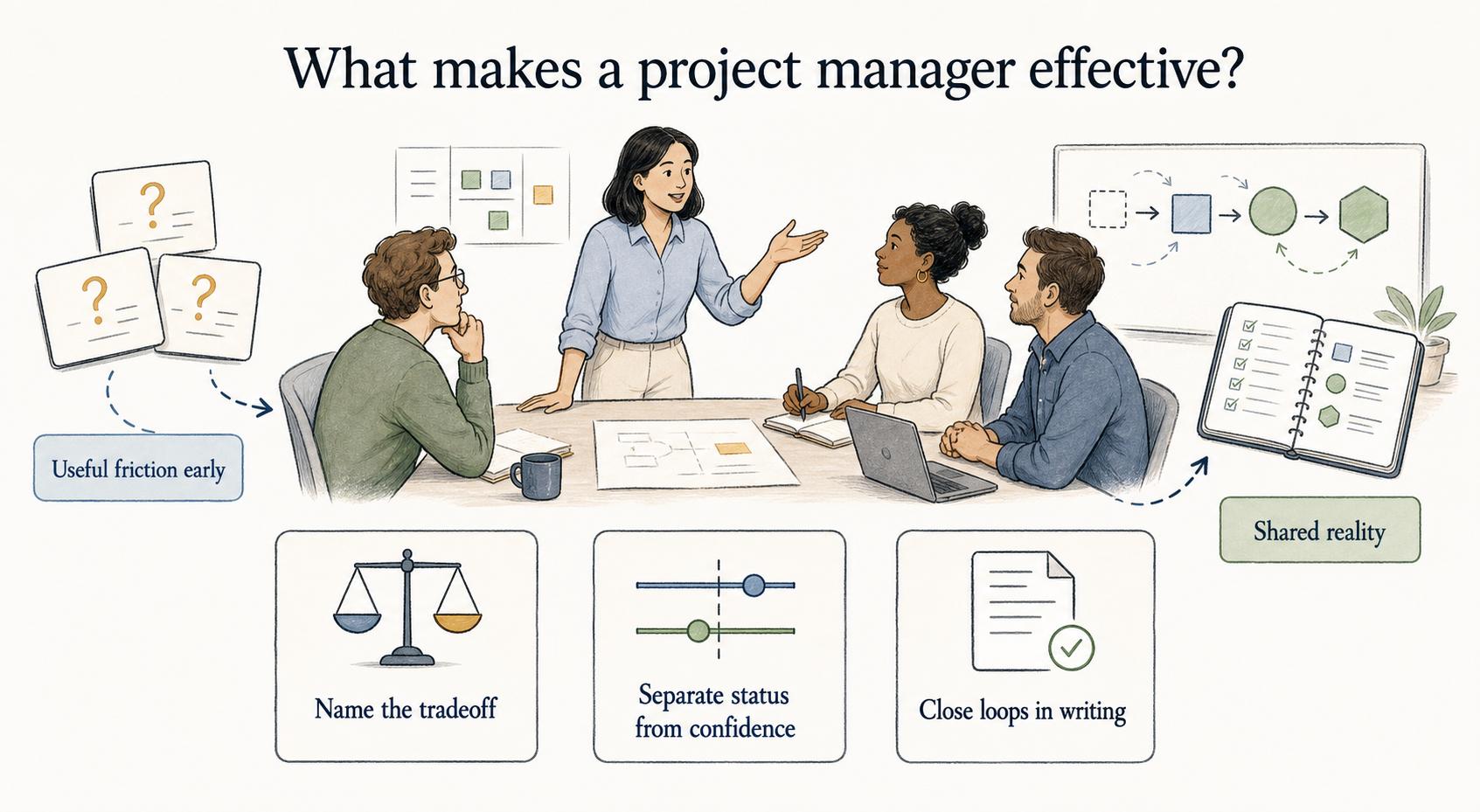
The strongest project managers create useful friction early. They ask the hard questions while there is still time to respond: Who is the real approver? What happens if this dependency slips? Which requirement is optional? Where will this decision be recorded?
Three habits matter more than a perfect template:
- Name the tradeoff before the team feels it. If scope expands but the deadline stays fixed, the PM should make the cost visible instead of hoping effort will absorb it.
- Separate status from confidence. A task can be "on track" and still depend on an untested assumption. Good PMs track both progress and uncertainty.
- Close loops in writing. Meetings create momentum, but written decisions create memory. The more people involved, the less the project can rely on everyone remembering the same conversation.
A schedule is only one artifact. The deeper job is keeping shared reality intact as the project changes.
AI-ready project manager prompt
Use this prompt to turn a vague project into a clearer operating plan:
## Project Operating Plan

**Glossary term:** Project Manager
**Source:** Trails Glossary — trails.so/glossary/project-manager

---

### 01. Create a project operating plan

"Act as a project manager for [team]. We are starting a project to [goal].

Create a concise project operating plan that includes:
- Project objective and success criteria
- In scope and out of scope
- Key stakeholders, approvers, contributors, and task owners
- Major milestones and dependencies
- Risks, assumptions, and open questions
- Decision log format
- Change request rule
- Status update cadence
- Handoff or closeout checklist

Keep the plan practical for a [small/medium/large] team using [tools]. Flag any accountability gaps or decisions that need an owner before kickoff."
This prompt is useful because it makes the hidden coordination work visible before the project starts.
How Trails helps
Trails helps teams document the repeatable workflows project managers depend on: creating a project request, updating a status report, running a closeout, handing work to another team, or completing a project management tool workflow. A PM can capture the workflow as it happens, turn it into a polished step-by-step guide, and share it with the team.
That keeps recurring project routines easier to train, repeat, and improve without trapping the details in one person's memory.
Sources
- 1
PMI. What is a Project Manager?. Project Management Institute. www.pmi.org/about/what-is-a-project-manager.
- 2
U.S. Government Accountability Office. Schedule Assessment Guide. GAO. www.gao.gov/products/gao-16-89g.
- 3
PMI. The art of communication in project management. Project Management Institute. www.pmi.org/learning/library/effective-communication-better-project-management-6480.
- 4
PMI. Change management process for project. ProjectManagement.com. www.projectmanagement.com/wikis/396744/change-management-process-for-project.