
Glossary
Lead Time
 ChatGPT
 Perplexity
 Gemini
 Claude
What is lead time?
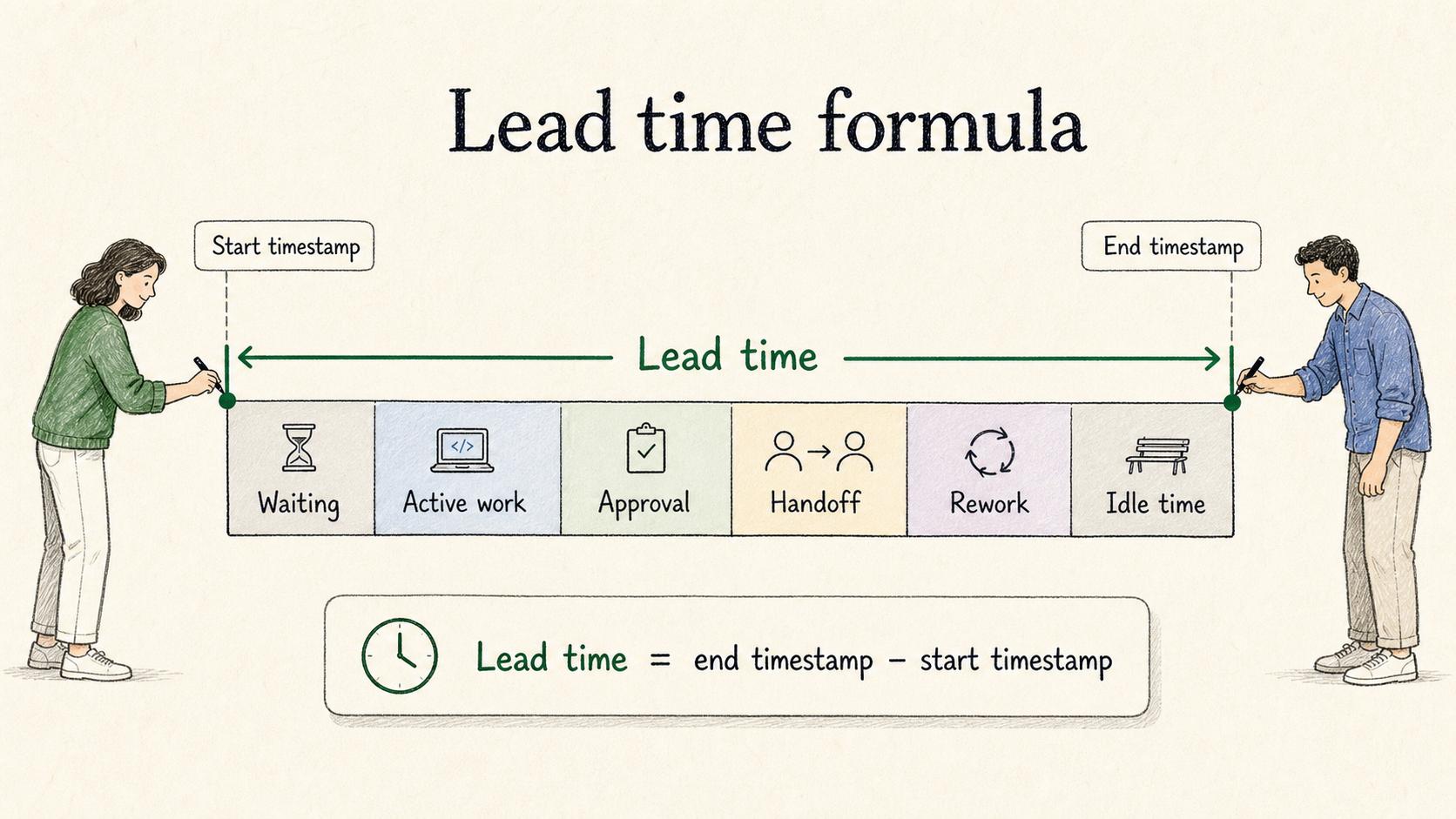
Lead time is the total elapsed time between a request being made and the final result being delivered. It includes active work, queues, approvals, handoffs, rework, and idle time.
A task might take 20 minutes once someone starts it, but still have a three-day lead time if it waits in a queue for most of that period.
Lead time formula
Lead time = end timestamp - start timestamp
The exact start and end points depend on the workflow. The important rule is consistency: teams must start and stop the clock at the same moments.
Lead time vs. cycle time vs. takt time
| Metric | What it measures | Useful question |
|---|---|---|
| Lead time | Total elapsed time from request to delivery | How long does the customer or downstream team wait? |
| Cycle time | Elapsed time once work begins | How long does the team take after work starts? |
| Takt time | The pace needed to meet demand | How quickly must work be completed to match need? |
Short cycle time and long lead time usually signals queues, approvals, batching, missing information, or unclear ownership.
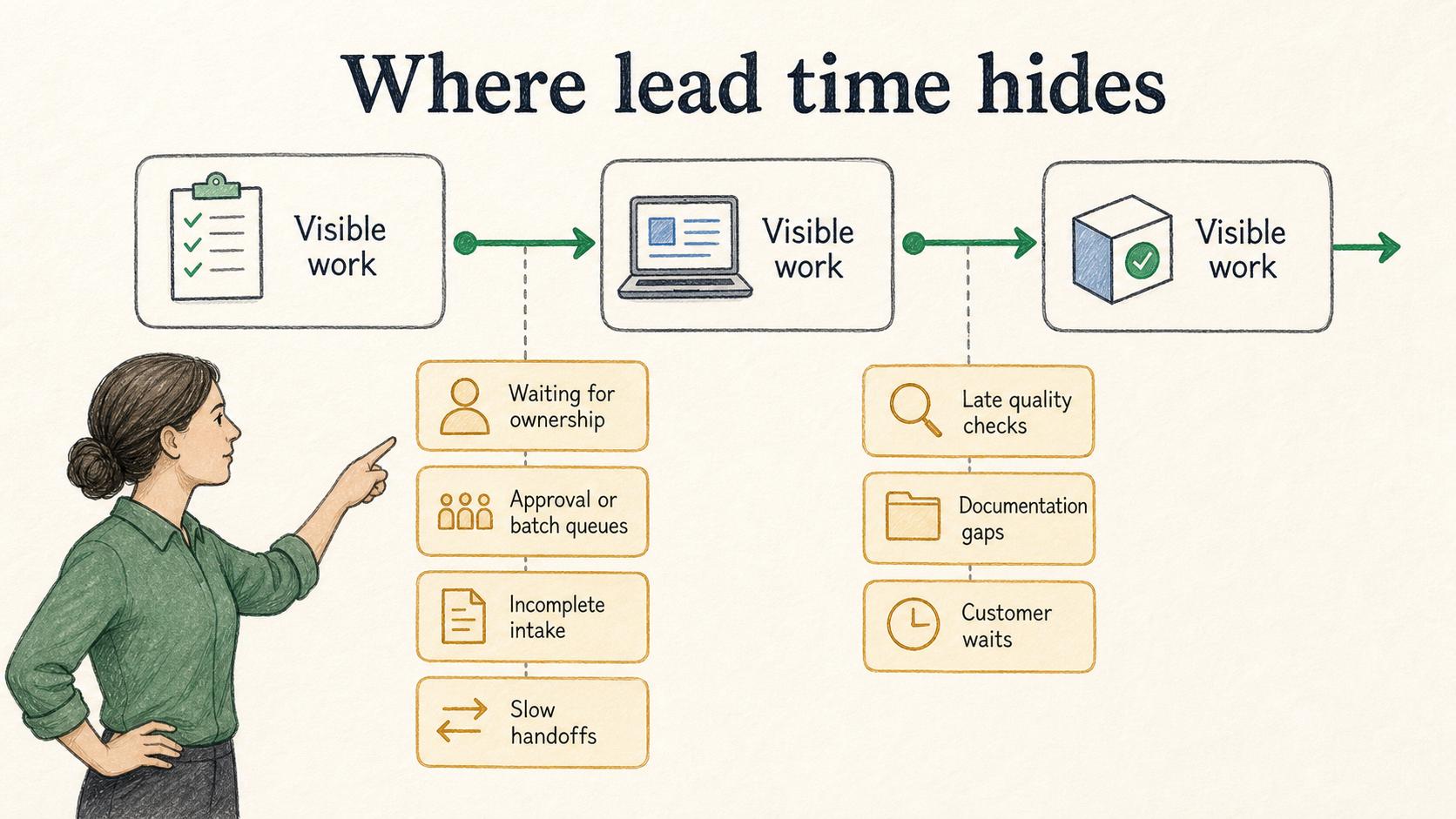
Where lead time hides
- Waiting for ownership
- Approval or batch queues
- Incomplete intake
- Slow handoffs
- Late quality checks
- Documentation gaps
The hidden parts often sit between visible work steps. A support escalation might take a specialist 10 minutes to resolve while the customer waits two days between teams.
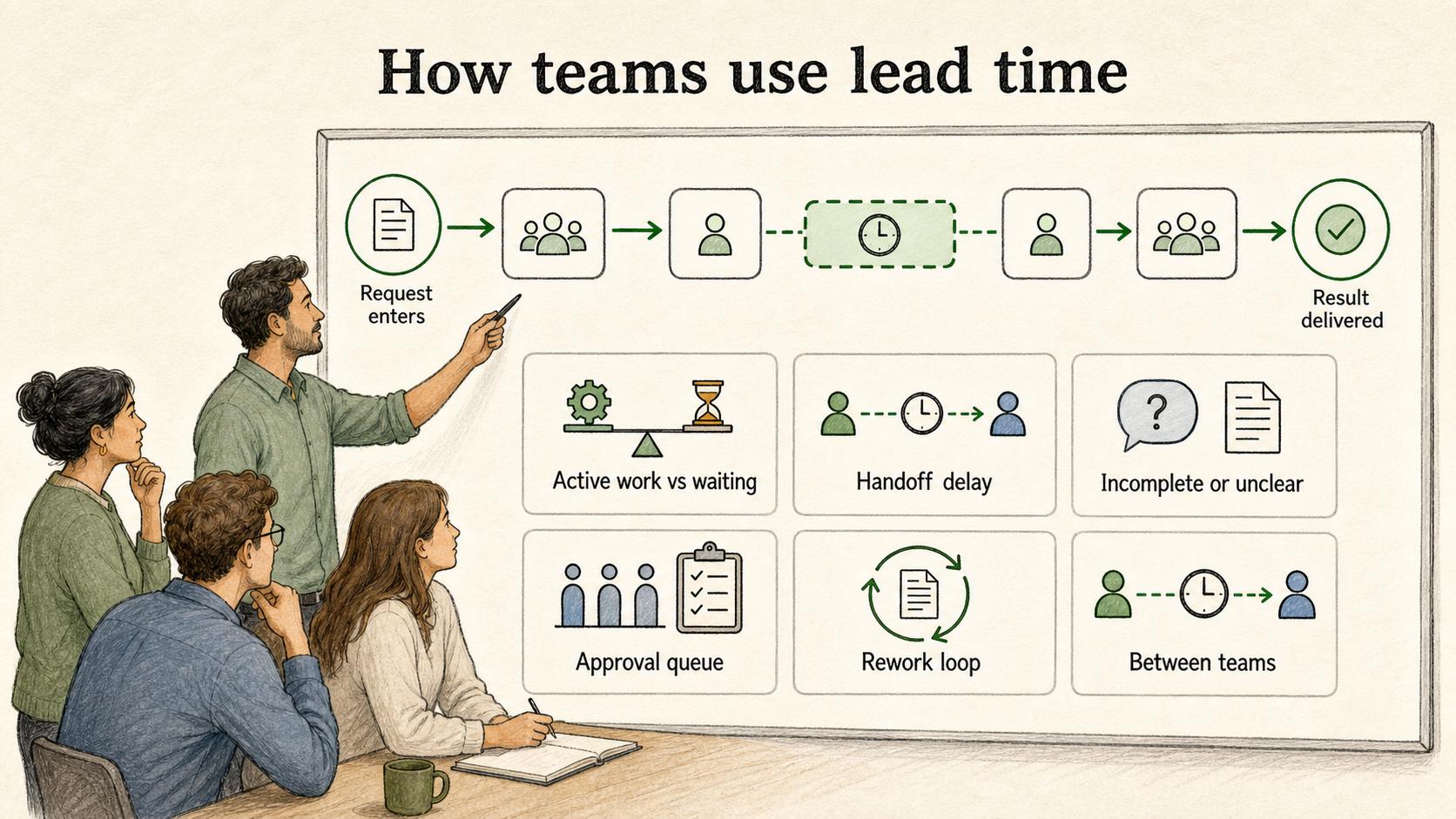
How teams use lead time
- When does the request enter the system?
- When is the result delivered?
- How much time is active work versus waiting?
- Which handoffs create the most delay?
- Where does work arrive incomplete or unclear?
How to reduce lead time
Reducing lead time is not the same as telling people to work faster. Improve the system around the work: clarify intake, reduce unnecessary approvals, split batches, make handoffs explicit, assign queue owners, use pull systems, and document standard work.
If active work time is small but lead time is large, fix flow before asking for more effort.
AI-ready lead time prompt
## Lead Time Analysis

**Glossary term:** Lead Time
**Source:** Trails Glossary — trails.so/glossary/lead-time

---

### 01. Analyze a workflow

"Analyze the lead time for [workflow/process]. Define the start and end points, list each step from request to delivery, separate active work time from waiting time, identify queues and handoffs, note where rework occurs, and recommend the two changes most likely to reduce total lead time without reducing quality."
How Trails helps
Trails makes lead-time-heavy workflows visible by turning a captured process into a step-by-step guide and AI-narrated video. Teams can see and improve the steps, handoffs, and exceptions that affect flow.