
Glossary
Knowledge Gap
 ChatGPT
 Perplexity
 Gemini
 Claude
What is a knowledge gap?
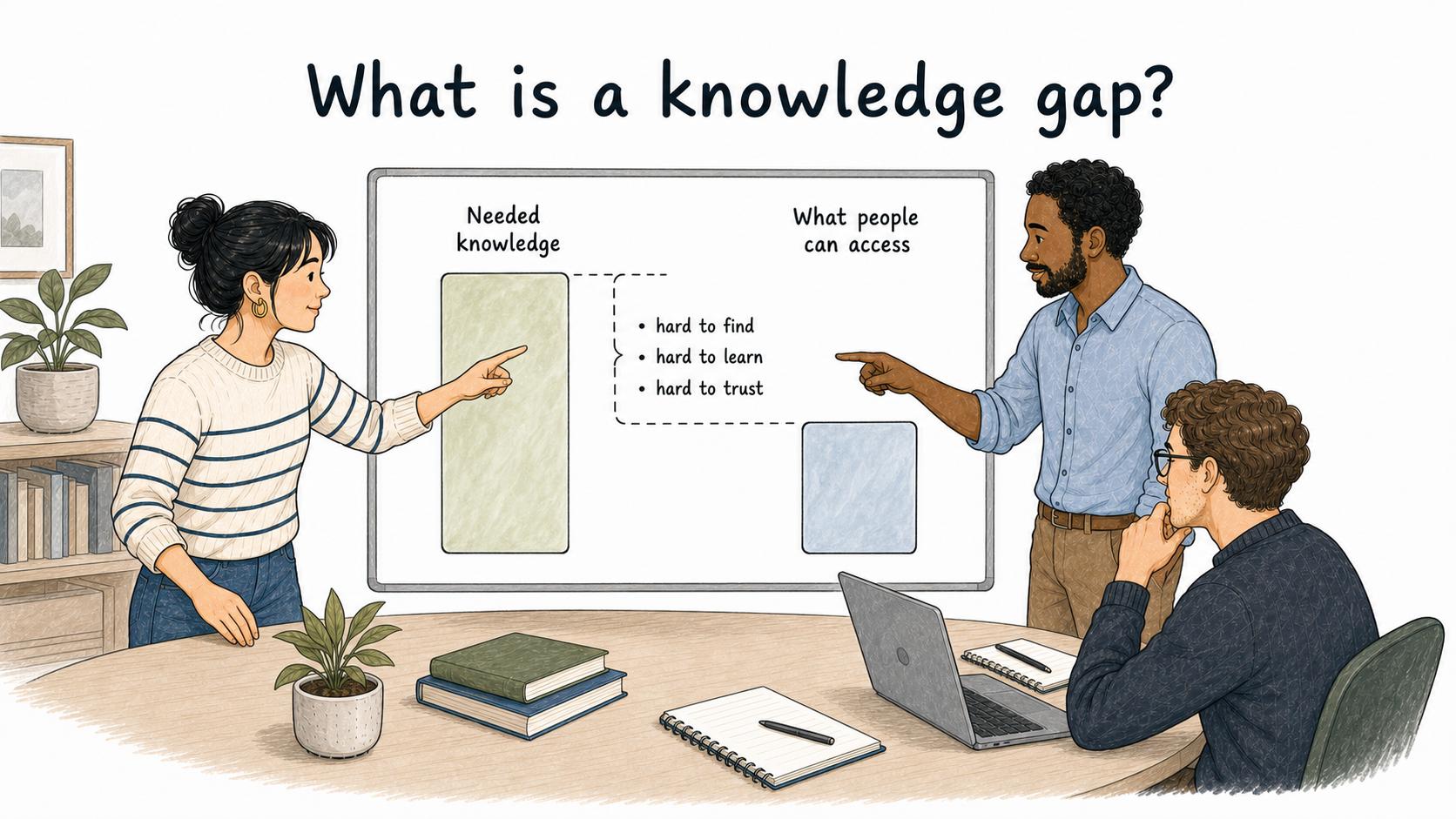
A knowledge gap is the difference between what someone needs to know to do something well and what they actually know or can access. In a team setting, knowledge gaps show up when people lack the right information, context, training, or documented guidance at the moment of work. 1
In many cases, the person is capable. The organization simply has not made the knowledge visible, current, or easy to use.
Why knowledge gaps matter
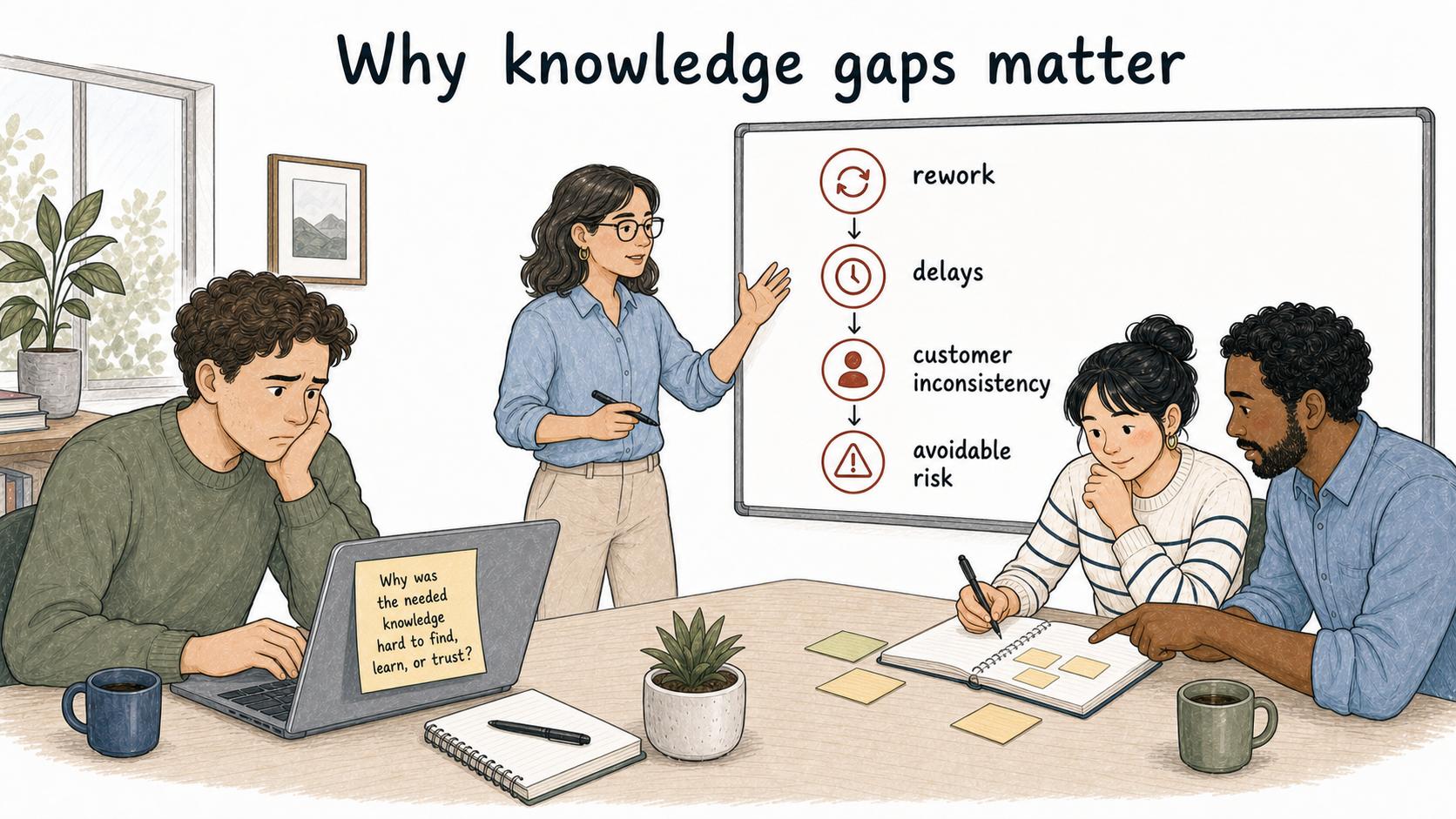
Knowledge gaps slow teams down in quiet ways. A new hire waits for help because the onboarding guide skips the real setup step. A support rep gives an inconsistent answer because the policy changed in a meeting but not in the knowledge base. A manager becomes the bottleneck because only they know how an exception should be handled.
These gaps create rework, delays, customer inconsistency, and avoidable risk. When the system hides knowledge, employees spend energy guessing, asking around, or rebuilding what someone else already knows. 2
A better diagnostic question is: Why was the needed knowledge hard to find, learn, or trust?
Common types of knowledge gaps
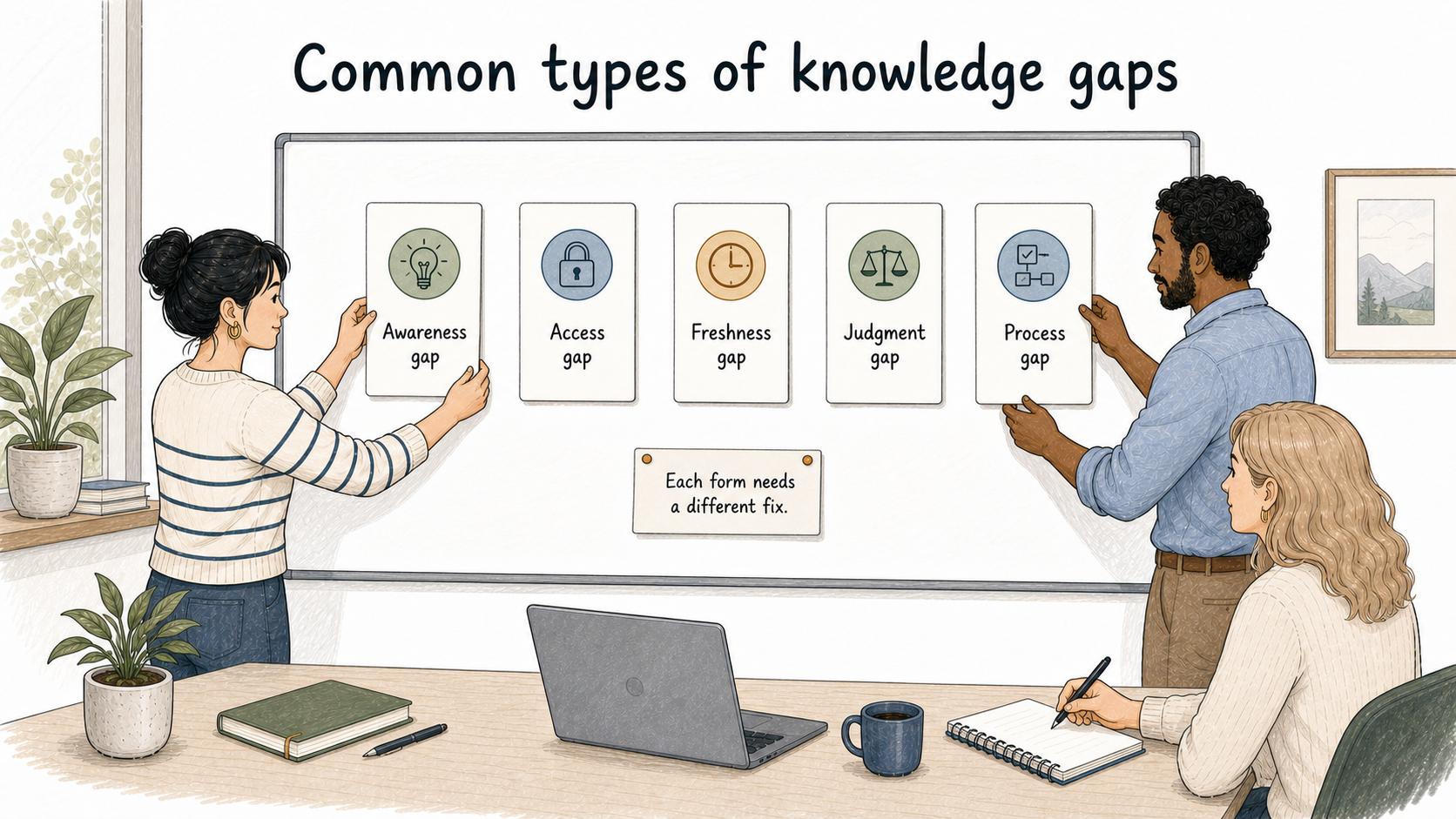
Knowledge gaps appear in several forms, and each form needs a different fix.
| Gap type | What it looks like | Better fix |
|---|---|---|
| Awareness gap | People do not know a resource exists | Put the resource in the workflow and onboarding path |
| Access gap | The answer exists but the right people cannot reach it | Fix permissions, links, or tool placement |
| Freshness gap | The documented answer is outdated | Assign ownership and review triggers |
| Judgment gap | People know the steps but not how to handle exceptions | Add examples, decision rules, or expert commentary |
| Process gap | The team has no agreed way to do the work | Clarify the workflow before documenting it |
This distinction matters because the wrong fix can make the gap worse. If the real problem is trust, another article will not help. If the real problem is unclear ownership, a training session will fade quickly. 3
How to spot a knowledge gap
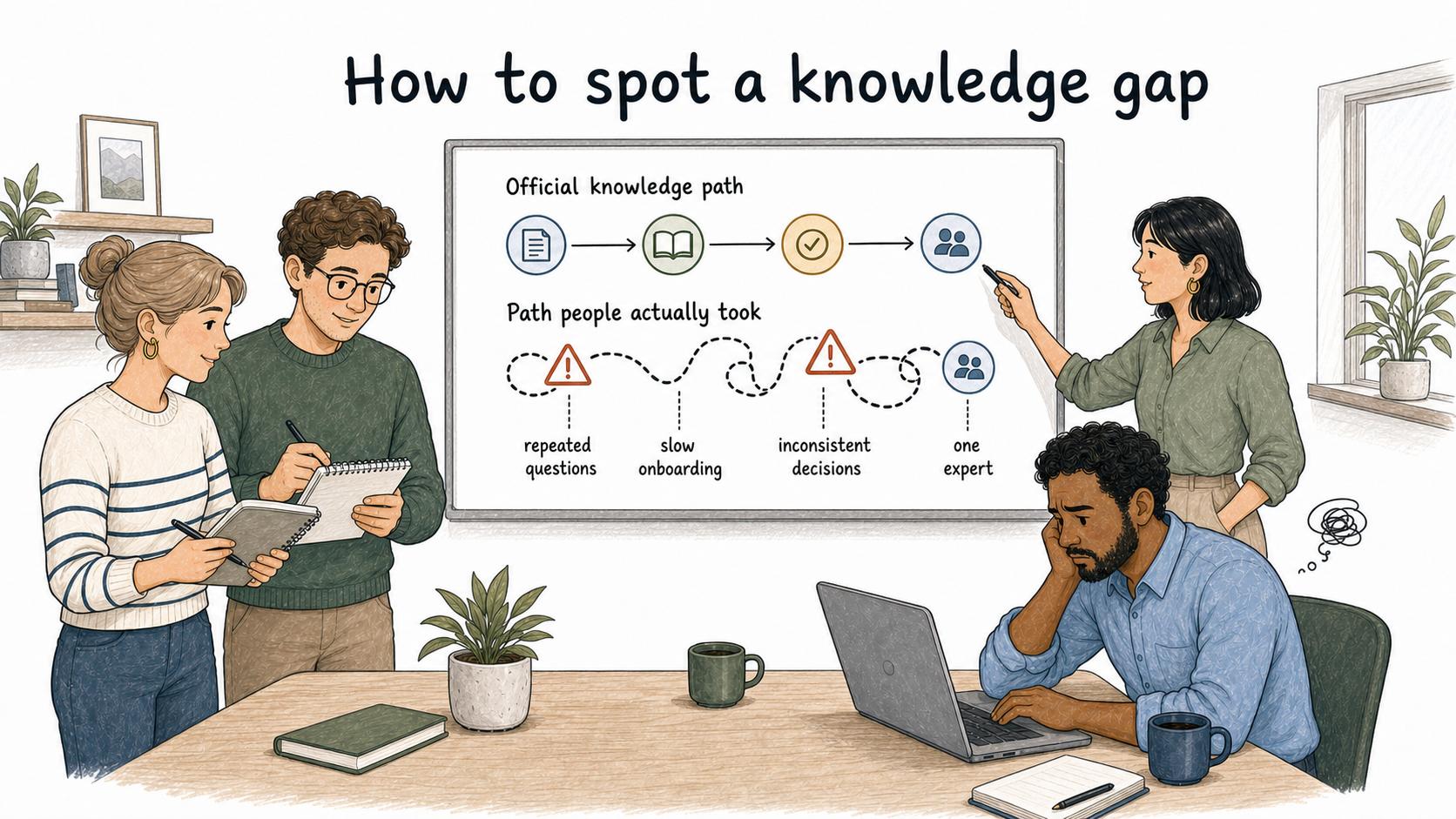
The easiest gaps to spot are repeated questions in Slack, support escalations, onboarding calls, or manager one-on-ones. Other signals include unclear processes, slow new-hire independence, inconsistent answers, and workflows that depend on one person being available.
Trace the last time someone got stuck: what were they trying to do, what did they search, who did they ask, and what answer finally helped? The gap usually sits between the official knowledge path and the path people actually took.
Knowledge gap vs skills gap
A knowledge gap means someone lacks needed information or context. A skills gap means someone lacks the ability or practice to perform the task well. They can overlap, but they are not the same. 4
Documentation can close some gaps, but training, coaching, better process design, or clearer ownership may be the better answer.
How to close a knowledge gap
Name the work affected by the gap, identify whether steps, context, examples, ownership, access, or decision rules are missing, then capture the knowledge in the format closest to the work. Make the owner visible so the gap does not reopen when the process changes.
How Trails helps
Trails helps close procedural knowledge gaps. A teammate can perform a workflow once, and Trails turns it into a polished step-by-step guide or AI-narrated video for onboarding, training, or sharing.
FAQ
What is an example of a knowledge gap?
A new employee knows a process goal but not the steps, edge cases, or source of truth needed to complete it correctly.
How do you measure a knowledge gap?
Look for repeated questions, error patterns, slow onboarding, inconsistent decisions, support escalations, and tasks that depend on one expert.
- Knowledge management
- Knowledge management system
- Knowledge mapping
- Knowledge manager
- Skills gap
- Training needs analysis
- Knowledge transfer
Sources
- 1
AIHR. Training Needs Analysis. www.aihr.com/blog/training-needs-analysis/.
- 2
APQC. Understanding Knowledge Mapping. www.apqc.org/resource-library/resource/understanding-knowledge-mapping-0.
- 3
APQC. What is Big Data and Knowledge Management?. www.apqc.org/resources/blog/what-big-data-and-knowledge-management.
- 4
Coursera. What Is a Skills Gap?. www.coursera.org/enterprise/articles/skills-gap-analysis.