
Glossary
Key Performance Indicator
 ChatGPT
 Perplexity
 Gemini
 Claude
What is a key performance indicator?
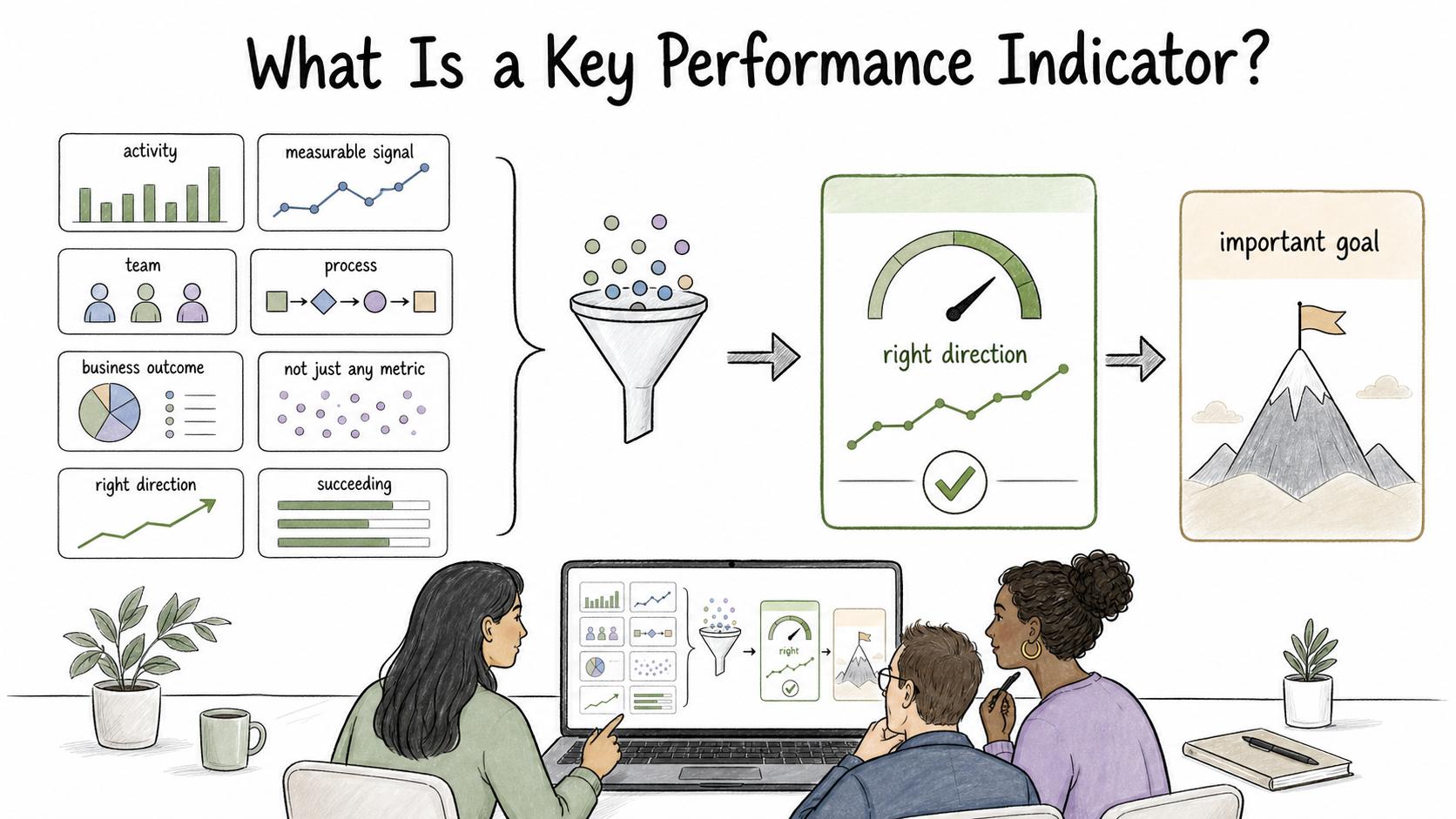
A key performance indicator, or KPI, is a measurable signal that shows whether a team, process, or business outcome is moving in the right direction. It is not just any metric: it is selected because it represents progress toward an important goal. 1
A support team may track tickets opened, tickets closed, response time, reopened issues, customer satisfaction, backlog age, and escalation volume. Only a few should become KPIs. A KPI tells the team whether work is succeeding, not just whether activity is happening.
KPI vs metric: what is the difference?
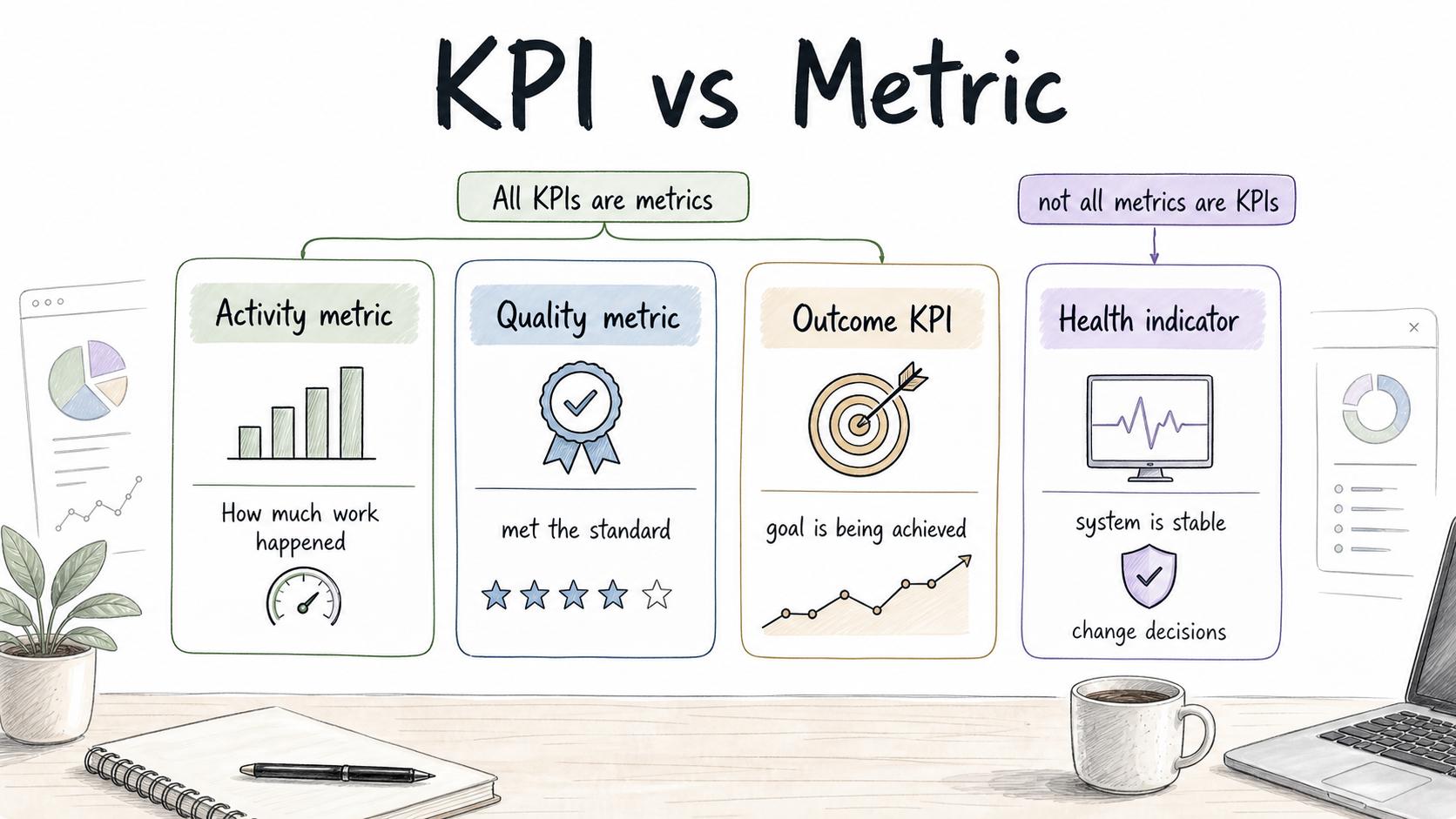
All KPIs are metrics, but not all metrics are KPIs. A metric is any measurement. A KPI has strategic or operational weight and should help someone decide whether to continue, investigate, change priorities, or improve a process. 2
| Measurement type | What it tells you | Example | Risk |
|---|---|---|---|
| Activity metric | How much work happened | Articles published | Can reward output without quality |
| Quality metric | Whether work met the standard | Reopened tickets | Can lag behind the problem |
| Outcome KPI | Whether the goal is achieved | Time to resolution | Can be distorted by a poor goal |
| Health indicator | Whether the system is stable | Backlog age | Can be ignored until urgent |
How to choose a useful KPI
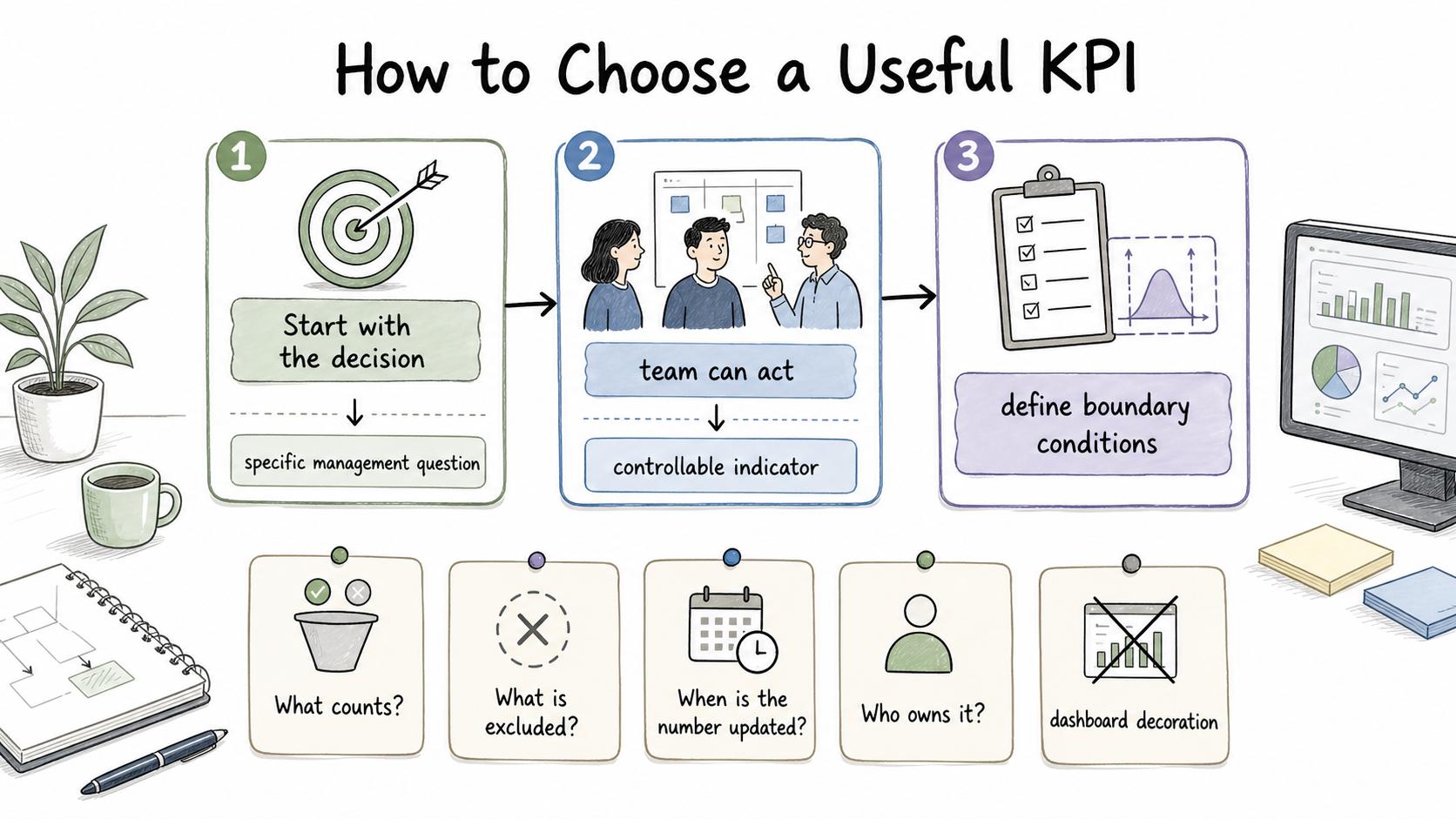
Start with the decision the KPI needs to support. If no one can name the decision, the number is probably dashboard decoration. Test whether the team can act on the result, and define what counts, what is excluded, when it updates, and who owns it.
Examples of KPIs in team operations
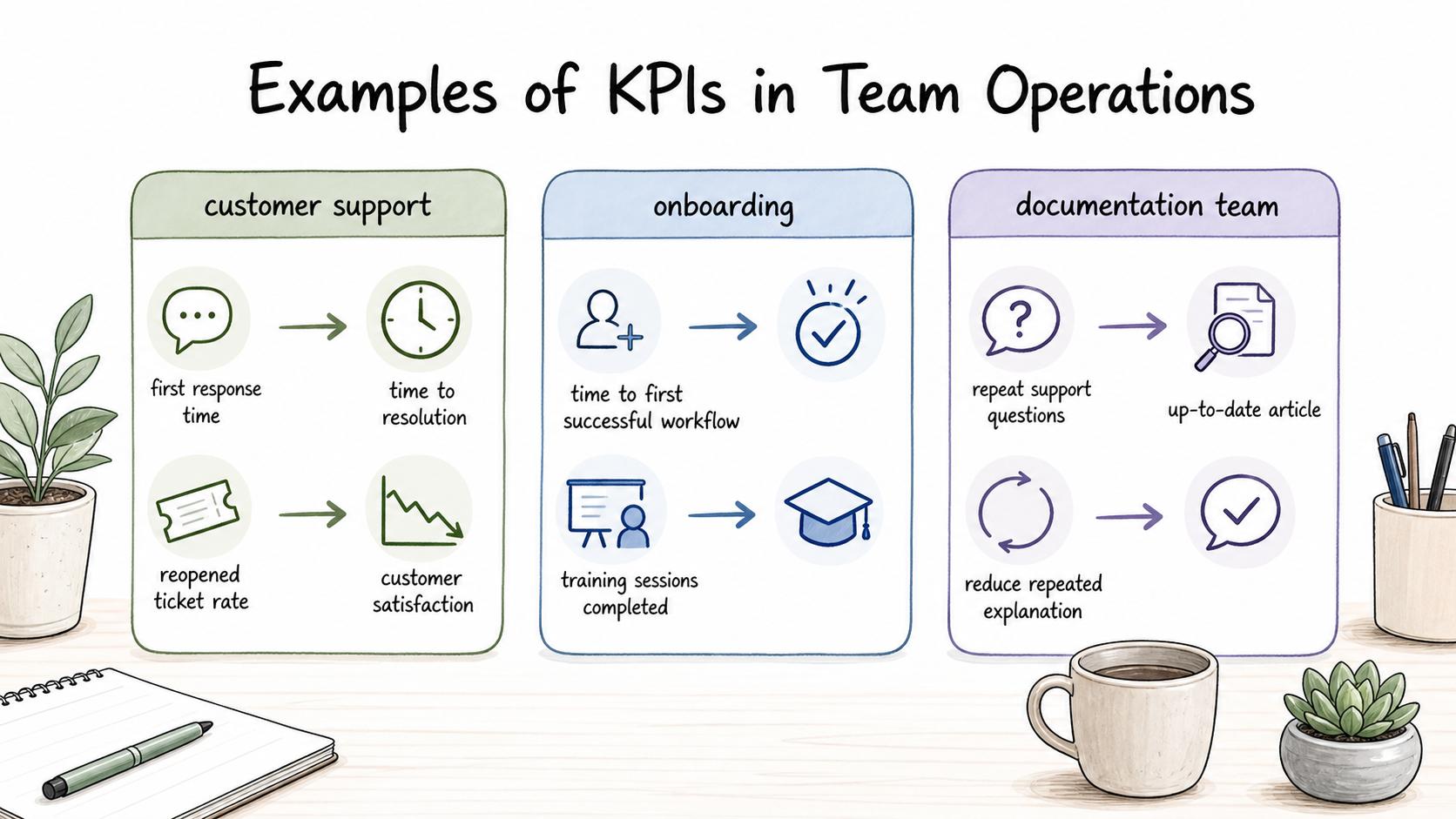
A support team may use first response time when speed is part of its customer promise, but time to resolution or reopened-ticket rate may be better when quick replies hide poor resolution quality. An onboarding team can track time to first successful workflow. A documentation team can track repeat support questions covered by an up-to-date article.
Common KPI mistakes
Avoid choosing too many KPIs or rewarding the wrong behavior. Measuring support only on close rate can encourage quick closures without solving the issue. KPIs should change as the goal changes. 3
KPI selection prompt
## KPI selection prompt

**Glossary term:** Key Performance Indicator
**Source:** Trails Glossary — trails.so/glossary/key-performance-indicator

---

### 01. Define useful KPIs

"Help define KPIs for [team or process].

Goal: [specific outcome]
Current problem: [what is not working]
Available data: [metrics we can already measure]
Decisions this KPI should support: [weekly planning, escalation, quality review, staffing, process improvement]
Constraints: [data quality, ownership, timing, customer impact]

Return:
- 3 candidate KPIs.
- What each KPI measures.
- What behavior each KPI might accidentally encourage.
- A recommended primary KPI.
- The exact definition and owner for that KPI."
Documentation takeaway
Document what each KPI means, how it is calculated, where data comes from, who owns it, and what action happens when it moves. 4
- Process improvement
- Continuous improvement
- Lean management
- Visual management
- Standard work
- Metric
- OKR
- Leading indicator
Sources
- 1
National Institute of Standards and Technology. Hierarchical KPI structure. tsapps.nist.gov/publication/get_pdf.cfm?pub_id=919754.
- 2
Harvard Business School. The Balanced Scorecard. www.hbs.edu/faculty/Pages/item.aspx?num=9161.
- 3
Donald Campbell. Assessing the impact of planned social change. ideas.repec.org/a/eee/epplan/v2y1979i1p67-90.html.
- 4
ISO. ISO 22400-2 KPI standard. www.iso.org/standard/54497.html.