
Glossary
Quality Manager
 ChatGPT
 Perplexity
 Gemini
 Claude
What is a quality manager?
A quality manager helps an organization define, follow, measure, and improve its quality standards. The role connects quality policy, process control, audits, training, inspection, corrective action, customer requirements, and documentation into a working quality system. 1
A quality manager is not just the person who finds defects after work is done. In a healthy organization, the quality manager helps teams prevent quality problems by making expectations clear, evidence easy to find, and improvement work visible.
What a quality manager does
The exact role depends on the industry, company size, and quality framework involved. In a small business, a quality manager may own much of the quality system directly. In a larger organization, they may coordinate quality assurance, quality control, supplier quality, compliance, training, audits, or continuous improvement specialists.
- Defining quality standards, acceptance criteria, and quality objectives
- Maintaining the quality manual or quality management system documentation
- Reviewing or approving quality SOPs and work instructions
- Planning audits and managing nonconformance or corrective action workflows
- Reviewing complaints, defect trends, inspection results, or service failures
- Tracking quality metrics and reporting performance to leadership
- Connecting suppliers, operations, support, production, and service teams when quality issues cross handoffs
O*NET describes quality control systems managers as roles that coordinate quality assurance programs and quality-control policies. 1 ASQ's quality manager certification framing also emphasizes leadership, process improvement, and quality-system responsibility. 2
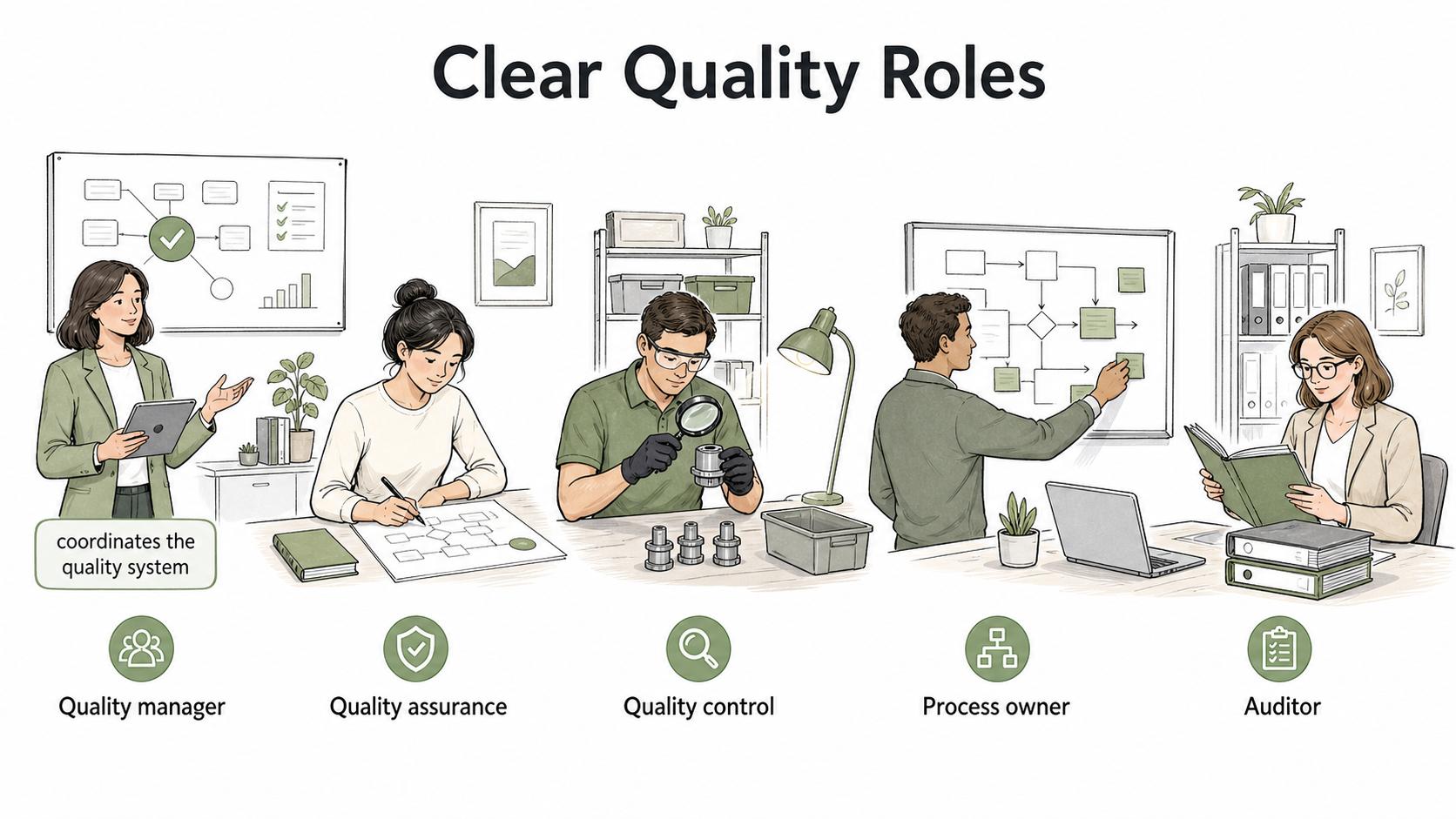
Quality manager vs quality assurance vs quality control
| Term | Primary focus | Practical example |
|---|---|---|
| Quality manager | Coordinates the quality system | Reviews audit findings, approves quality SOPs, and reports quality performance |
| Quality assurance | Prevents problems through process design | Defines document control, training, validation, or review workflows |
| Quality control | Checks outputs against requirements | Inspects a product, record, service, or deliverable against criteria |
| Process owner | Owns a specific operating process | Keeps a fulfillment, onboarding, production, or support process working correctly |
| Auditor | Checks whether the system is being followed | Reviews records, interviews staff, and reports findings |
The overlap matters because quality should not live in one person's inbox. A quality manager designs and coordinates the system, but process owners still need to own the work that creates quality.
Documents a quality manager usually owns
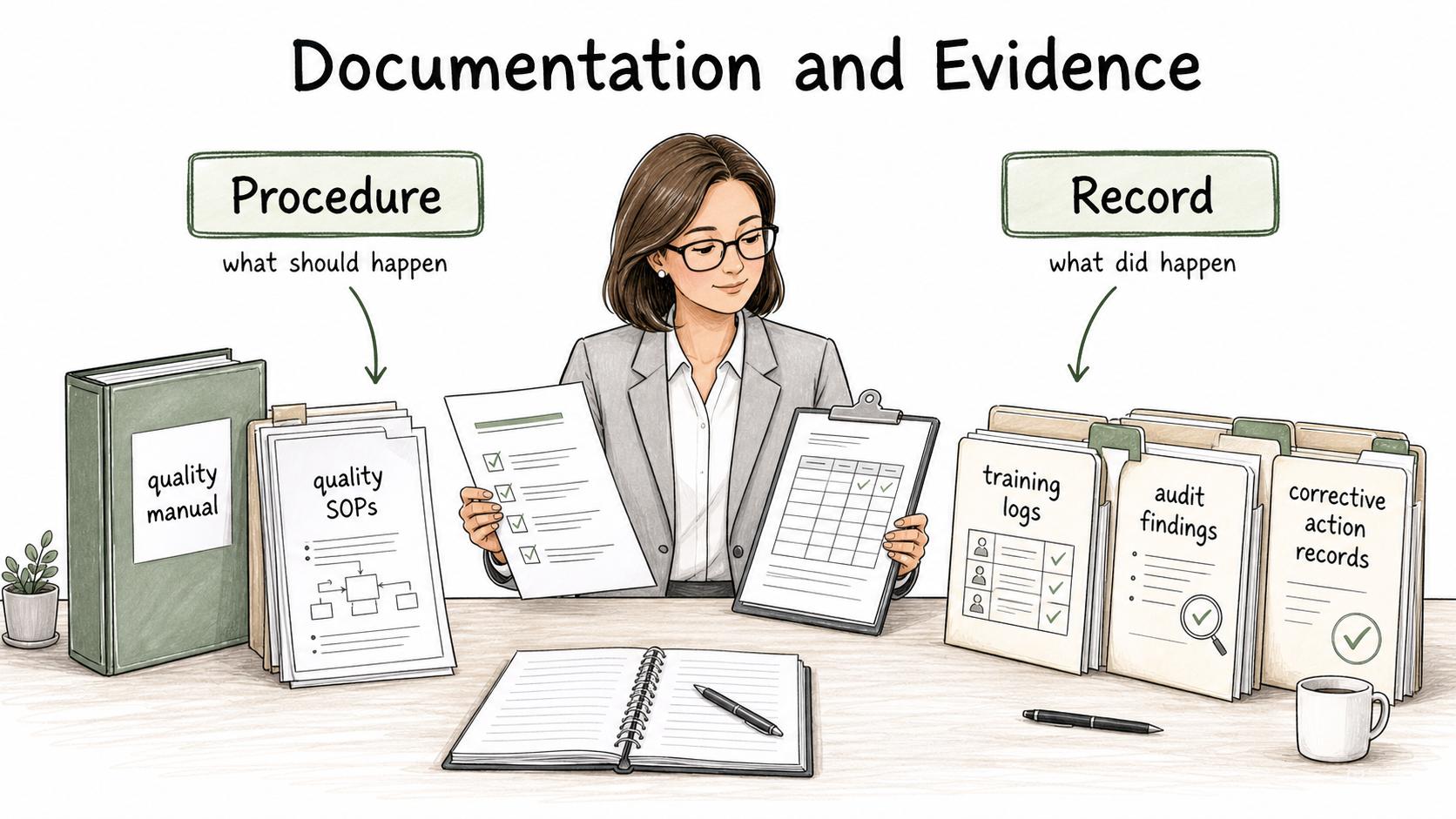
Quality management relies on documentation because expectations have to survive turnover, audits, customer questions, and process changes. 3 A quality manager usually owns or coordinates:
- System documents: quality manual, quality policy, quality objectives, and quality metrics
- Procedure documents: quality SOPs, inspection checklists, acceptance criteria, audit procedures, and supplier evaluation procedures
- Evidence records: audit findings, nonconformance reports, corrective action records, training logs, customer complaint records, and management review materials
- Control rules: document control, records management, review cadence, and approval paths
The important distinction is between documentation and evidence. A procedure explains what should happen. A record proves what did happen. A quality manager needs both.
What makes a quality manager effective
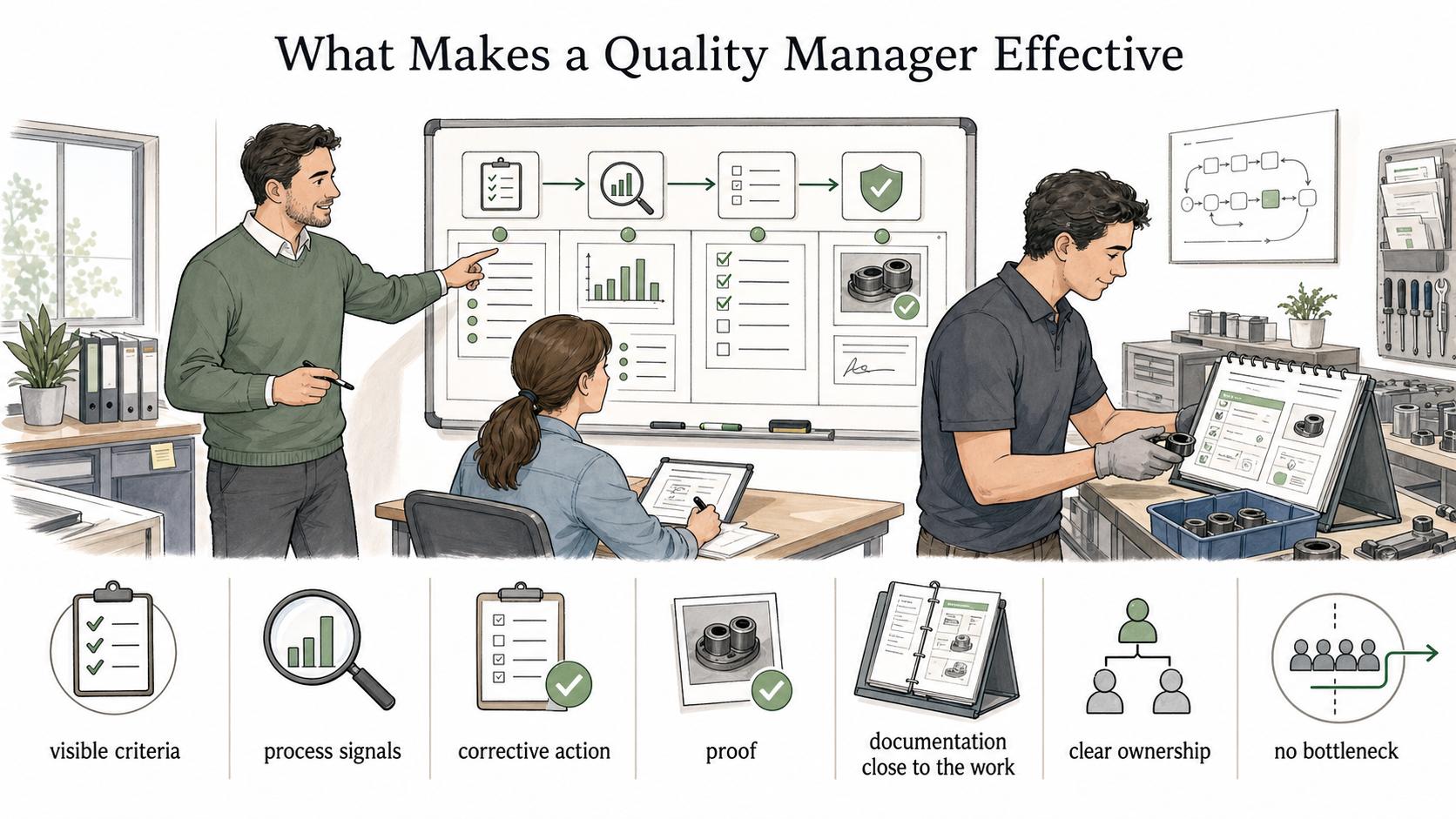
A strong quality manager makes quality easier to practice, not just easier to audit. That usually means translating broad requirements into procedures and artifacts people can actually use.
A few habits matter more than a long checklist:
- Turn requirements into visible criteria. People cannot consistently meet a standard they cannot see. Acceptance criteria, examples, review points, and inspection prompts reduce interpretation at the point of work.
- Use defects as process signals. A missed step, customer complaint, or failed inspection is often a clue about training, handoffs, tooling, unclear ownership, or weak documentation.
- Close corrective actions with proof. A corrective action is not finished when someone writes a fix. It is finished when the team can show the process changed and the issue is less likely to return.
- Keep documentation close to the work. Quality documents should be easy to find from the workflow they support. If employees only see procedures during audits, the procedures are too detached from daily operations.
The hidden trap is becoming the quality bottleneck. If every decision waits for the quality manager, the system is fragile. The better goal is to make standards, ownership, and evidence clear enough that teams can make good quality decisions without constant escalation.
Quality manager documentation checklist
Use these diagnostic questions to spot gaps in a quality system:
- Is there a current quality manual or equivalent QMS overview?
- Are core processes mapped with named owners?
- Are quality SOPs approved, current, and easy to find?
- Do inspection and review steps include clear acceptance criteria?
- Are nonconformance and corrective action workflows documented?
- Are training requirements tied to roles, procedures, or processes?
- Can audit evidence be found quickly?
- Is there a trigger for updating documents when tools, teams, products, or processes change?
If several answers are no, the issue is usually not that people do not care about quality. It is that the system is too implicit.
Documentation takeaway
A quality manager turns quality from a vague expectation into a managed operating system. The role needs clear procedures, reliable records, visible ownership, and feedback loops that turn problems into improvements.
The best quality managers do not create documentation for its own sake. They create enough structure for people to do the right work consistently, prove it happened, and improve the process when reality exposes a gap.
How Trails helps
Trails helps quality managers document the workflows underneath a quality manual. A quality manager can capture an inspection, review, approval, onboarding, corrective action, or reporting process as someone performs it, then turn that workflow into a polished step-by-step guide. Trails can also create an AI-narrated video version for training or handoff when quality procedures need to be followed consistently across teams or locations.
Sources
- 1
O*NET OnLine. Quality Control Systems Managers. www.onetonline.org/link/summary/11-3051.01.
- 2
ASQ. Certified Manager of Quality/Organizational Excellence. www.asq.org/cert/manager-of-quality.
- 3
ISO. ISO 9001:2015 Quality management systems. www.iso.org/standard/62085.html.