
Glossary
Safety Manual
 ChatGPT
 Perplexity
 Gemini
 Claude
What is a safety manual?
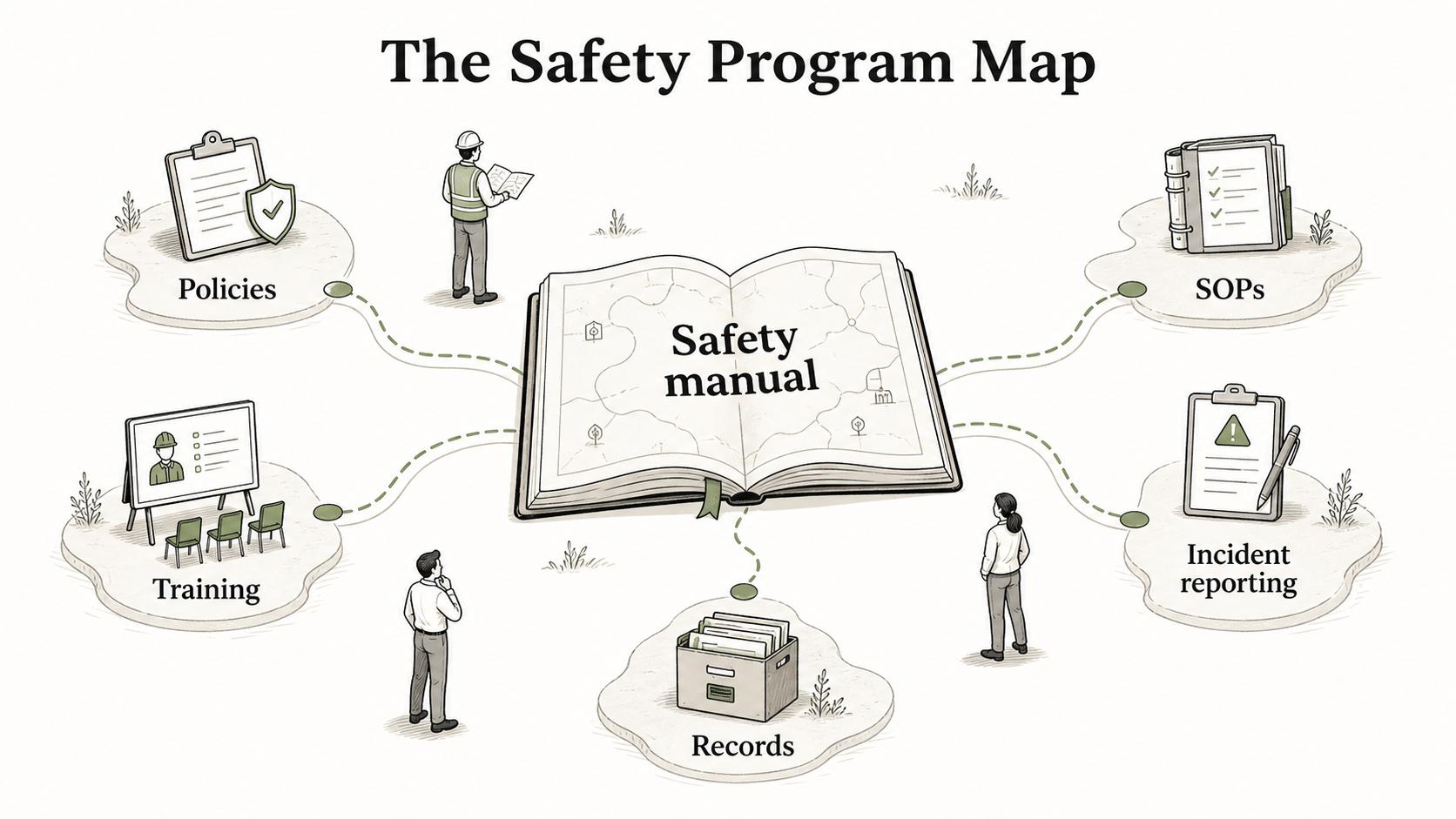
A safety manual is a central document or knowledge hub that explains how an organization manages workplace safety. It brings policies, responsibilities, required procedures, training expectations, incident reporting, emergency guidance, and recordkeeping rules into one navigable place.
A good safety manual is not a binder for auditors. It is the safety program's map: what people are expected to do, where detailed procedures live, who owns each activity, and how the organization keeps the manual current.
What belongs in a safety manual?
A safety manual should reflect the actual work, hazards, locations, tools, and roles in the organization. Most manuals need:
- Safety policy and leadership expectations
- Employee, supervisor, and management responsibilities
- Hazard identification, reporting, prevention, and control
- Required safety SOPs and work instructions
- PPE expectations and equipment-specific rules
- Training requirements and records
- Incident, injury, near-miss, and emergency response procedures
- Inspection, audit, corrective action, contractor, and visitor rules
- Document owner, review cadence, and change history
OSHA's safety and health program guidance organizes effective programs around core elements such as management leadership, worker participation, hazard identification, hazard prevention and control, training, program evaluation, and coordination with contractors or staffing agencies.1 A safety manual can use those themes as a practical organizing frame, while still adapting the details to the workplace.
Safety manual vs. SOP vs. policy
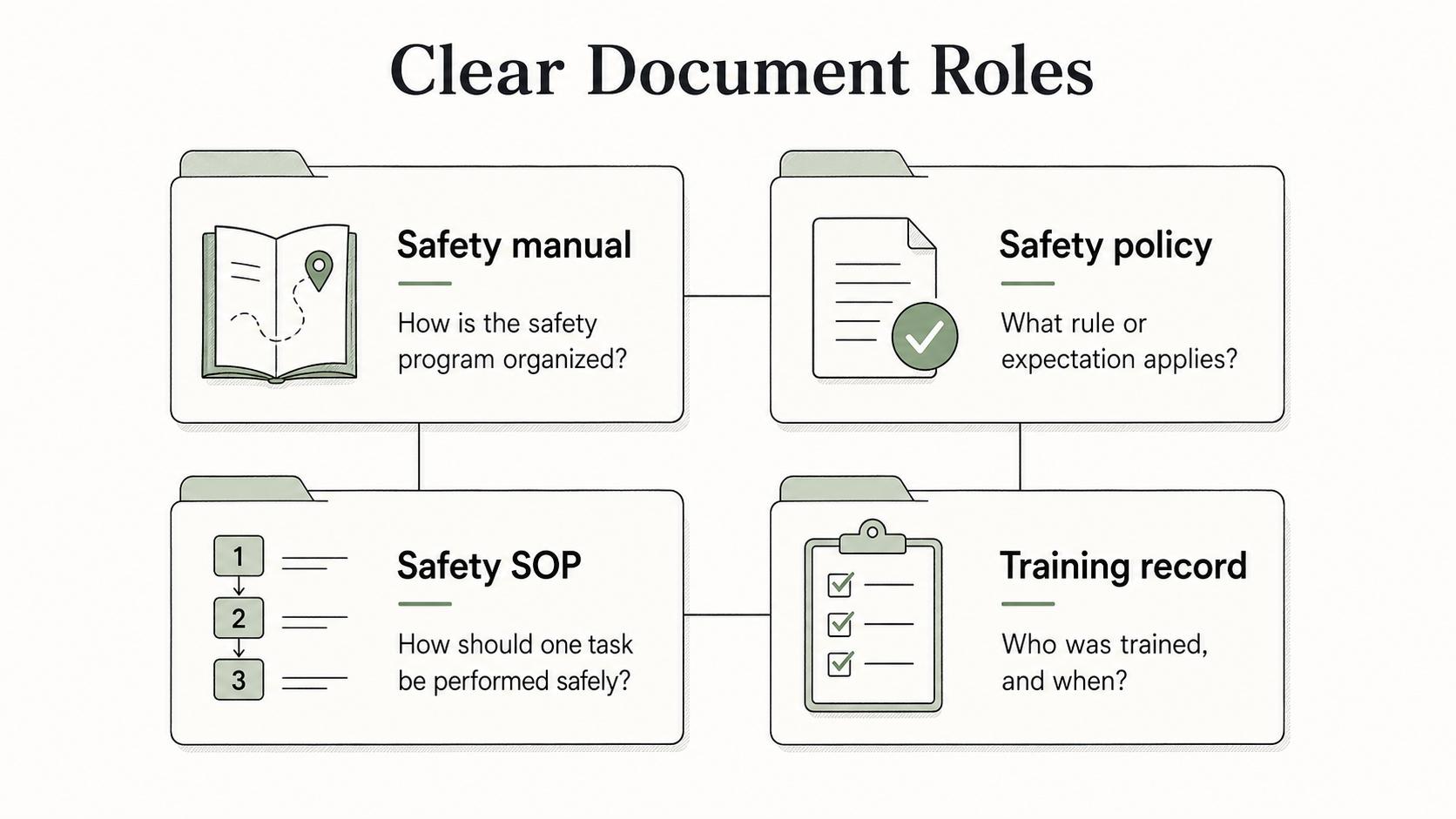
Teams often blur safety manuals, policies, and SOPs together. That makes the manual harder to use because readers cannot tell whether they are looking at a rule, a task procedure, or evidence that something was completed.
| Document type | What it answers | Example |
|---|---|---|
| Safety manual | How is the safety program organized? | Warehouse safety manual |
| Safety policy | What rule or expectation applies? | Incident reporting policy |
| Safety SOP | How should one task be performed safely? | Lockout/tagout procedure |
| Training record | Who was trained, and when? | Forklift training log |
The manual should not try to contain every task detail. It should point to the correct SOPs, forms, logs, and training materials so the detailed documents can be updated without rewriting the entire manual.
Why safety manuals matter
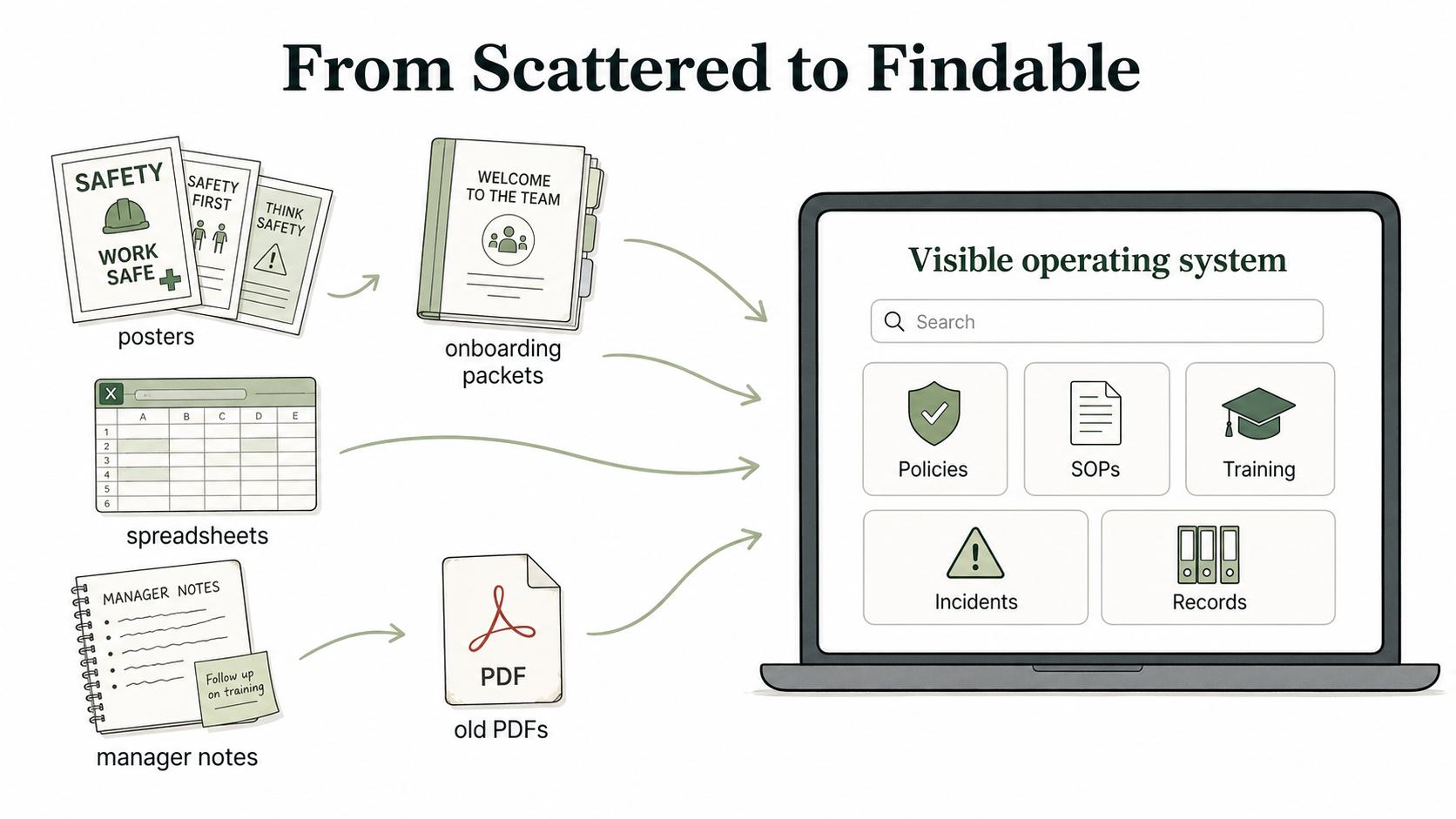
A safety manual turns scattered safety knowledge into a visible operating system. Without one, the same information often lives across posters, onboarding packets, manager notes, spreadsheets, and old PDFs. People may know a rule exists but still not know where to find the current version.
The practical value is clarity. New employees can see what matters before they learn every local habit. OSHA describes education and training as a way to help workers and managers understand workplace hazards, controls, and the safety program itself.2 Supervisors can see which inspections, trainings, and corrective actions they own. Operations leaders can spot whether a safety expectation has supporting procedures and records. Reviewers can understand how the program is supposed to work without chasing ten different owners.
The hidden failure mode is false completeness. A manual can look polished while still missing the procedure people need on a busy floor. The test is not whether the manual sounds comprehensive. The test is whether a worker, supervisor, or auditor can find the right next action quickly.
How to structure a useful safety manual
Start with the work, not the document. List the teams, locations, equipment, tasks, hazards, and recurring safety activities the manual needs to cover. Then group content around decisions readers actually make: what rule applies, which SOP to follow, what record proves the work happened, and who owns the review.
A practical outline looks like this:
## Safety Manual Outline

**Glossary term:** Safety Manual
**Source:** Trails Glossary — trails.so/glossary/safety-manual

---

### 01. Structure a safety manual

"Purpose and scope: who and what the manual covers
Responsibilities: employee, supervisor, manager, and safety owner duties
Hazard management: how hazards are identified, reported, controlled, and reviewed
Procedures: links to required safety SOPs and work instructions
Training: required training, refreshers, and records
Incidents: reporting, investigation, root cause review, and corrective action
Emergencies: response roles, contacts, evacuation, and site-specific procedures
Records: forms, logs, retention expectations, and evidence of completion
Governance: document owner, review cadence, approvals, and change history"
OSHA's injury and illness recordkeeping resources are a useful reminder that safety documentation often needs to connect policies with concrete forms, logs, and evidence of completion.3
The governance section matters more than most teams expect. A safety manual becomes risky when nobody can tell whether it is current. Every major section should have an owner, a review trigger, and a simple way for employees to flag outdated or confusing guidance.
Common mistakes
- Making the manual too generic. A manual that says "follow safe work practices" does not help someone handle a chemical spill, report a near miss, or choose the right procedure for a piece of equipment.
- Burying operational instructions inside policy language. Policies explain expectations; SOPs explain execution. If those are mixed together, updates become slower and readers lose confidence in the manual.
- Treating employee feedback as optional. The people closest to the work notice when instructions no longer match reality. OSHA's worker participation guidance makes that point directly: workers should be involved in establishing, operating, evaluating, and improving the safety and health program.
Without a feedback loop, the manual drifts toward ceremony instead of usefulness.4
Documentation takeaway
A safety manual is the organizing layer for safety documentation. It connects policies, SOPs, training, incident response, emergency guidance, and records into a system people can navigate.
The best manual is specific, current, and clearly owned. It should make the safe way of working easy to find, teach, follow, and improve.
How Trails helps
Trails helps teams capture repeatable workflows as they are performed and turn them into polished step-by-step guides. For safety manuals, that can help teams maintain supporting SOPs, onboarding guides, and training walkthroughs. Safety-critical content still needs review by the appropriate safety, legal, or compliance owner before it becomes official guidance.
For the supporting guides and walkthroughs, compare training documentation software based on how easily approved instructions can be maintained and shared.
Sources
- 1
Occupational Safety and Health Administration. Recommended Practices for Safety and Health Programs. OSHA. www.osha.gov/safety-management. Accessed July 9, 2026.
- 2
Occupational Safety and Health Administration. Education and Training. OSHA. www.osha.gov/safety-management/education-training. Accessed July 9, 2026.
- 3
Occupational Safety and Health Administration. Injury and Illness Recordkeeping Forms. OSHA. www.osha.gov/recordkeeping/forms. Accessed July 9, 2026.
- 4
Occupational Safety and Health Administration. Worker Participation. OSHA. www.osha.gov/safety-management/worker-participation. Accessed July 9, 2026.