
Glossary
Single Source of Truth
 ChatGPT
 Perplexity
 Gemini
 Claude
What is a single source of truth?
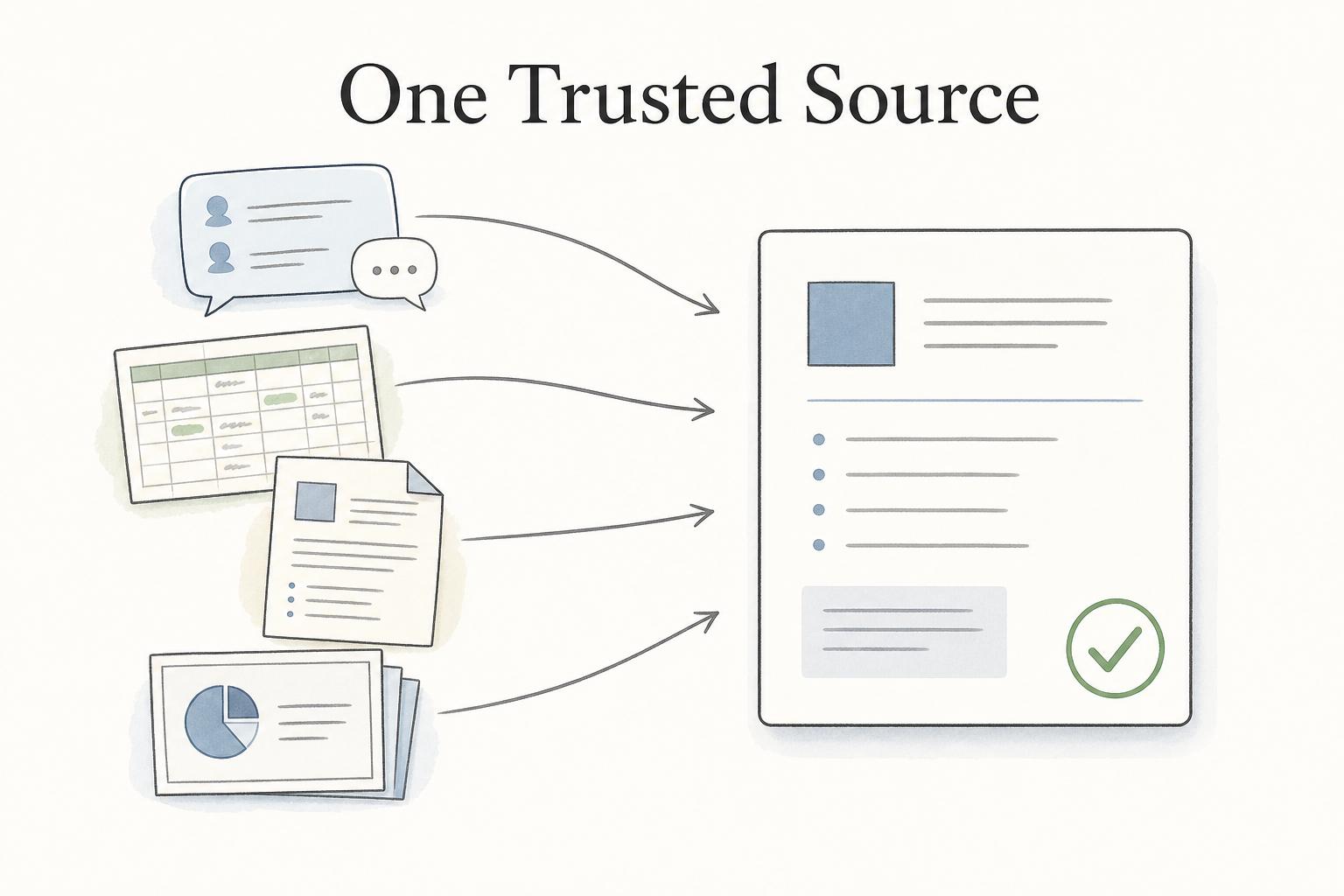
A single source of truth is the one trusted place a team uses for the current, approved version of important information. Talend frames SSOT as one source for the data points people need so decisions are based on the same data.1
In operations, documentation, and knowledge management, it tells people where to look before they answer a customer, train a teammate, or change a process.
The phrase sounds tidy, but the work behind it is usually messy. Teams rarely fail because information is absent. They fail because the same answer appears in five places, and nobody knows which one reflects how the work is done now.
Why a single source of truth matters
A single source of truth reduces uncertainty at the moment someone needs to act. A support rep should not have to compare an old Slack message, a help center article, and a manager's spreadsheet before answering a refund question. An operations lead should not have to guess whether the onboarding checklist or the training deck is newer.
The practical value is confidence. When a team trusts the source, work speeds up because people stop re-validating the basics; McKinsey has estimated that searchable internal knowledge can materially reduce the time employees spend looking for company information.2
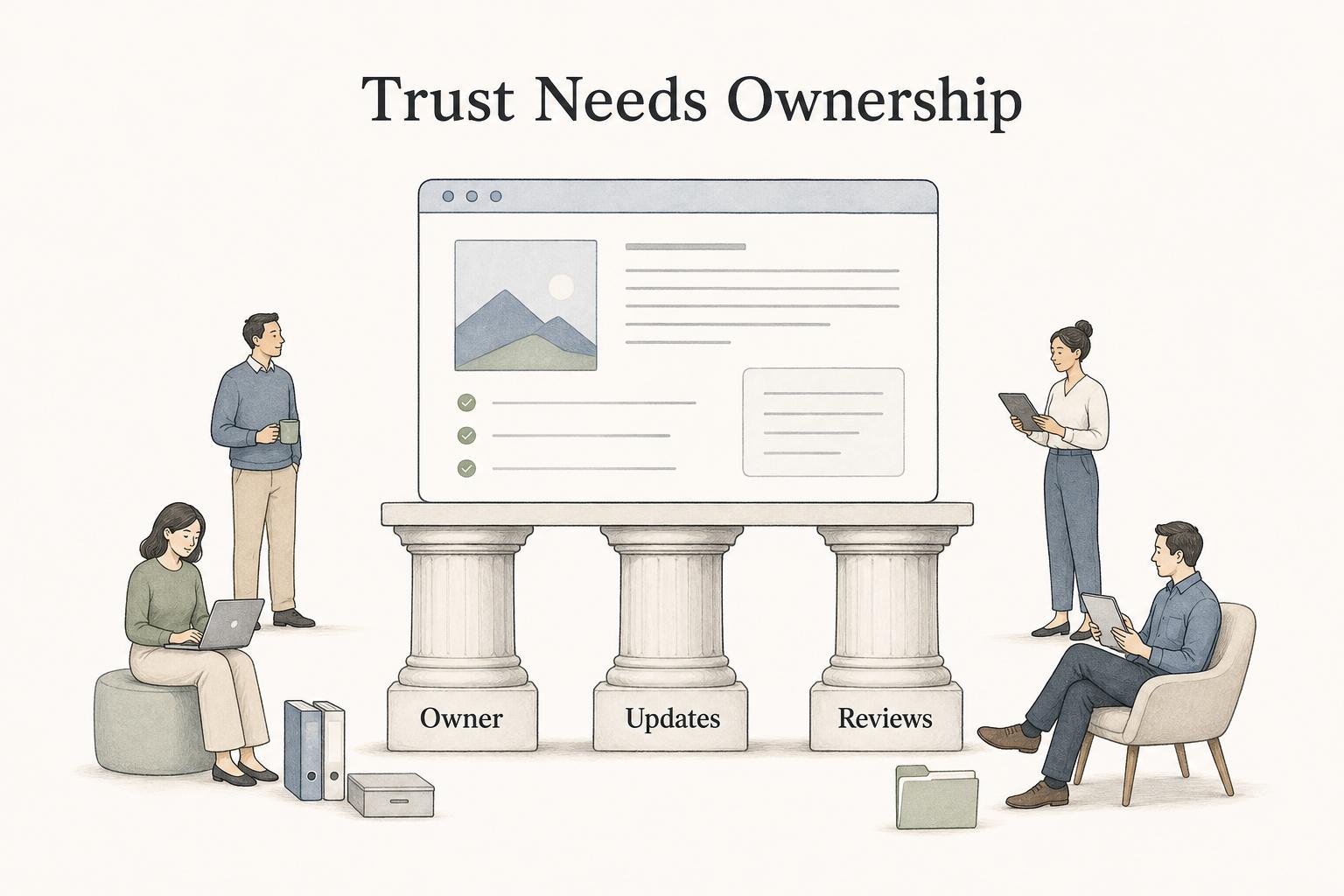
When people do not trust the source, every process becomes a small investigation. That trust has to be earned. A folder full of files is not a source of truth by default. A wiki is not a source of truth if half its pages are stale. A source of truth needs ownership, update rules, and clear links from the places where work actually happens; Gartner describes data governance in terms of decision rights and accountability for how data is created, consumed, and controlled.3
What makes something the source of truth
The source of truth is not always the biggest system or the most polished document. IBM distinguishes an authoritative system of record for a business domain from a source of truth that may aggregate and harmonize data across domains.4
The source of truth is the place the team has agreed to treat as authoritative for a specific type of information.
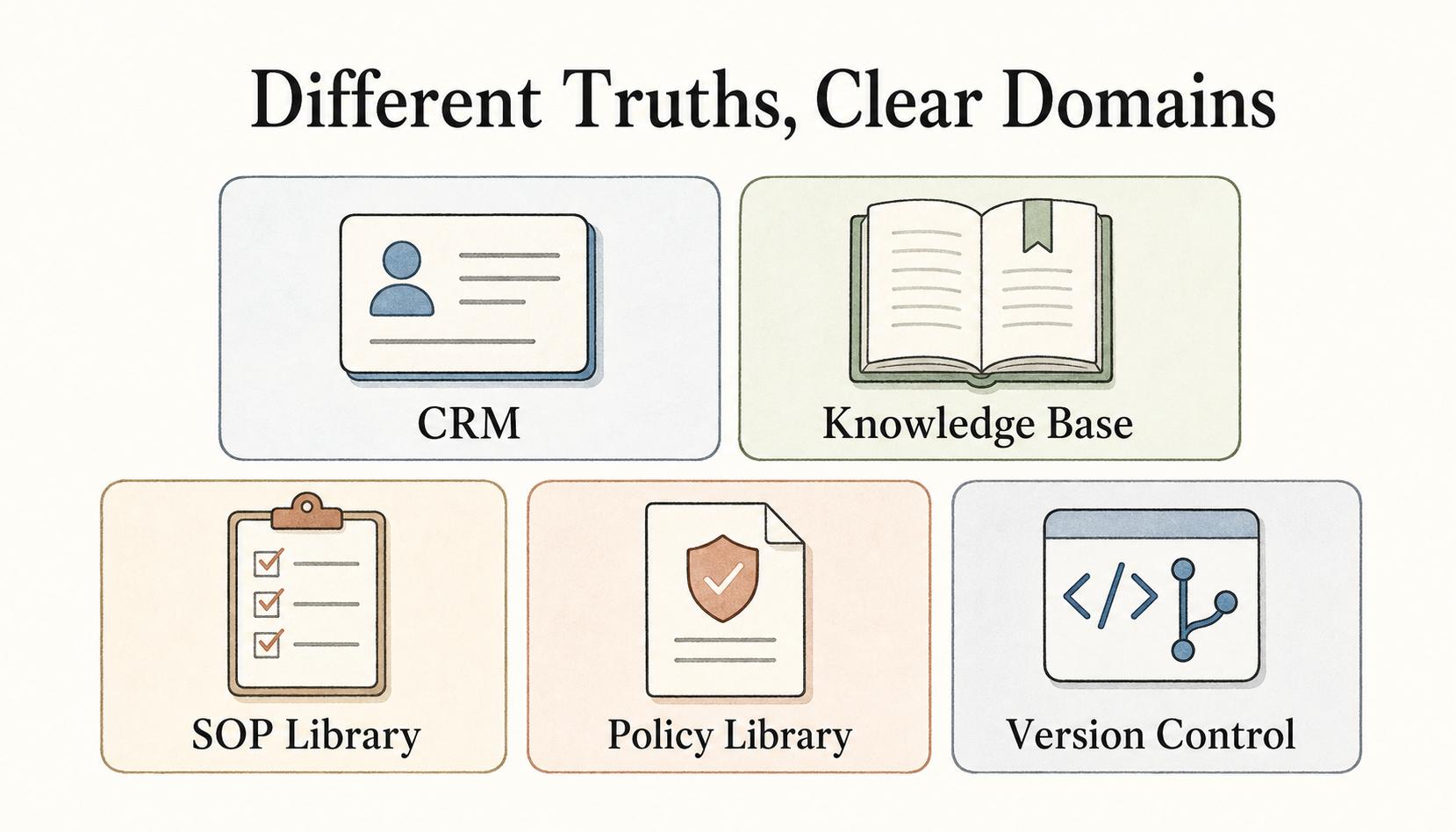
For customer support, that may be an internal knowledge base. For process documentation, it may be an SOP library. For engineering, it may be version control. For customer records, it may be the CRM. The important part is that each domain has a clear owner and no silent duplicates competing with it.
A useful source of truth usually has five traits:
- A narrow domain: it is clear what this source owns and what it does not.
- A named owner: someone is accountable for accuracy, not just storage.
- A visible update path: people know how to request or make changes.
- A review habit: important content is revisited before it quietly decays.
- Retired copies are marked: old versions are archived, redirected, or clearly labeled.
The last trait is where teams often slip. If outdated copies remain searchable and unmarked, people will keep using them.
Single source of truth examples
A company can have several sources of truth, as long as each one owns a different kind of truth. The mistake is expecting one tool to settle every question.
For example, a service team might use:
- A knowledge base for approved customer answers.
- A CRM for account history and ownership.
- A process documentation tool for internal workflows.
- A policy library for legal or compliance-approved rules.
- Version control for product or technical changes.
Those systems can all be valid at the same time. The real decision is: when a question comes up, which source wins?
A practical decision rule
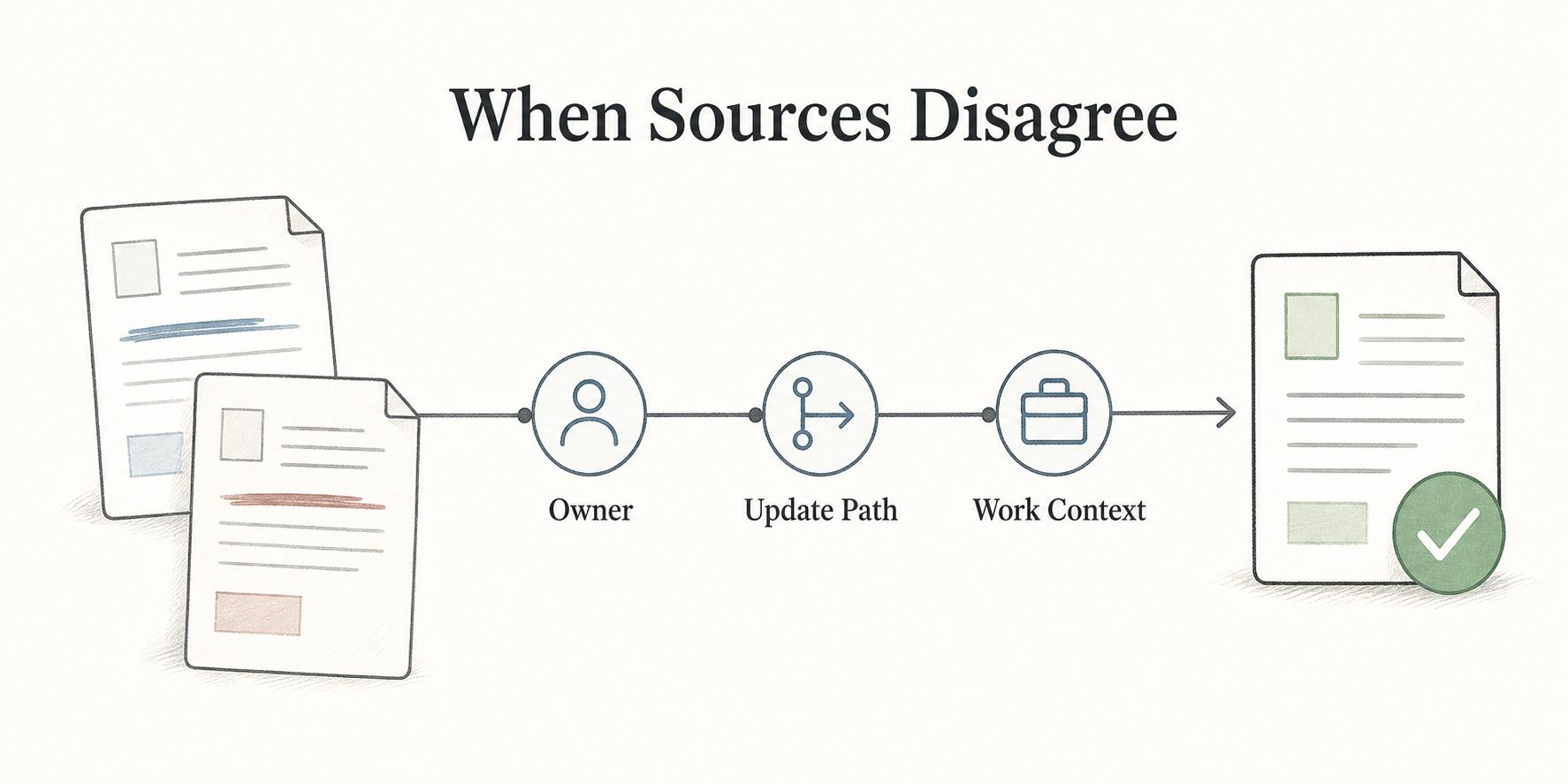
Use this rule when two sources disagree:
The source of truth is the place with the clearest owner, update path, and connection to the work being performed.
If the refund policy in the help center conflicts with the support team's internal SOP, do not ask which document looks newer. Ask which one is meant to govern the decision, who owns it, and where the team has agreed changes should be made.
If the answer is unclear, it is a governance problem, not a formatting problem. Someone needs to name the authoritative home, update it, and archive or redirect the competing copy.
How to create a single source of truth for processes
Start smaller than you think. Pick one process category where confusion already costs time: support escalations, new-hire onboarding, finance approvals, IT access requests, or customer handoffs.
First, inventory the places people currently look. Include docs, spreadsheets, saved messages, training decks, and personal notes. Then choose the official home and move only the current approved version there. Do not migrate every artifact just because it exists.
Next, add ownership. Each important process should have someone responsible for keeping it accurate. That does not mean they write every word. It means they decide what counts as current.
Finally, link the source from the work surface. If the process is used during onboarding, link it from the onboarding checklist. If support reps need it while resolving tickets, link it from the support workspace. A source of truth that people have to remember manually will be bypassed.
AI-ready template
Use this prompt to clean up competing sources before naming the official one:
## Single Source of Truth Consolidation Prompt

**Glossary term:** Single Source of Truth
**Source:** Trails Glossary — trails.so/glossary/single-source-of-truth

---

### 01. Consolidate competing process materials

"I am consolidating these materials into one source of truth for [team/process]. Compare the notes below and identify:
1. The current approved workflow, if it is clear.
2. Conflicts or outdated steps that need an owner decision.
3. Missing details someone would need to perform the work.
4. The recommended structure for the final source-of-truth page.
5. A short list of old files or messages that should be archived or redirected.

Materials:
[paste notes, links, or excerpts]"
The output should not become the source of truth automatically. It should surface the decisions a human owner needs to make.
Common mistakes
The first mistake is treating centralization as cleanup. Moving messy information into one place only creates a bigger mess if the team does not decide what is current.
The second mistake is making updates too hard. If the official source requires too much ceremony for ordinary corrections, people will create shadow docs in faster tools.
The third mistake is confusing access with authority. A document can be easy to find and still be unofficial. The team needs to know not just where information is, but whether it should be trusted.
How Trails helps
Trails helps teams turn real workflows into reliable process documentation. A teammate can capture a workflow as they perform it, turn it into a polished step-by-step guide, and share it as the current reference for training or repeatable work.
That makes Trails useful when the source-of-truth problem is not abstract knowledge, but undocumented process know-how sitting in someone's head or scattered across old notes.
- Knowledge management
- Knowledge base
- Internal knowledge base
- Process documentation
- Process documentation software
- Version control
- Content governance
Sources
- 1
Talend. Talend guide to single source of truth. Talend. www.talend.com/resources/single-source-truth/. Accessed July 7, 2026.
- 2
McKinsey. The social economy. McKinsey & Company. www.mckinsey.com/industries/technology-media-and-telecommunications/our-insights/the-social-economy. Accessed July 7, 2026.
- 3
Gartner. Gartner data governance overview. Gartner. www.gartner.com/en/data-analytics/topics/data-governance. Accessed July 7, 2026.
- 4
IBM. System of Record vs Source of Truth. IBM. www.ibm.com/think/topics/system-of-record-vs-source-of-truth. Accessed July 7, 2026.